Barnes Cassandra L, Salom David, Namitz Kevin E W, Smith W Clay, Knutson Bruce A, Cosgrove Michael S, Kiser Philip D, Calvert Peter D
Center for Vision Research and the Department of Ophthalmology and Visual Sciences, SUNY Upstate Medical University, Syracuse, New York, USA.
Department of Ophthalmology, Gavin Herbert Eye Institute - Center for Translational Vision Research, University of California, Irvine, California, USA.
J Biol Chem. 2024 Dec;300(12):107966. doi: 10.1016/j.jbc.2024.107966. Epub 2024 Nov 5.
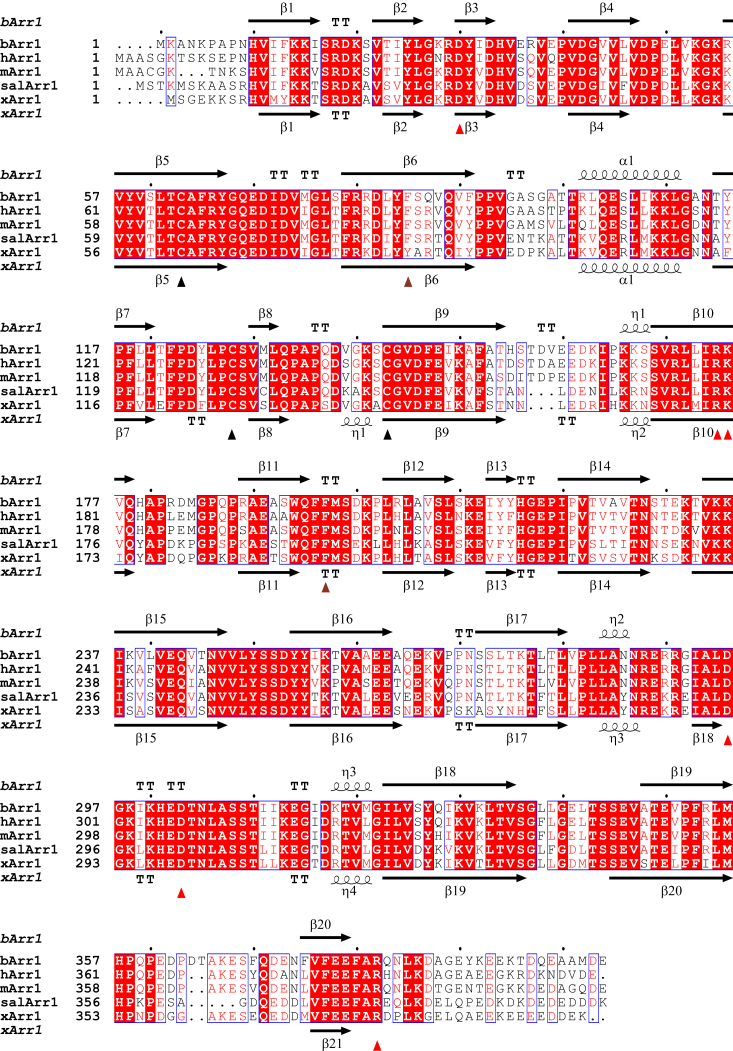
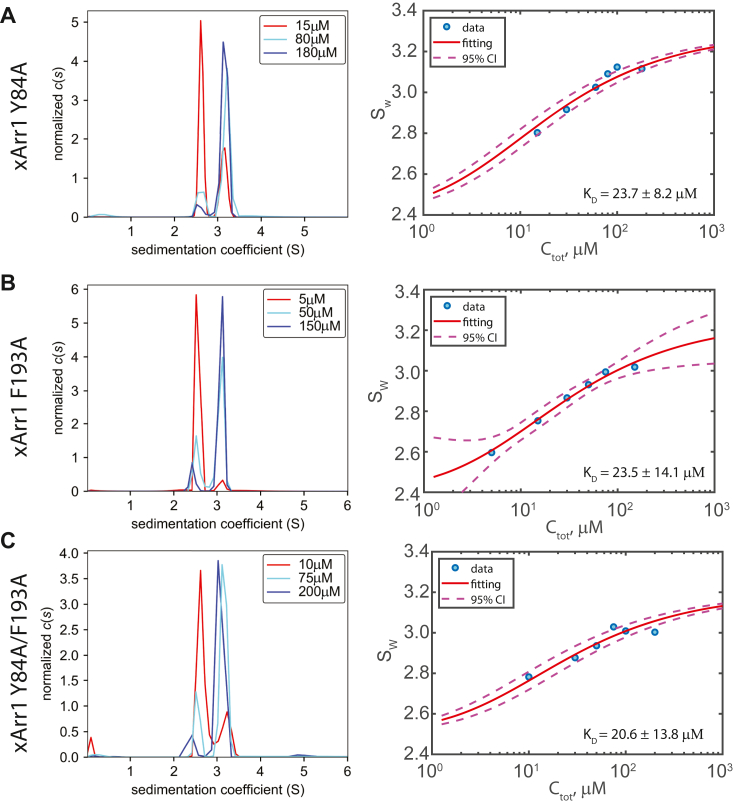
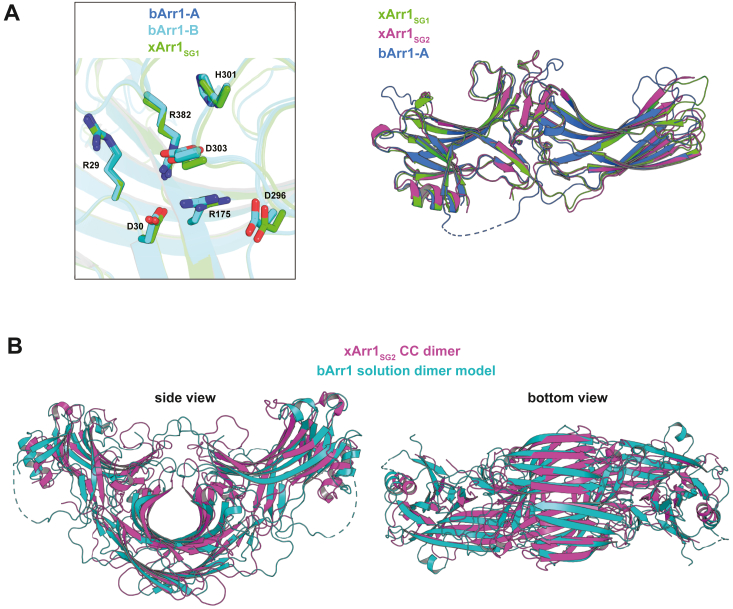
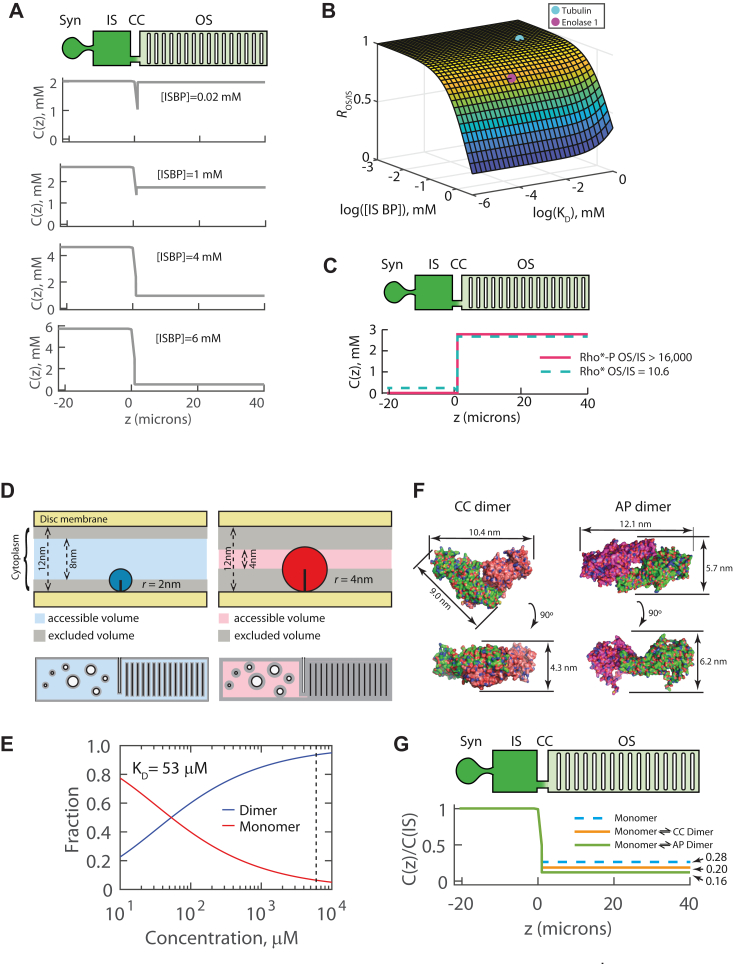
Visual arrestin 1 (Arr1) is an essential protein for termination of the light response in photoreceptors. While mammalian Arr1s form dimers and tetramers at physiological concentrations in vitro, oligomerization in other vertebrates has not been studied. Here we examine self-association of Arr1 from two amphibian species, Xenopus laevis (xArr1) and Ambystoma tigrinum (salArr1). Sedimentation velocity analytical ultracentrifugation showed that xArr1 and salArr1 oligomerization is limited to dimers. The K for dimer formation was 53 μM for xArr1 and 44 μM for salArr1, similar to the 69 μM K for bovine Arr1 (bArr1) dimers. Mutations of orthologous amino acids important for mammalian Arr1 oligomerization had no impact on xArr1 dimerization. Crystallography showed that the fold of xArr1 closely resembles that of bArr1 and crystal structures in different space groups revealed two potential xArr1 dimer forms: a symmetric dimer with a C-domain interface (CC dimer), resembling the bArr1 solution dimer, and an asymmetric dimer with an N-domain/C-domain interface. Mutagenesis of residues predicted to interact in either of these two dimer forms yielded modest reduction in dimer affinity, suggesting that the dimer interfaces compete or are not unique. Indeed, small-angle X-ray scattering and protein painting data were consistent with a symmetric anti-parallel solution dimer (AP dimer) distinct from the assemblies observed by crystallography. Finally, a computational model evaluating xArr1 binding to compartment-specific partners and partitioning based on heterogeneity of available cytoplasmic spaces shows that Arr1 distribution in dark-adapted photoreceptors is largely explained by the excluded volume effect together with tuning by oligomerization.
视 arrestin 1(Arr1)是光感受器中终止光反应所必需的蛋白质。虽然哺乳动物的 Arr1 在体外生理浓度下会形成二聚体和四聚体,但其他脊椎动物中的寡聚化尚未得到研究。在这里,我们研究了来自两种两栖动物物种,即非洲爪蟾(xArr1)和虎纹钝口螈(salArr1)的 Arr1 的自缔合。沉降速度分析超速离心表明,xArr1 和 salArr1 的寡聚化仅限于二聚体。xArr1 形成二聚体的 K 值为 53 μM,salArr1 为 44 μM,与牛 Arr1(bArr1)二聚体的 69 μM K 值相似。对哺乳动物 Arr1 寡聚化重要的直系同源氨基酸的突变对 xArr1 二聚化没有影响。晶体学表明,xArr1 的折叠与 bArr1 非常相似,不同空间群的晶体结构揭示了两种潜在的 xArr1 二聚体形式:一种具有 C 结构域界面的对称二聚体(CC 二聚体),类似于 bArr1 溶液二聚体,以及一种具有 N 结构域/C 结构域界面的不对称二聚体。对预测在这两种二聚体形式中任何一种中相互作用的残基进行诱变,导致二聚体亲和力适度降低,这表明二聚体界面相互竞争或并非独一无二。事实上,小角 X 射线散射和蛋白质绘图数据与一种对称反平行溶液二聚体(AP 二聚体)一致,该二聚体与晶体学观察到的组装体不同。最后,一个评估 xArr1 与特定区室伙伴结合并基于可用细胞质空间异质性进行分配的计算模型表明,暗适应光感受器中 Arr1 的分布在很大程度上由排除体积效应以及寡聚化调节来解释。