Yabuki Yasushi, Matsuo Kazuya, Komiya Ginji, Kudo Kenta, Hori Karin, Ikenoshita Susumu, Kawata Yasushi, Mizobata Tomohiro, Shioda Norifumi
Institute of Molecular Embryology and Genetics (IMEG), Department of Genomic Neurology, Kumamoto University, Kumamoto, Japan; Graduate School of Pharmaceutical Sciences, Kumamoto University, Kumamoto, Japan.
Institute of Molecular Embryology and Genetics (IMEG), Department of Genomic Neurology, Kumamoto University, Kumamoto, Japan; Graduate School of Pharmaceutical Sciences, Kumamoto University, Kumamoto, Japan.
J Biol Chem. 2024 Dec;300(12):107971. doi: 10.1016/j.jbc.2024.107971. Epub 2024 Nov 5.
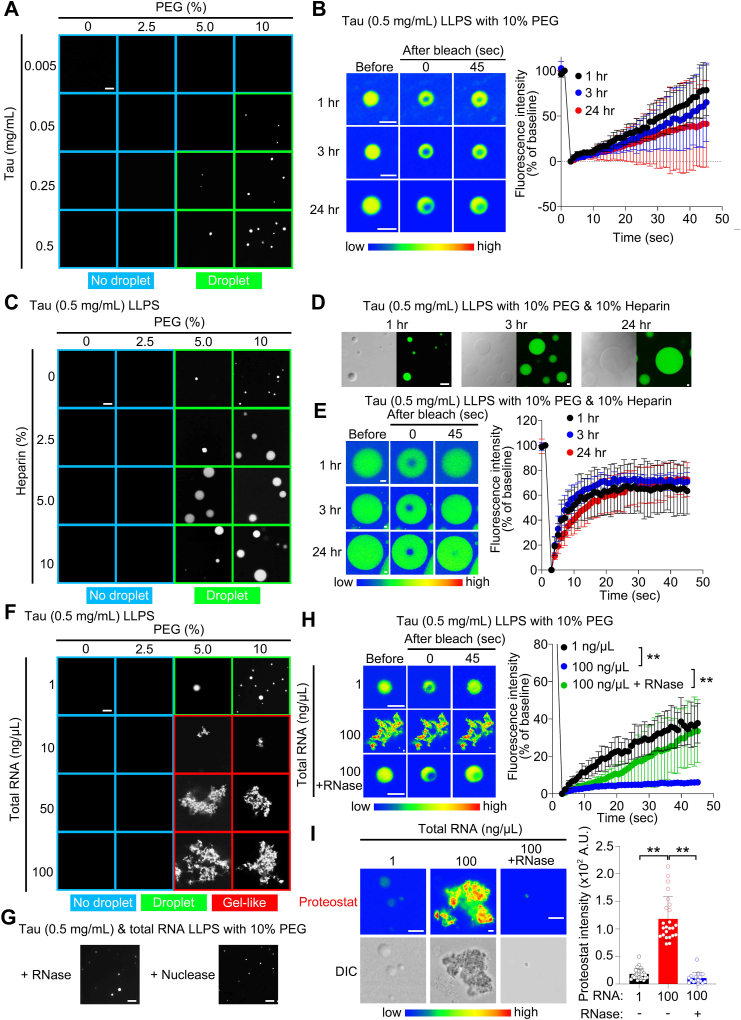
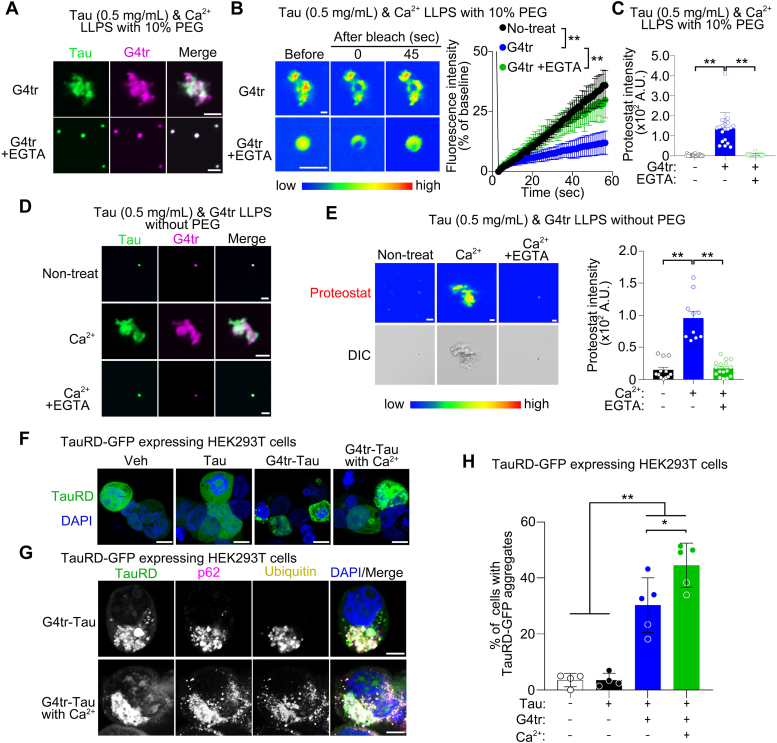
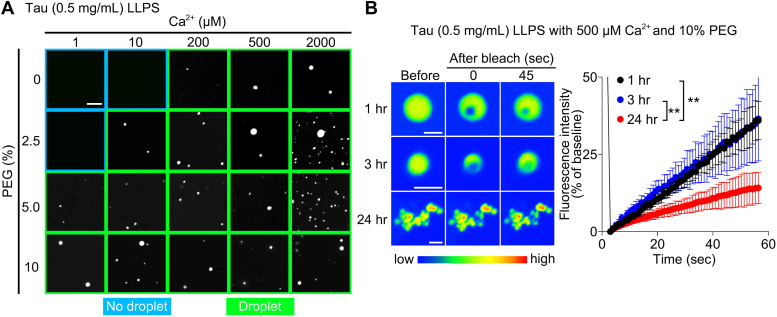
Tau aggregation is a defining feature of neurodegenerative tauopathies, including Alzheimer's disease, corticobasal degeneration, and frontotemporal dementia. This aggregation involves the liquid-liquid phase separation (LLPS) of Tau, followed by its sol-gel phase transition, representing a crucial step in aggregate formation both in vitro and in vivo. However, the precise cofactors influencing Tau phase transition and aggregation under physiological conditions (e.g., ion concentration and temperature) remain unclear. In this study, we unveil that nucleic acid secondary structures, specifically RNA G-quadruplexes (rG4s), and calcium ions (Ca) synergistically facilitated the sol-gel phase transition of human Tau under mimic intracellular ion conditions (140 mM KCl, 15 mM NaCl, and 10 mM MgCl) at 37 °C in vitro. In the presence of molecular crowding reagents, Tau formed stable liquid droplets through LLPS, maintaining fluidity for 24 h under physiological conditions. Notably, cell-derived RNA promoted Tau sol-gel phase transition, with rG4s emerging as a crucial factor. Surprisingly, polyanion heparin did not elicit a similar response, indicating a distinct mechanism not rooted in electrostatic interactions. Further exploration underscored the significance of Ca, which accumulate intracellularly during neurodegeneration, as additional cofactors in promoting Tau phase transition after 24 h. Importantly, our findings demonstrate that rG4s and Ca synergistically enhance Tau phase transition within 1 h when introduced to Tau droplets. Moreover, rG4-Tau aggregates showed seeding ability in cells. In conclusion, our study illuminates the pivotal roles of rG4s and Ca in promoting Tau aggregation under physiological conditions in vitro, offering insights into potential triggers for tauopathy.
tau蛋白聚集是神经退行性tau蛋白病的一个决定性特征,包括阿尔茨海默病、皮质基底节变性和额颞叶痴呆。这种聚集涉及tau蛋白的液-液相分离(LLPS),随后是其溶胶-凝胶相转变,这是体外和体内聚集体形成的关键步骤。然而,在生理条件下(如离子浓度和温度)影响tau蛋白相变和聚集的精确辅助因子仍不清楚。在本研究中,我们发现核酸二级结构,特别是RNA G-四链体(rG4s)和钙离子(Ca)在体外模拟细胞内离子条件(140 mM KCl、15 mM NaCl和10 mM MgCl)下于37℃协同促进人tau蛋白的溶胶-凝胶相转变。在存在分子拥挤试剂的情况下,tau蛋白通过LLPS形成稳定的液滴,在生理条件下保持流动性24小时。值得注意的是,细胞来源的RNA促进tau蛋白溶胶-凝胶相转变,rG4s成为关键因素。令人惊讶的是,聚阴离子肝素没有引发类似反应,表明其机制并非基于静电相互作用。进一步的探索强调了在神经退行性变过程中细胞内积累的Ca作为促进24小时后tau蛋白相变的额外辅助因子的重要性。重要的是,我们的研究结果表明,当rG4s和Ca引入tau蛋白液滴时,它们在1小时内协同增强tau蛋白相变。此外,rG4-tau聚集体在细胞中显示出种子能力。总之,我们的研究阐明了rG4s和Ca在体外生理条件下促进tau蛋白聚集的关键作用,为tau蛋白病的潜在触发因素提供了见解。