Department of Circulation and Medical Imaging, NTNU - Norwegian University of Science and Technology, Trondheim, Norway.
Clinic of Surgery, St. Olavs Hospital, Trondheim University Hospital, Trondheim, Norway.
Commun Biol. 2024 Nov 8;7(1):1462. doi: 10.1038/s42003-024-07161-x.
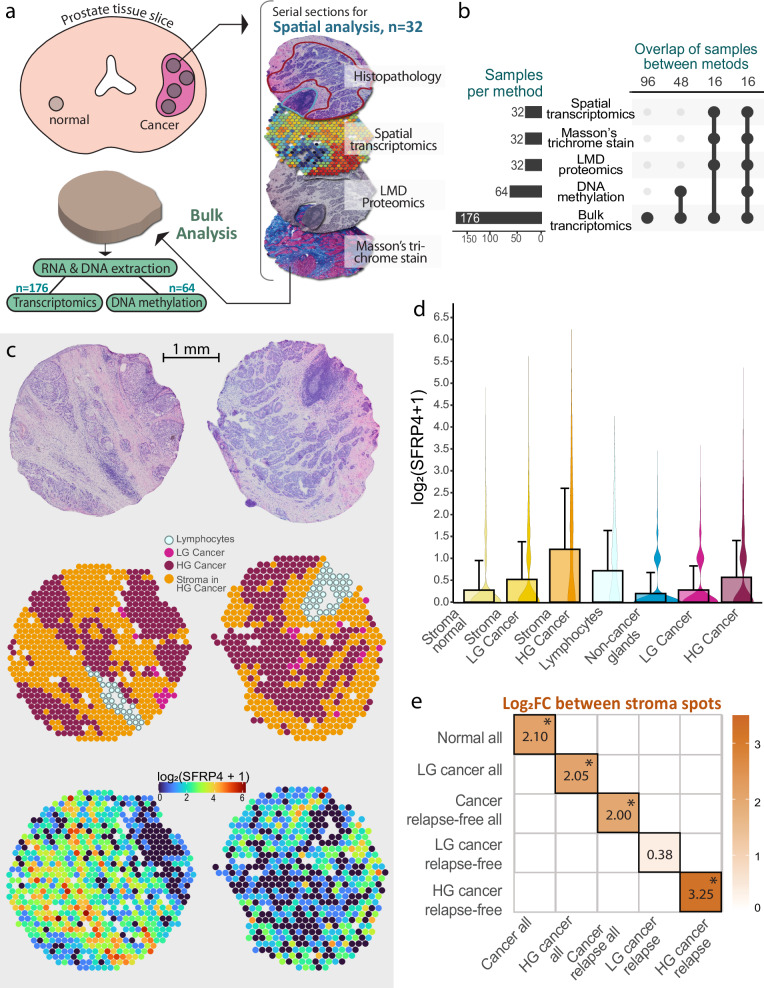
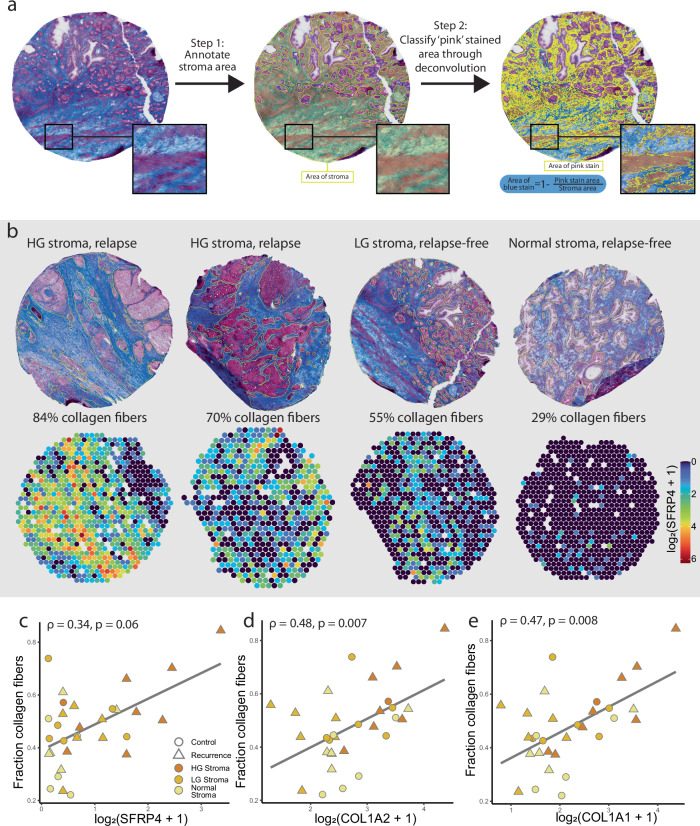
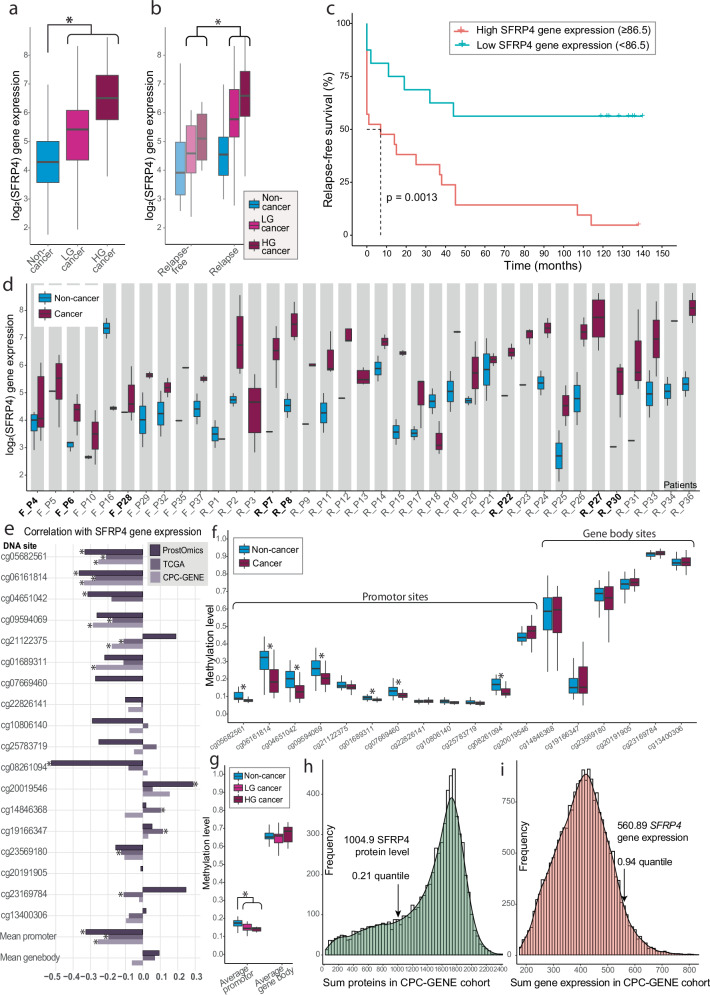
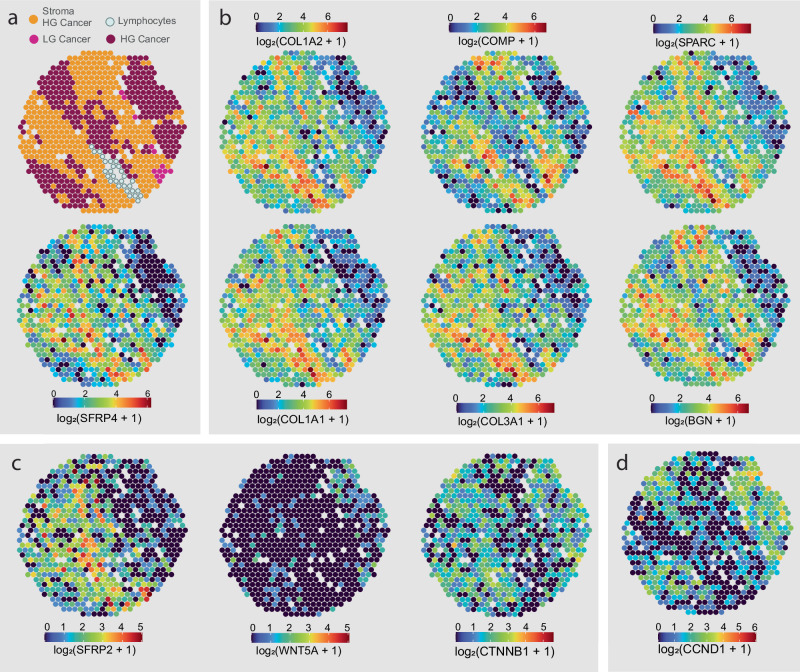
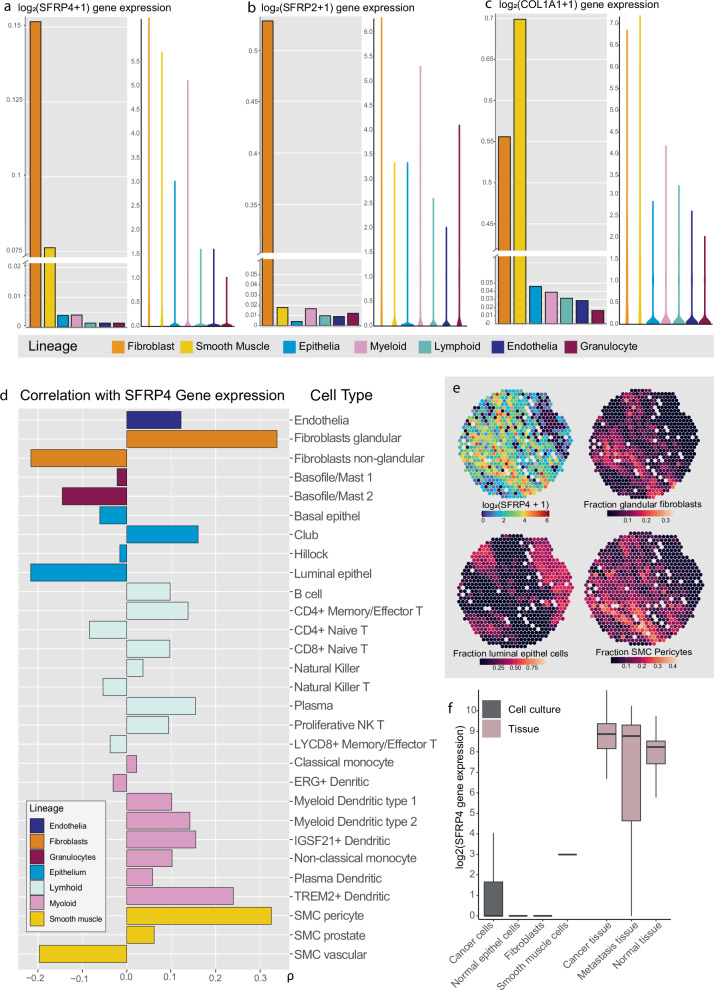
Prostate tumor heterogeneity is a major obstacle when studying the biological mechanisms of molecular markers. Increased gene expression levels of secreted frizzled-related protein 4 (SFRP4) is a biomarker in aggressive prostate cancer. To understand how SFRP4 relates to prostate cancer we performed comprehensive spatial and multiomics analysis of the same prostate cancer tissue samples. The experimental workflow included spatial transcriptomics, bulk transcriptomics, proteomics, DNA methylomics and tissue staining. SFRP4 mRNA was predominantly located in cancer stroma, produced by fibroblasts and smooth muscle cells, and co-expressed with extracellular matrix components. We also confirmed that higher SFRP4 gene expression is associated with cancer aggressiveness. Gene expression of SFRP4 was affected by gene promotor methylation. Surprisingly, the high mRNA levels did not reflect SFRP4 protein levels, which was much lower. This study contributes previously unknown insights of SFRP4 mRNA in the prostate tumor environment that potentially can improve diagnosis and treatment.
前列腺肿瘤异质性是研究分子标志物生物学机制的主要障碍。分泌卷曲相关蛋白 4(SFRP4)的基因表达水平升高是侵袭性前列腺癌的生物标志物。为了了解 SFRP4 与前列腺癌的关系,我们对相同的前列腺癌组织样本进行了全面的空间和多组学分析。实验工作流程包括空间转录组学、批量转录组学、蛋白质组学、DNA 甲基组学和组织染色。SFRP4 mRNA 主要位于癌症基质中,由成纤维细胞和平滑肌细胞产生,并与细胞外基质成分共同表达。我们还证实,SFRP4 基因表达水平升高与癌症侵袭性有关。SFRP4 基因的表达受基因启动子甲基化的影响。令人惊讶的是,高 mRNA 水平并不反映 SFRP4 蛋白水平,后者要低得多。这项研究提供了 SFRP4 mRNA 在前列腺肿瘤环境中的以前未知的见解,这可能有助于改善诊断和治疗。