Xu Elizabeth, Ho Quan, Liu Ashley, Gautam Shiva, Wong Eric T
Department of Chemistry, University of Pennsylvania, Philadelphia, PA, USA.
Department of Biomedical Engineering, Boston University, Boston, MA, USA.
BJC Rep. 2024 Apr 23;2(1):34. doi: 10.1038/s44276-024-00053-x.
Neurolymphomatosis is a lymphoid malignancy of the peripheral nervous system and its natural history is poorly understood.
We performed PubMed search and extracted clinical data for Kaplan-Meier statistics to determine outcome parameters over time. Kruskal-Wallis test was performed to compare prognostic factors.
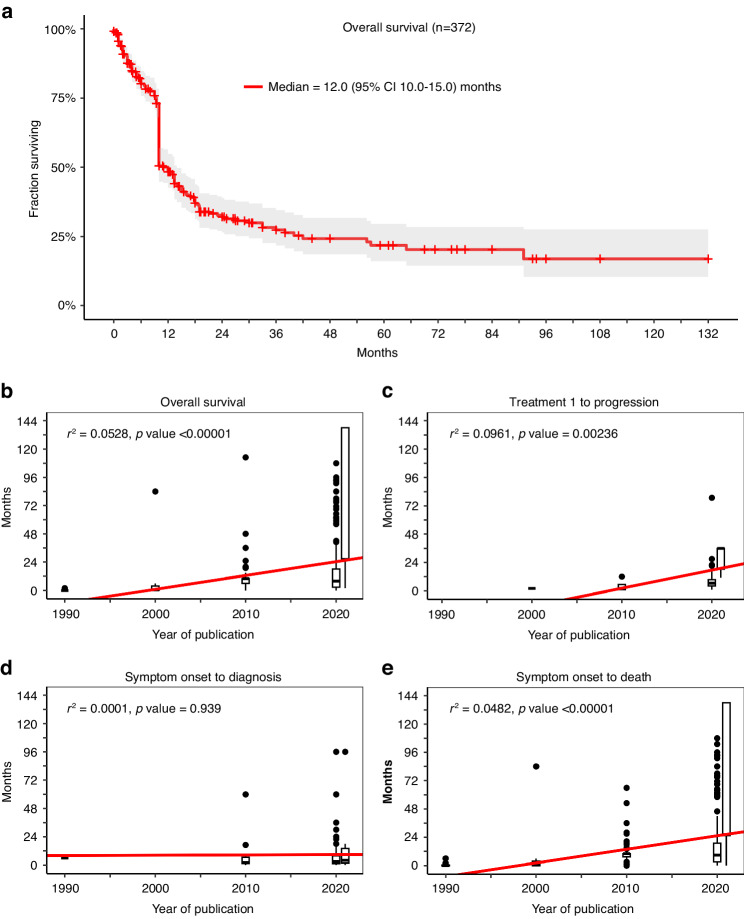
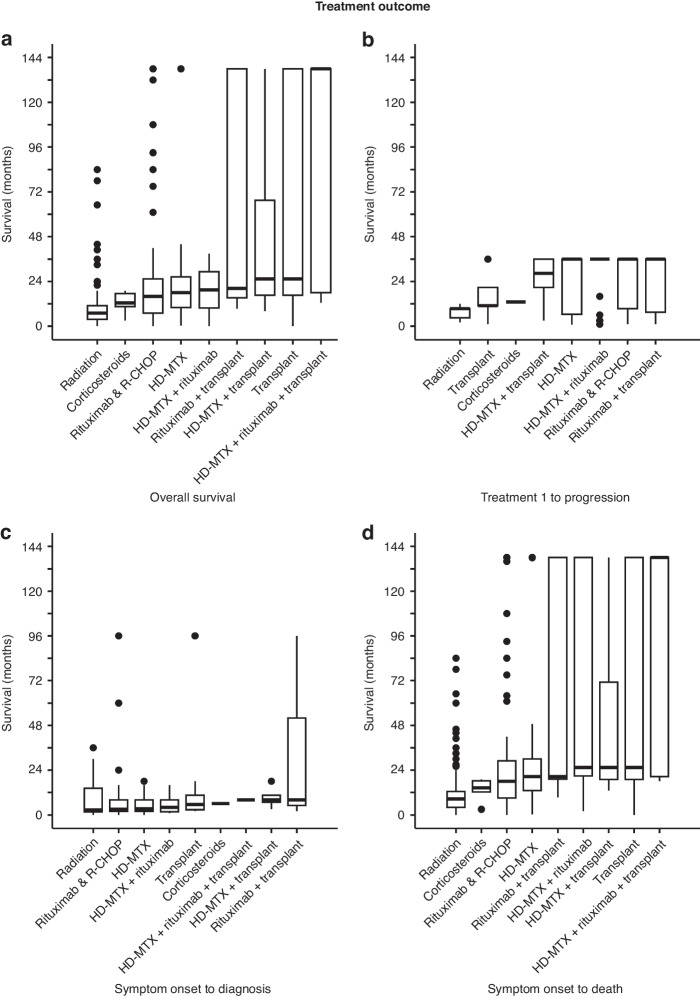
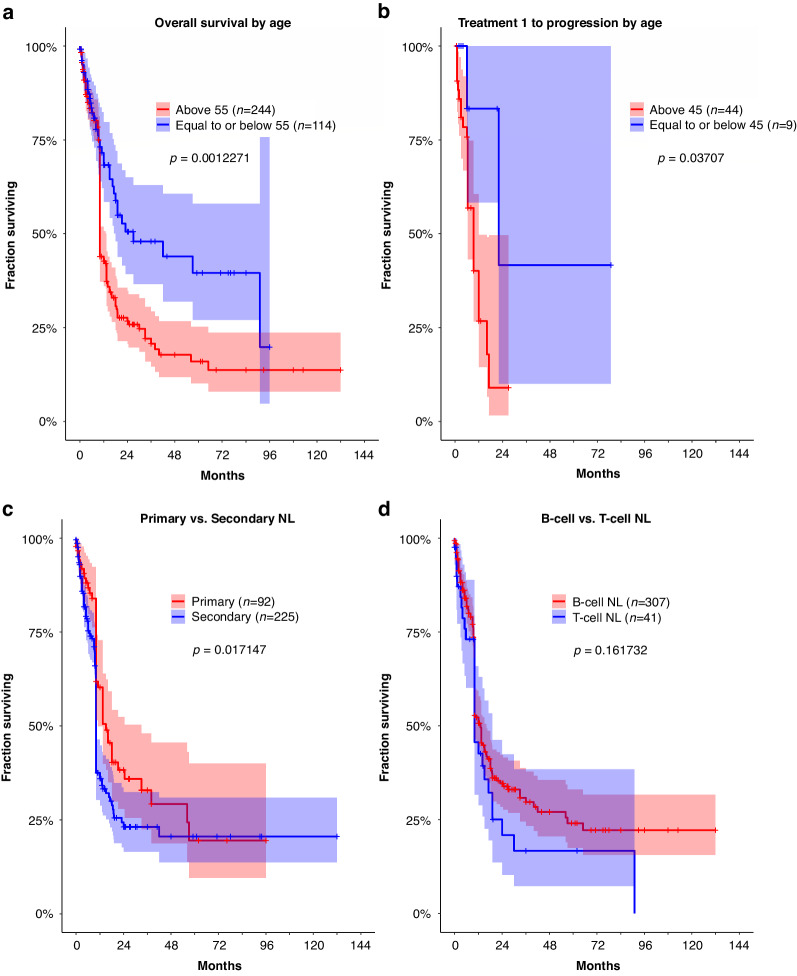
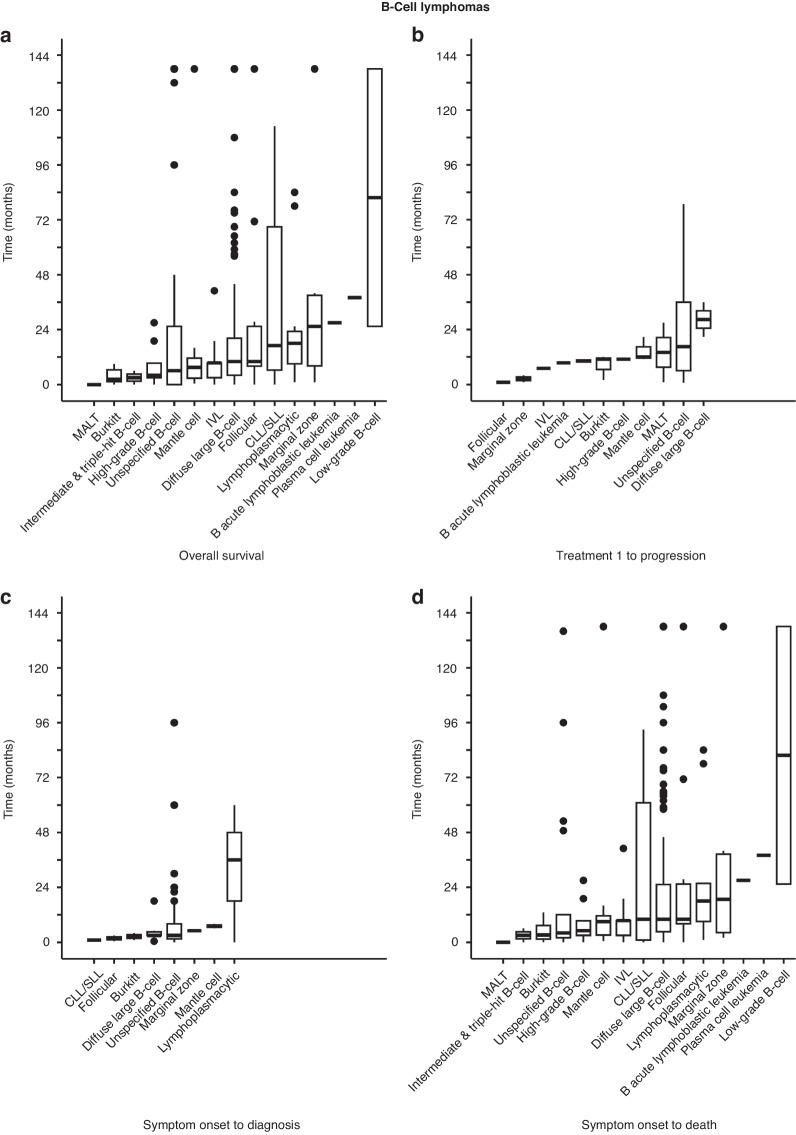
Our search identified 559 patients and their median age was 61 years. Median overall survival (OS) was 12.0 (range 10.0-15.0) months. Diffuse large B-cell lymphoma was the most frequent histology, involving the brachial plexus, cranial nerves, and sciatic nerve. None had molecular profiling. There was a progressive lengthening of OS in successive decades, from 0.5 (95% CI 0.0-0.8) to 26.4 (95% CI 18.0-34.8) months between 1951 and 2022 (r = 0.0528, p < 0.00001). Time from first treatment (treatment 1) to progression increased from 2.0 to 36.0 (95% CI 6.5-50.7) months (r = 0.0961, p = 0.00236). Time from symptom onset to diagnosis remained unchanged (r = 0.0000556, p = 0.939). Patients were most frequently treated with methotrexate, rituximab, and/or radiation either alone or in combination. Primary neurolymphomatosis had a better prognosis than secondary neurolymphomatosis. No OS difference was noted between B- and T-cell disease, but low-grade B-cell performed better than Burkitt's lymphoma.
Better outcome for patients with neurolymphomatosis is noted over time. But timely diagnosis remains a major problem that needs improvement.
神经淋巴瘤是一种外周神经系统的淋巴恶性肿瘤,其自然病程尚不清楚。
我们进行了PubMed检索,并提取临床数据用于Kaplan-Meier统计,以确定随时间变化的结局参数。进行Kruskal-Wallis检验以比较预后因素。
我们的检索确定了559例患者,他们的中位年龄为61岁。中位总生存期(OS)为12.0(范围10.0 - 15.0)个月。弥漫性大B细胞淋巴瘤是最常见的组织学类型,累及臂丛神经、颅神经和坐骨神经。均未进行分子分析。在1951年至2022年期间,连续几十年的总生存期逐渐延长,从0.5(95%CI 0.0 - 0.8)个月增至26.4(95%CI 18.0 - 34.8)个月(r = 0.0528,p < 0.00001)。从首次治疗(治疗1)到疾病进展的时间从2.0个月增加到36.0(95%CI 6.5 - 50.7)个月(r = 0.0961,p = 0.00236)。从症状出现到诊断的时间保持不变(r = 0.0000556,p = 0.939)。患者最常单独或联合使用甲氨蝶呤、利妥昔单抗和/或放疗进行治疗。原发性神经淋巴瘤的预后优于继发性神经淋巴瘤。B细胞和T细胞疾病之间未观察到总生存期差异,但低级别B细胞淋巴瘤的表现优于伯基特淋巴瘤。
随着时间推移,神经淋巴瘤患者的预后有所改善。但及时诊断仍然是一个需要改进的主要问题。