Kamrul-Hasan Abm, Mondal Sunetra, Nagendra Lakshmi, Sasikanth Thanikai, Ahammed Afsar, Rahman Shahin Ibn, Wickramarachchi Ashani, Parajuli Naresh, Khatiwada Saurav, Dutta Deep
Department of Endocrinology, Mymensingh Medical College, Mymensingh, Bangladesh.
Department of Endocrinology, NRS Medical College, Kolkata, India.
touchREV Endocrinol. 2024 Oct;20(2):54-61. doi: 10.17925/EE.2024.20.2.8. Epub 2024 Oct 9.
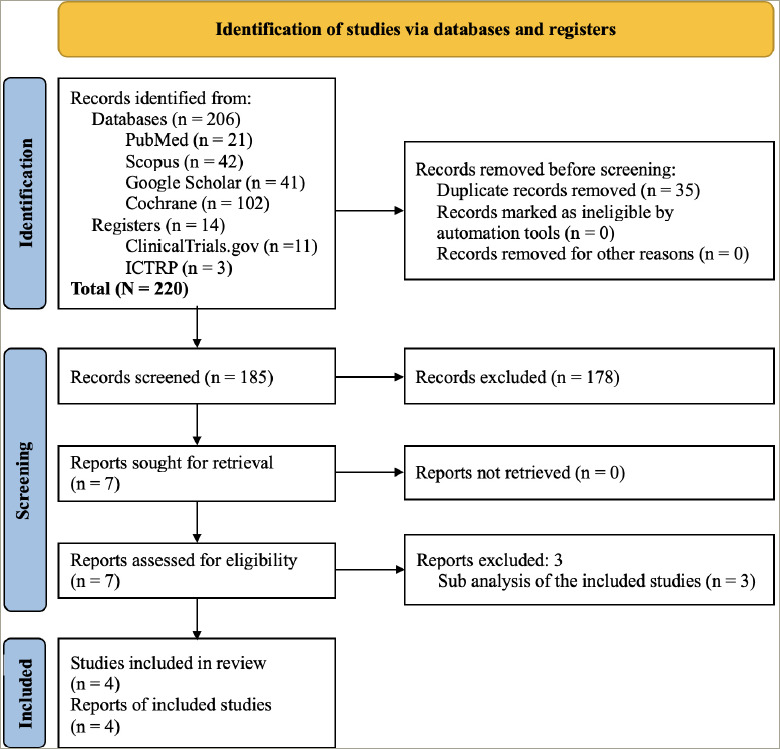
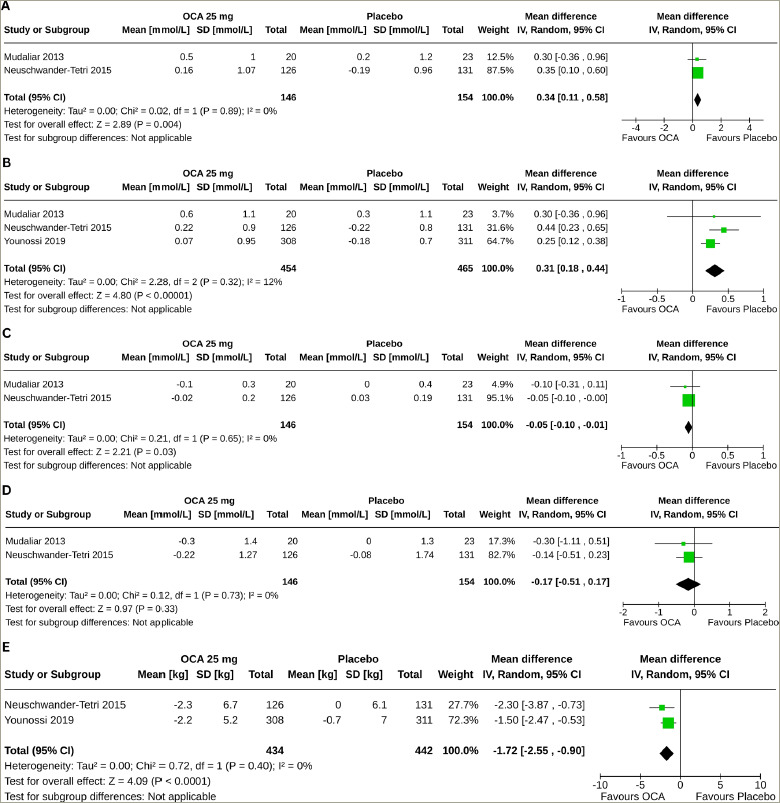
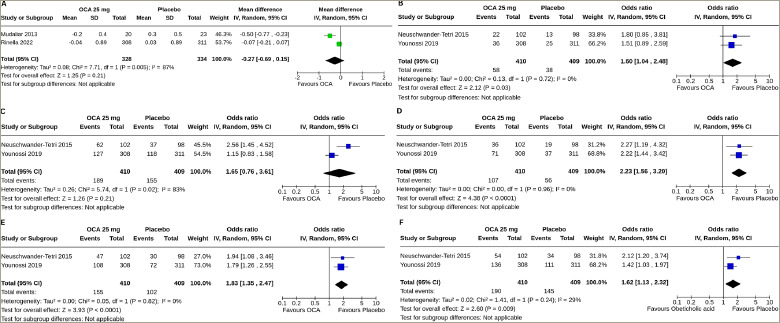
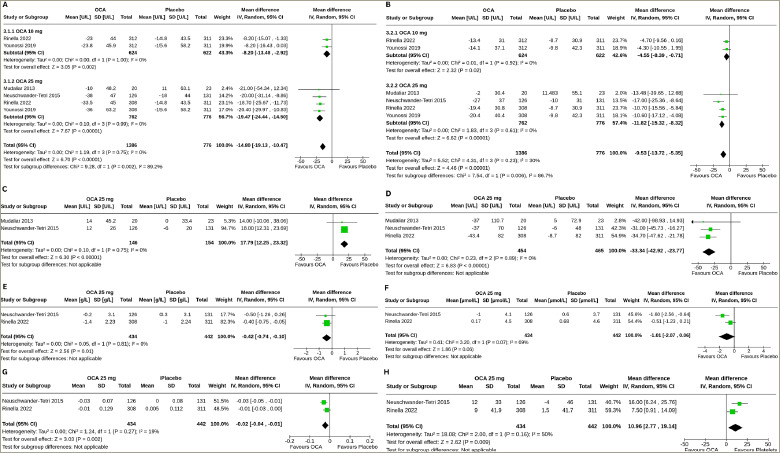
Obeticholic acid (OCA) has emerged as a promising drug in the management of nonalcoholic fatty liver disease (NAFLD). This meta-analysis aimed to analyse the therapeutic effect of OCA on NAFLD. Randomized controlled trials (RCTs) involving patients with NAFLD receiving OCA in the intervention arm and placebo in the control arm were searched throughout the electronic databases. The primary outcomes were changes in non-invasive markers of hepatic fibrosis and liver histology. The secondary outcomes included changes in liver enzymes, metabolic parameters from baseline and adverse events (AEs). Four RCTs involving 1,278 subjects met the inclusion criteria. Over 6 weeks to 18 months of clinical use, OCA outperformed placebo in resolving definite nonalcoholic steatohepatitis (odds ratio [OR] 1.60, 95% confidence interval [CI] [1.04-2.48], p=0.03) and improving fibrosis (OR 2.23, 95% CI [1.56-3.20], p<0.0001), hepatocellular ballooning (OR 1.83, 95% CI [1.35-2.47], p<0.0001) and lobular inflammation (OR 1.62, 95% CI [1.13-2.32], p=0.009). OCA did not improve the enhanced liver fibrosis score and steatosis better than placebo, and demonstrated superior efficacy compared with the placebo in reducing serum alanine aminotransferase, aspartate aminotransferase and gamma-glutamyl transferase levels. Although a favourable effect of OCA over placebo was seen in body-weight reduction, the OCA use was associated with adverse changes in lipid parameters. Except for the greater risk of pruritus and constipation, the AE profile was comparable between the OCA and placebo groups. OCA has a favourable efficacy in improving liver histology and liver enzymes. However, the worsening of lipid parameters and other AEs with the OCA use warrants further investigation.
奥贝胆酸(OCA)已成为治疗非酒精性脂肪性肝病(NAFLD)的一种有前景的药物。这项荟萃分析旨在分析OCA对NAFLD的治疗效果。通过电子数据库全面检索了涉及NAFLD患者的随机对照试验(RCT),干预组接受OCA,对照组接受安慰剂。主要结局是肝纤维化和肝脏组织学的非侵入性标志物的变化。次要结局包括肝酶、基线代谢参数的变化以及不良事件(AE)。四项涉及1278名受试者的RCT符合纳入标准。在6周至18个月的临床使用中,OCA在解决明确的非酒精性脂肪性肝炎方面优于安慰剂(优势比[OR] 1.60,95%置信区间[CI] [1.04 - 2.48],p = 0.03),并在改善纤维化(OR 2.23,95% CI [1.56 - 3.20],p < 0.0001)、肝细胞气球样变(OR 1.83,95% CI [1.35 - 2.47],p < 0.0001)和小叶炎症(OR 1.62,95% CI [1.13 - 2.32],p = 0.009)方面表现更优。OCA在改善增强肝纤维化评分和脂肪变性方面并不比安慰剂更好,但在降低血清丙氨酸氨基转移酶、天冬氨酸氨基转移酶和γ-谷氨酰转移酶水平方面显示出优于安慰剂的疗效。尽管在减轻体重方面OCA比安慰剂有更有利的效果,但使用OCA与脂质参数的不良变化有关。除了瘙痒和便秘风险更高外,OCA组和安慰剂组的AE情况相当。OCA在改善肝脏组织学和肝酶方面具有良好疗效。然而,使用OCA导致脂质参数恶化和其他AE值得进一步研究。