CIBER Infectious diseases, Carlos III Health Institute (ISCIII), Madrid, Spain.
National Centre for Tropical Diseases (CNMT), Carlos III Health Institute (ISCIII), Madrid, Spain.
PLoS One. 2024 Nov 12;19(11):e0313388. doi: 10.1371/journal.pone.0313388. eCollection 2024.
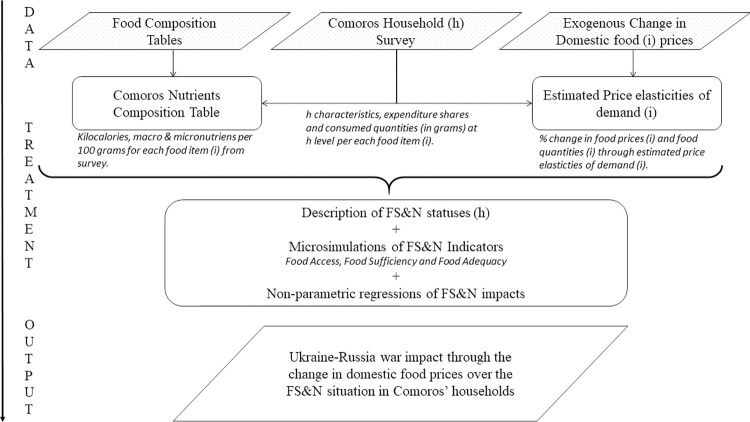
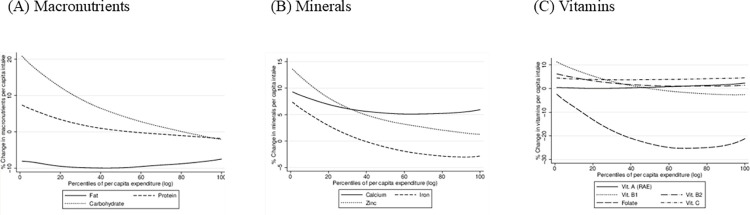
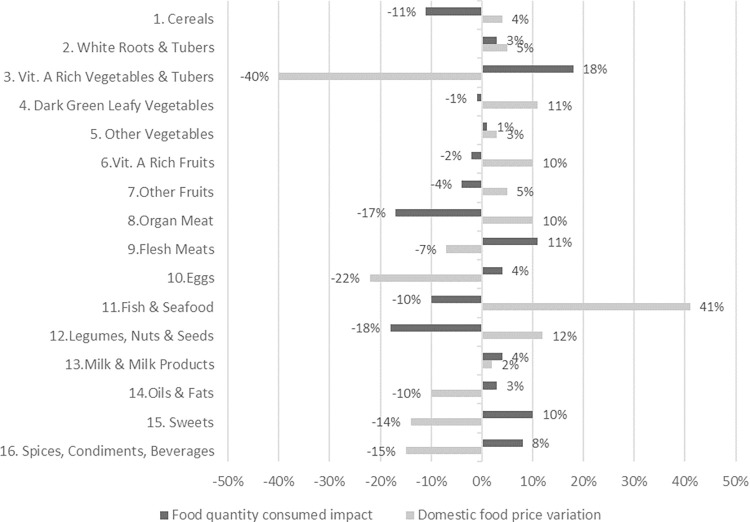
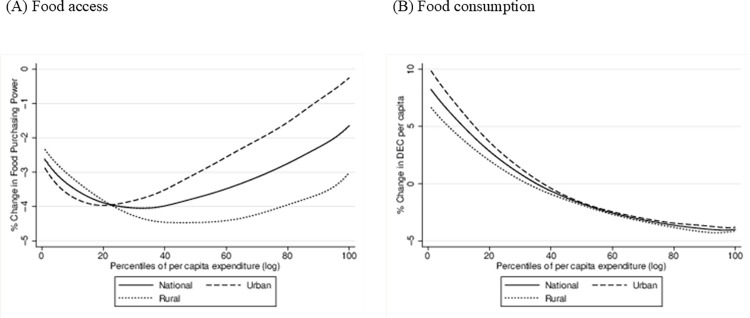
The Sustainable Development Goal 2 aims to eradicate hunger. However, many small island developing states (SIDS) face challenges in achieving this goal due to their reliance on the global market and susceptibility to crises. This paper focuses on Comoros, one of the least studied SIDS located in the Indian Ocean, to examine its food security and nutritional vulnerability. The findings reveal that Comoros experiences limited access to sufficient and nutritious diets, which are excessive in fat and deficient in key micronutrients. This situation is similar to other SIDS in the Pacific and the Caribbean, which also exhibit the convergence of the malnutrition triple burden. This paper further assesses the impact of changing food prices during the initial year of the Russia-Ukraine conflict on food security and nutrition in Comoros, serving as a case study for SIDS. Using microsimulations, we estimate the effects on food access, sufficiency, and adequacy at the household level. The results indicate a decline in food access and purchasing power for all households, particularly the poorer and rural. Additionally, food sufficiency has markedly decreased, leading to an additional 5,000 households (3.3% of all households) experiencing inadequate daily calorie intake. The study also highlights a reduction in the consumption of organ meats, fruits, and vegetables, resulting in decreased daily iron and folate intakes. This is particularly concerning given the high prevalence of anemia among women in Comoros and other SIDS. To address these challenges, policies promoting the consumption of fresh, nutrient-rich foods with low fat content are crucial to mitigate the malnutrition triple burden and curb the increasing trend of non-communicable diseases in these countries.
可持续发展目标 2 旨在消除饥饿。然而,由于许多小岛屿发展中国家(SIDS)依赖全球市场且容易受到危机的影响,因此在实现这项目标上面临挑战。本文以印度洋中的一个研究最少的小岛屿发展中国家科摩罗为例,研究其粮食安全和营养脆弱性。研究结果表明,科摩罗获得充足和营养饮食的机会有限,其饮食中脂肪过多,关键微量营养素不足。这种情况与太平洋和加勒比地区的其他 SIDS 相似,这些地区也表现出营养不良三重负担的趋同。本文进一步评估了俄罗斯-乌克兰冲突第一年期间不断变化的粮食价格对科摩罗粮食安全和营养的影响,将其作为 SIDS 的案例研究。我们使用微观模拟估计了家庭层面粮食获取、充足性和适当性的影响。结果表明,所有家庭,尤其是贫困家庭和农村家庭的粮食获取和购买力都有所下降。此外,粮食充足性明显下降,导致另外 5000 户家庭(占所有家庭的 3.3%)出现每日卡路里摄入量不足的情况。该研究还强调了食用器官肉、水果和蔬菜减少,导致每日铁和叶酸摄入量减少。考虑到科摩罗和其他 SIDS 中妇女贫血的高发率,这尤其令人担忧。为了解决这些挑战,促进消费新鲜、营养丰富且脂肪含量低的食物的政策对于减轻营养不良三重负担和遏制这些国家不断增加的非传染性疾病趋势至关重要。