Department of Ethology, Eötvös Loránd University, Budapest, Hungary.
MTA-ELTE Lendület "Momentum" Companion Animal Research Group, Budapest, Hungary.
Sci Rep. 2024 Nov 12;14(1):27548. doi: 10.1038/s41598-024-77400-y.
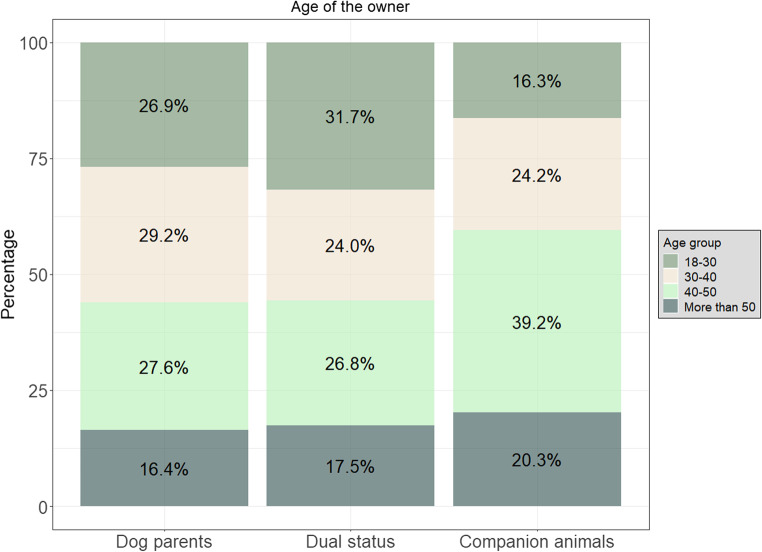
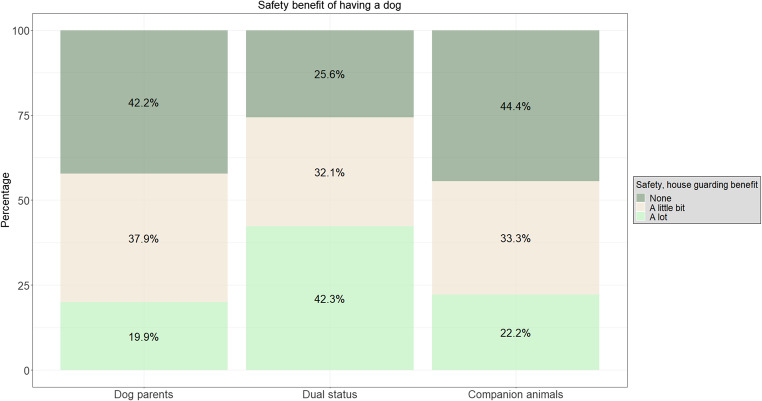
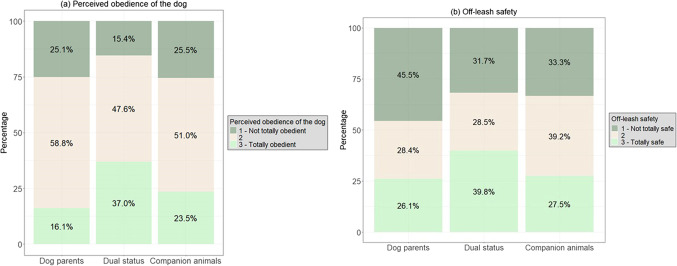
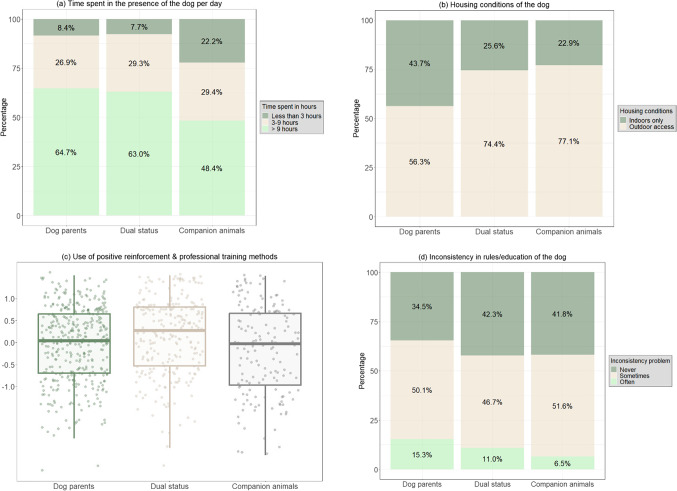
Owned dogs are often regarded as family members, best friends, or even as substitutes for children. These new roles and their effects on human well-being have received scientific attention, but little is known about how attributing such social functions to dogs might influence the caring behaviour of the owner, which in turn can impact canine welfare. Our online survey of Hungarian dog owners (N = 790) aimed to describe what owners appreciate the most and the least in their dogs and to investigate the relationship between the social and non-social functions of the dog, the characteristics of the owner and the dog, the management practices of the owner, as well as the dog's behaviour, including behaviour problems. We found that most owners appreciated petting and physical contact with their dog (97.6%), followed by 'unconditional love' (93.7%), the dog's beauty (88.4%), and walking with the dog (86.5%). The most frequently mentioned problems were socialisation issues (20.4%) and lack of time (15.9%). Regarding canine behaviour, jumping up (33.2%), chasing animals (28.5%), territoriality (26.7%), and overexcitement (20.9%) were common problems. Almost a quarter of owners rated their dogs as totally obedient and 30.6% as totally safe off-leash. We identified three profiles of dog owners based on the roles they attribute to their dogs. Dogs with both companionship and practical functions (31.1%) were perceived as more obedient and provided higher safety benefits to their owners than others. Dogs regarded as 'companion animals' (19.4%) spent less time with their owners and had older owners than others. Lastly, owners labelled as 'dog parents' (49.5%) were more likely to keep their dog indoors only than others. Importantly, the roles attributed to dogs were not associated with owner-reported canine behaviour problems. We concluded that while the functions humans attribute to dogs are multiple and appear to have direct implications for the dogs' daily lives, these variations in management practices do not necessarily seem to compromise their welfare.
养宠物狗的人通常将狗视为家庭成员、最好的朋友,甚至是孩子的替代品。这些新角色及其对人类福祉的影响引起了科学界的关注,但人们对将这些社会功能赋予狗如何影响主人的照顾行为知之甚少,而照顾行为反过来又会影响犬类的福利。我们对匈牙利狗主人进行了在线调查(N=790),旨在描述主人最欣赏狗的哪些方面,最不欣赏狗的哪些方面,并探讨狗的社会和非社会功能、主人和狗的特征、主人的管理实践以及狗的行为之间的关系,包括行为问题。我们发现,大多数主人喜欢抚摸和与狗进行身体接触(97.6%),其次是“无条件的爱”(93.7%)、狗的美丽(88.4%)和与狗一起散步(86.5%)。最常提到的问题是社会化问题(20.4%)和缺乏时间(15.9%)。在犬类行为方面,跳起来(33.2%)、追逐动物(28.5%)、领地意识(26.7%)和过度兴奋(20.9%)是常见问题。近四分之一的主人认为他们的狗完全听话,30.6%的狗完全可以在没有狗链的情况下安全离开。我们根据主人赋予狗的角色将他们分为三类。将狗视为既有陪伴功能又有实用功能的主人(31.1%)认为他们的狗更听话,给他们带来的安全好处也高于其他主人。将狗视为“伴侣动物”的主人(19.4%)与狗相处的时间较少,并且他们的年龄也比其他主人更大。最后,将狗视为“狗父母”的主人(49.5%)比其他主人更有可能将狗养在室内。重要的是,赋予狗的角色与主人报告的犬类行为问题无关。我们的结论是,尽管人类赋予狗的功能多种多样,并且似乎对狗的日常生活直接产生影响,但这些管理实践上的差异似乎并不一定会损害它们的福利。