Royal Veterinary College, Hawkshead Lane, North Mymms, Hertfordshire, United Kingdom.
Royal (Dick) School of Veterinary Studies, The University of Edinburgh, Easter Bush Veterinary Centre, Roslin, United Kingdom.
PLoS One. 2019 Jul 19;14(7):e0219918. doi: 10.1371/journal.pone.0219918. eCollection 2019.
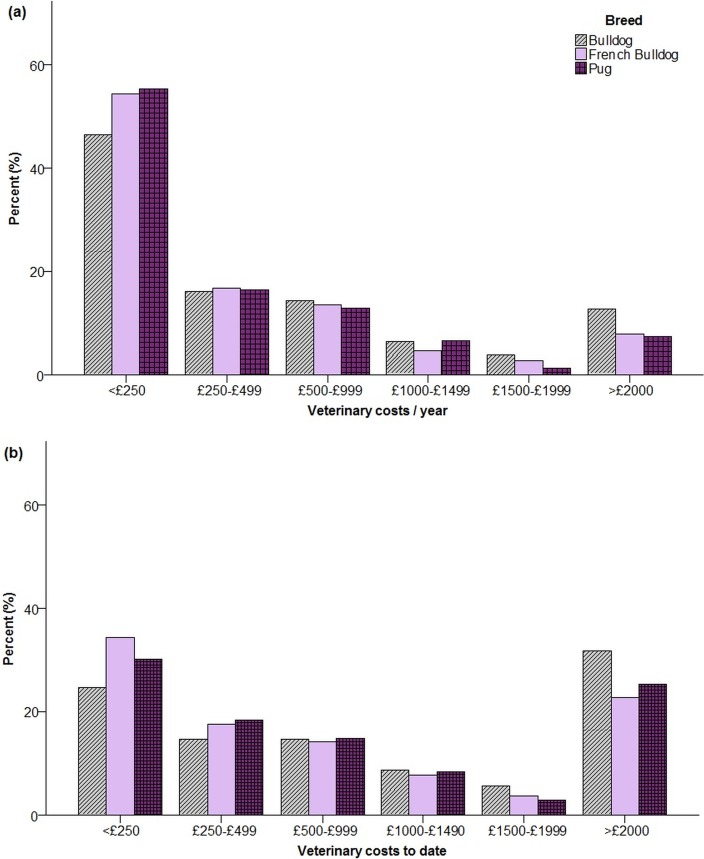
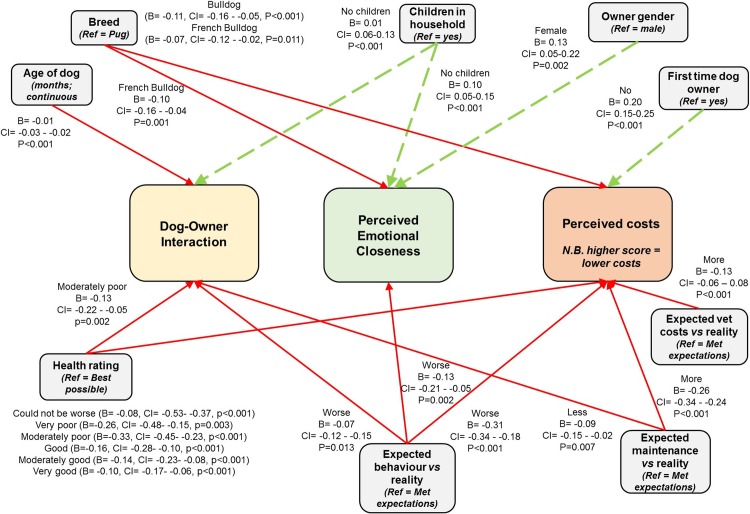
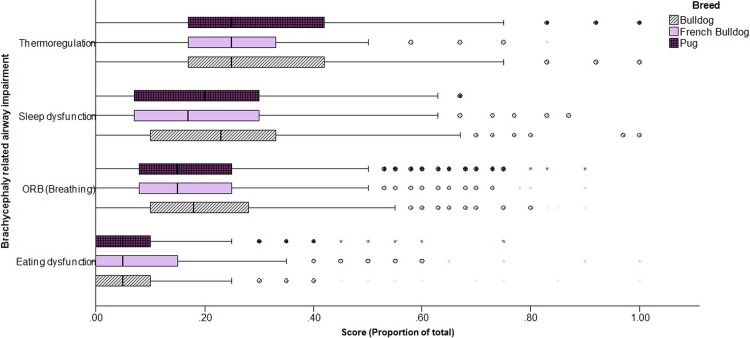
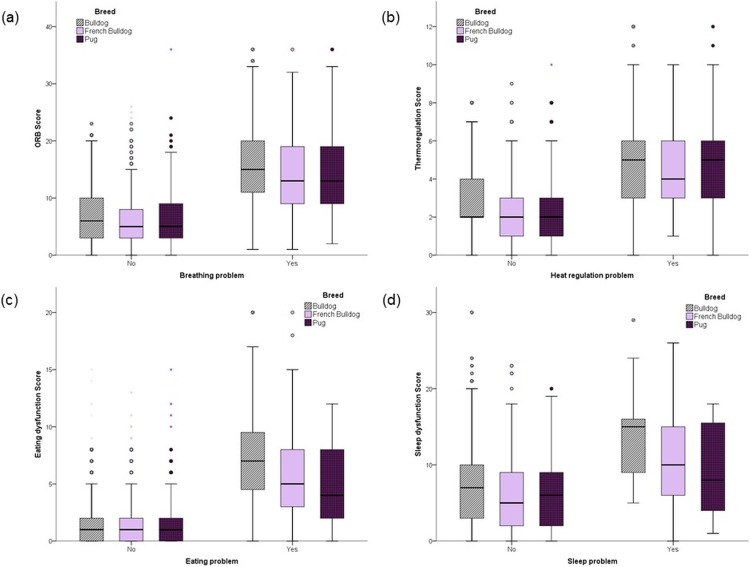
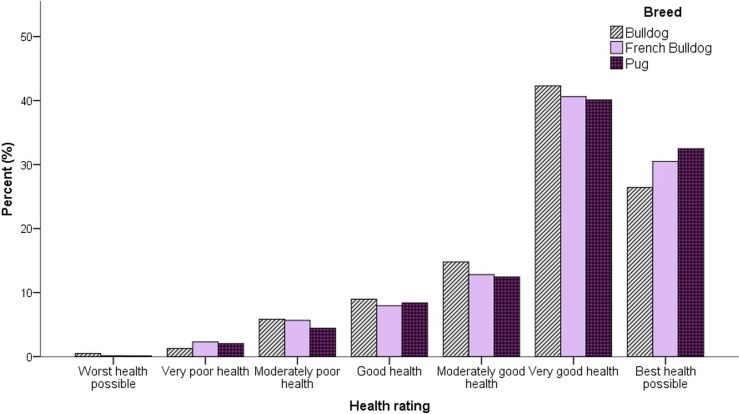
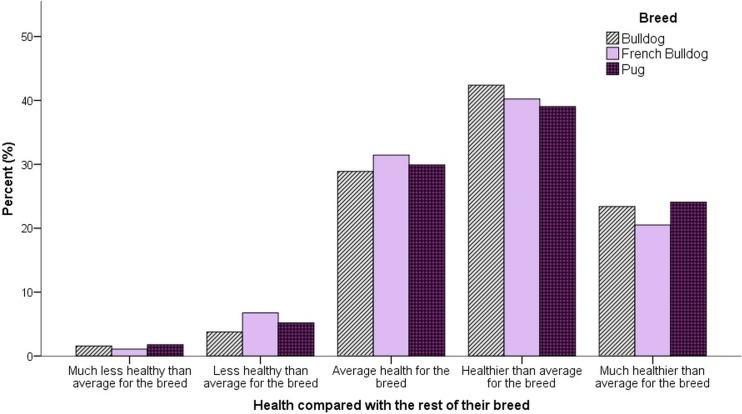
Popularity of brachycephalic (flat-faced) dog breeds is increasing internationally despite well-documented intrinsic health and welfare problems associated with their conformation. Given this apparent paradox, greater understanding of the expectations and reality for brachycephalic dog owners and factors driving the dog-owner bond are needed. This study reports a large-scale online survey with valid responses from 2168 owners of brachycephalic dogs (Pugs: n = 789, median age of dogs 2.5 years; French Bulldog: n = 741, median age 2.0 years; Bulldogs: n = 638, median age 2.5 years). The most common owner-reported disorders in their dogs were allergies, corneal ulcers, skin fold infections and Brachycephalic Obstructive Airway Syndrome (BOAS). One-fifth (19.9%) of owners reported that their dog had undergone at least one conformation-related surgery, 36.5% of dogs were reported with a problem with heat regulation, and 17.9% with problems breathing. Despite awareness of their dog's health issues, 70.9% owners considered their dog to be in very good health or the best health possible. Paradoxically, just 6.8% of owners considered their dog to be less healthy than average for their breed. Dog owner-relationships were extremely strong across all three breeds. Emotional closeness to their dog was highest for owners of Pugs, female owners, and owners with no children in the household. Ownership of brachycephalic dog breeds is a complex phenomenon, characterised by extremely strong dog-owner relationships and unrealistic perceptions of good health set against high levels of disease in relatively young dogs. Perceptual errors in owner beliefs appear to exist between brachycephalic owner perspectives of their own dog's health versus the health of the rest of their breed, which may be fuelled by cognitive dissonance processes. These novel data improve our understanding of the cognitive processes and relationships that facilitate the rising popularity of breeds that paradoxically are affected by high levels of conformation-related morbidity.
尽管短面犬种(扁脸犬)存在着大量已被记录在案的内在健康和福利问题,但它们在国际上的受欢迎程度仍在不断提高。鉴于这种明显的矛盾,我们需要更多地了解短面犬主人的期望和现实,以及驱动犬主关系的因素。本研究报告了一项大规模的在线调查,共收到 2168 名短面犬主人的有效回复(哈巴狗:n = 789,犬的中位数年龄为 2.5 岁;法国斗牛犬:n = 741,犬的中位数年龄为 2.0 岁;英国斗牛犬:n = 638,犬的中位数年龄为 2.5 岁)。主人报告的犬类最常见的疾病包括过敏、角膜溃疡、皮肤褶皱感染和短面气道阻塞综合征(BOAS)。五分之一(19.9%)的主人报告说,他们的狗至少做过一次与外形相关的手术,36.5%的狗被报告有热调节问题,17.9%的狗有呼吸问题。尽管主人意识到他们的狗存在健康问题,但 70.9%的主人认为他们的狗非常健康或处于最佳健康状态。矛盾的是,只有 6.8%的主人认为他们的狗比他们品种的平均健康状况差。三种犬种的犬主关系都非常紧密。对哈巴狗的主人来说,与狗的情感亲近度最高,其次是女性主人,以及家中没有孩子的主人。拥有短面犬种是一种复杂的现象,其特点是犬主关系极其紧密,以及对相对年轻的犬只存在高水平疾病的情况下,对良好健康状况的不切实际的看法。主人对自己的狗的健康看法与他们品种中其他狗的健康状况之间似乎存在认知错误,这可能是由认知失调过程引起的。这些新数据提高了我们对促进这种高发病率犬种流行的认知过程和关系的理解。