Theismann Jeffrey J, Hartwell Matthew J, Moulton Samuel G, Wong Stephanie E, Zhang Alan L
Department of Orthopedic Surgery, University of California San Francisco, 1500 Owens Street, San Francisco, California, U.S.A.
Arthrosc Sports Med Rehabil. 2024 Jul 2;6(5):100971. doi: 10.1016/j.asmr.2024.100971. eCollection 2024 Oct.
To assess the quality and presence of spin bias in the abstracts of systematic reviews and meta-analyses that evaluated the outcomes of using hip arthroscopy for the treatment of hip pathology in the setting of borderline hip dysplasia.
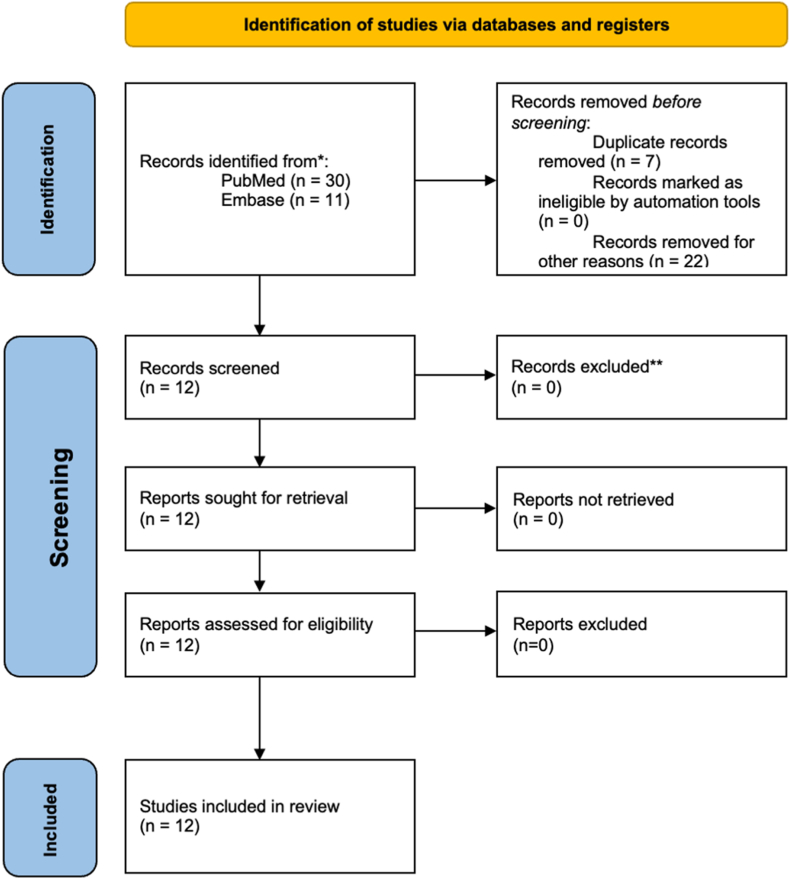
PubMed and Embase were searched using the terms "borderline hip dysplasia" and "systematic review" or "meta-analysis." Forty-one initial studies were identified, and 12 met the inclusion criteria. Study characteristics were then collected, and each study was evaluated for the 15 most common types of bias and study quality using A Measurement Tool to Assess Systematic Reviews 2 (AMSTAR 2) rating system. Inclusion criteria included a systematic review with or without meta-analysis, published in a peer-reviewed journal, accessible in English, with outcomes after hip arthroscopy for borderline hip dysplasia.
The 12 reviewed studies were published between 2016 and 2023, and 10 of the studies represented Level IV evidence (2 studies were Level III evidence). At least 1 form of spin was identified in 83% (10/12) of the included studies. Regarding the specific categories of spin type, misleading interpretation was identified in 58% (7/12) of the studies, misleading reporting in 67% (8/12) of the studies, and inappropriate extrapolation in 50% (6/12) of the studies. On the basis of the AMSTAR 2 assessment, 92% (11/12) were categorized as either low quality or critically low quality, with 1 study being categorized as moderate.
Spin bias is frequently encountered in the abstracts for systematic reviews and meta-analyses that evaluate outcomes after hip arthroscopy for the treatment of hip pathology in the setting of borderline hip dysplasia.
Level IV, systematic review of Level III and IV studies.
评估在评估髋关节镜治疗临界性髋关节发育不良背景下髋关节病变疗效的系统评价和荟萃分析摘要中的偏倚质量及存在情况。
使用“临界性髋关节发育不良”和“系统评价”或“荟萃分析”等术语在PubMed和Embase数据库中进行检索。共识别出41项初始研究,其中12项符合纳入标准。随后收集研究特征,并使用评估系统评价的测量工具2(AMSTAR 2)评分系统对每项研究的15种最常见偏倚类型和研究质量进行评估。纳入标准包括发表在同行评审期刊上、英文可获取、关于临界性髋关节发育不良髋关节镜治疗后疗效的有或无荟萃分析的系统评价。
12项纳入研究发表于2016年至2023年之间,其中10项研究为IV级证据(2项为III级证据)。在83%(10/12)的纳入研究中至少识别出1种形式的偏倚。关于偏倚类型的具体类别,58%(7/12)的研究存在误导性解释,67%(8/12)的研究存在误导性报告,50%(6/12)的研究存在不适当外推。根据AMSTAR 2评估,92%(11/12)被归类为低质量或极低质量,1项研究被归类为中等质量。
在评估临界性髋关节发育不良背景下髋关节镜治疗髋关节病变疗效的系统评价和荟萃分析摘要中经常遇到偏倚。
IV级,对III级和IV级研究的系统评价。