Gotoh Nanami, Oda Tsukasa, Kitamura Yuya, Shiraishi Natsuki, Aoyagi Runa, Omori Ayane, Yanagisawa Kota, Iida Minami, Itoi Yua, Negishi Hikaru, Matsumura Ikuko, Kasamatsu Tetsuhiro, Miyauchi Eiji, Sasaki Nobuo, Takada Satoru, Yokohama Akihiko, Handa Hiroshi, Murakami Hirokazu, Saitoh Takayuki
Department of Laboratory Science, Graduate School of Health Sciences, Gunma University, Maebashi, Japan.
Laboratory of Mucosal Ecosystem Design, Institute for Molecular and Cellular Regulation, Gunma University, Maebashi, Japan.
Int J Lab Hematol. 2025 Apr;47(2):276-287. doi: 10.1111/ijlh.14401. Epub 2024 Nov 13.
The link between DNA repair gene polymorphisms and cancer susceptibility has gained significant attention. Thus, we investigated the impact of base excision repair (BER) gene polymorphisms on acute myeloid leukemia (AML) risk and pathogenesis.
In total, 106 patients with AML and 191 healthy controls were included in the study, wherein polymorphisms in four BER genes (APEX1, MUTYH, OGG1, and XRCC1) were examined.
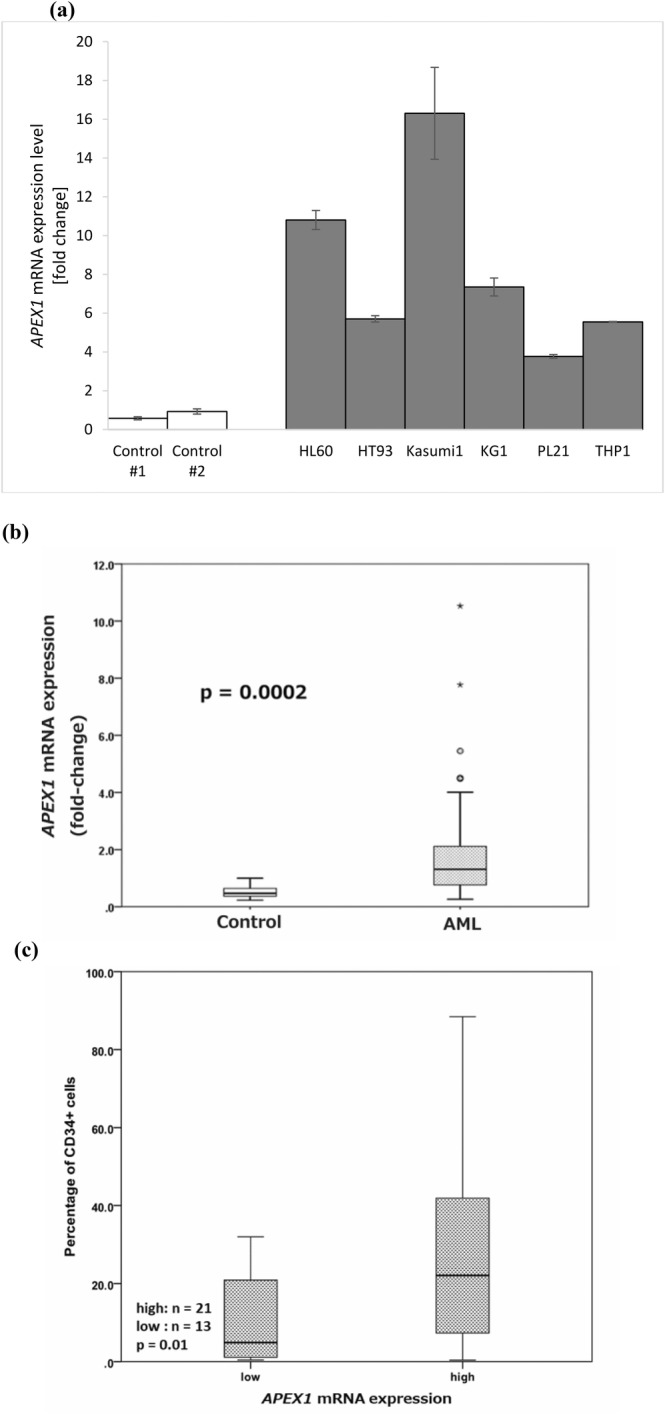
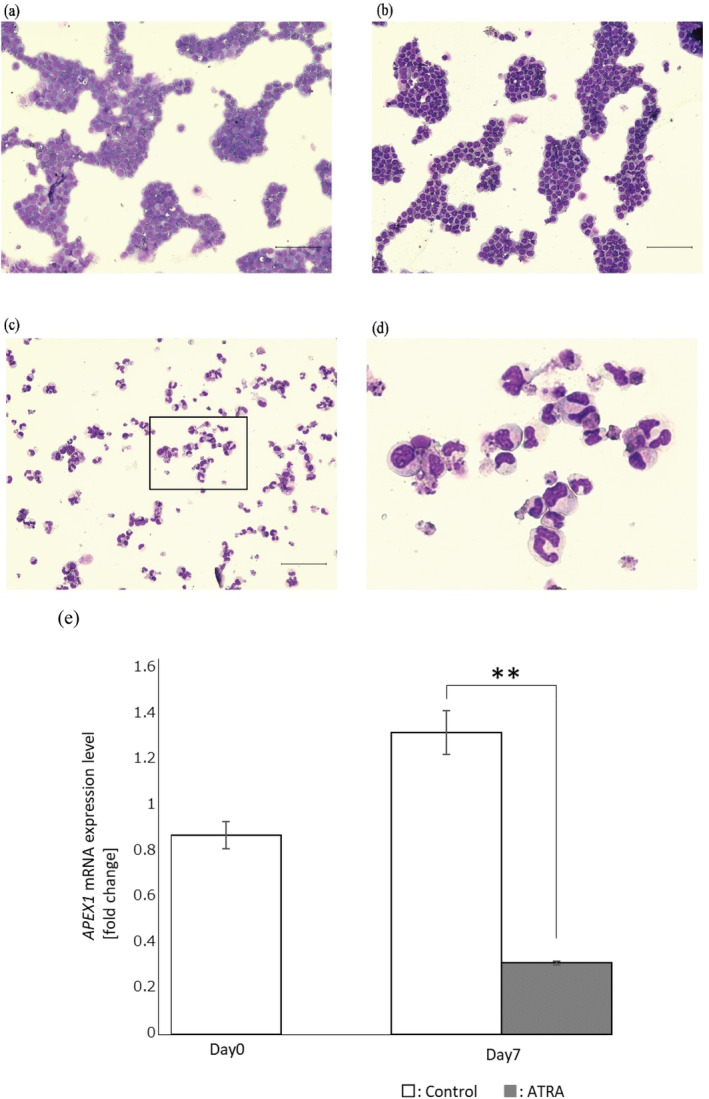
Notably, the APEX1-656 T>G polymorphism exhibited a significant association with AML risk in the recessive (TT vs. TG + GG) (p = 0.046) and co-dominant models (TT vs. GG) (p = 0.02). Assessing APEX1 expression levels, APEX1 expression was elevated in the bone marrow of patients with AML compared with that in controls (p = 0.02). Subsequently, we compared the percentages of CD34+ cells between the APEX1 high or low expression groups, revealing a significant difference (high vs. low = 29.9% vs. 11.5%, p = 0.01). Additionally, we observed reduced APEX1 expression in HL60 cells differentiated with all-trans retinoic acid (p < 0.001). We hypothesized that APEX1 expression could correlate with stemness and analyzed its expression in stem and differentiated cells.
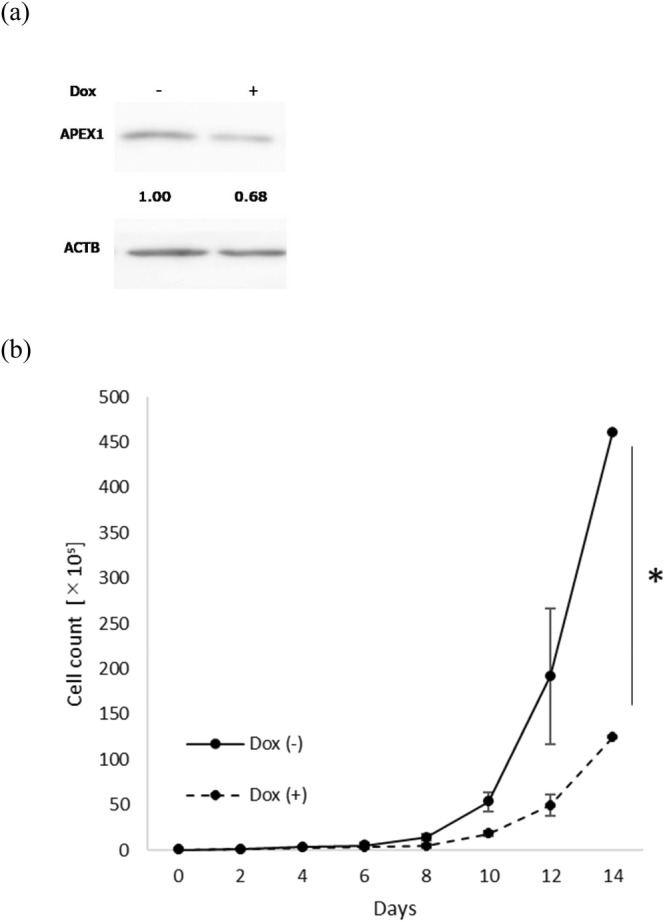
In the GSE48558 dataset, AML cells and normal CD34+ cells expressed APEX1 at higher levels than did granulocytes (p < 0.01). Functional experiments revealed that APEX1 knockdown led to a reduction in AML cell proliferation. These findings indicated that APEX1 polymorphisms were a potential risk factor for AML and highlighted the important role of APEX1 in regulating AML cell differentiation and proliferation.
DNA修复基因多态性与癌症易感性之间的联系已受到广泛关注。因此,我们研究了碱基切除修复(BER)基因多态性对急性髓系白血病(AML)风险和发病机制的影响。
本研究共纳入106例AML患者和191例健康对照,检测了四个BER基因(APEX1、MUTYH、OGG1和XRCC1)的多态性。
值得注意的是,APEX1 - 656 T>G多态性在隐性模型(TT与TG + GG相比)(p = 0.046)和共显性模型(TT与GG相比)(p = 0.02)中与AML风险显著相关。评估APEX1表达水平,与对照组相比,AML患者骨髓中APEX1表达升高(p = 0.02)。随后,我们比较了APEX1高表达组和低表达组之间CD34 +细胞的百分比,发现存在显著差异(高表达组与低表达组分别为29.9%与11.5%,p = 0.01)。此外,我们观察到用全反式维甲酸分化的HL60细胞中APEX1表达降低(p < 0.001)。我们推测APEX1表达可能与干性相关,并分析了其在干细胞和分化细胞中的表达。
在GSE48558数据集中,AML细胞和正常CD34 +细胞中APEX1的表达水平高于粒细胞(p < 0.01)。功能实验表明,敲低APEX1会导致AML细胞增殖减少。这些发现表明APEX1多态性是AML的潜在危险因素,并突出了APEX1在调节AML细胞分化和增殖中的重要作用。