Ding Jixin, Fishel Melissa L, Reed April M, McAdams Erin, Czader Magdalena B, Cardoso Angelo A, Kelley Mark R
Department of Pediatrics, Herman B. Wells Center for Pediatric Research, Indiana University School of Medicine, Indianapolis, Indiana.
Department of Pharmacology & Toxicology, Indiana University School of Medicine, Indianapolis, Indiana.
Mol Cancer Ther. 2017 Jul;16(7):1401-1411. doi: 10.1158/1535-7163.MCT-17-0099. Epub 2017 Apr 26.
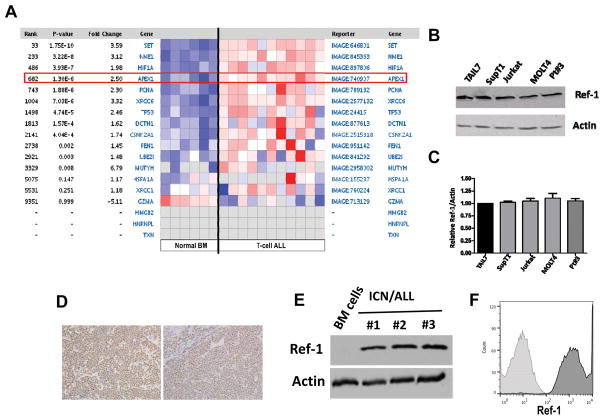
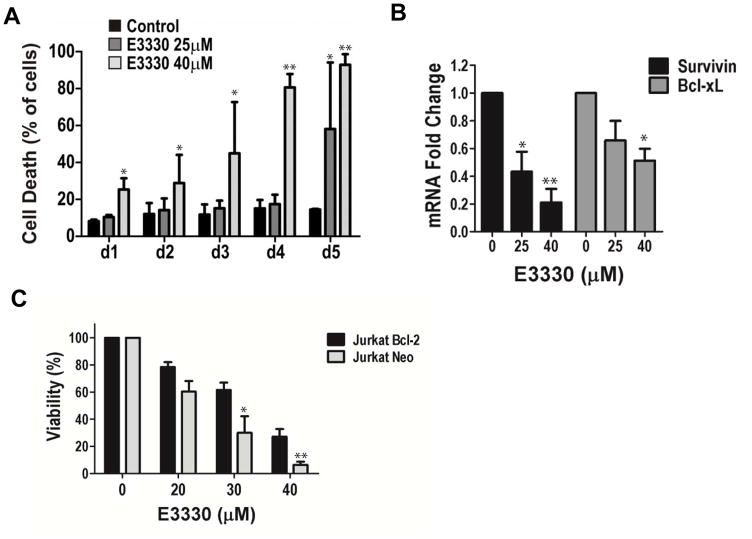
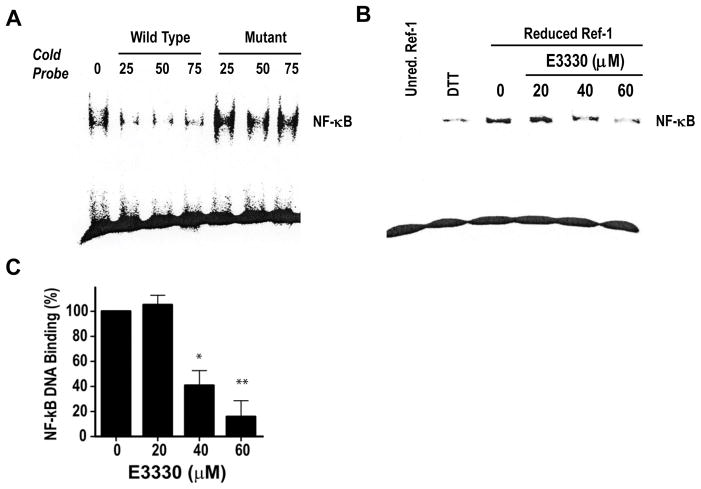
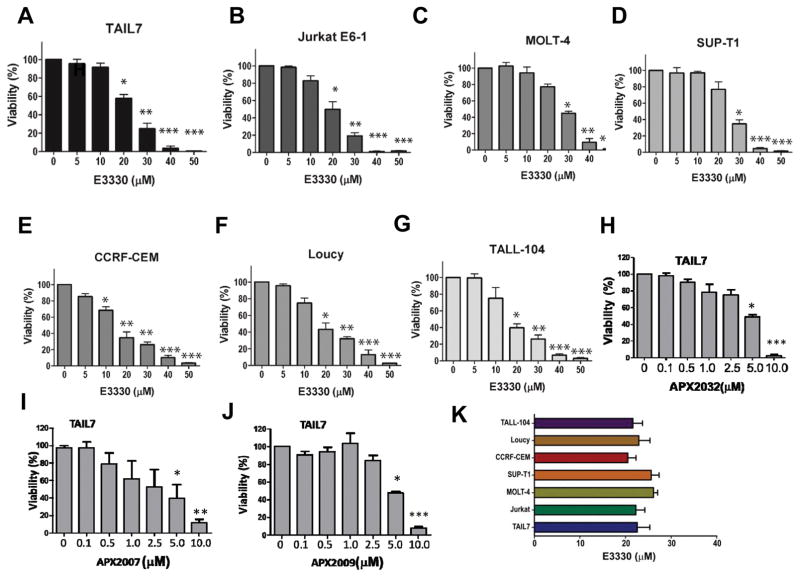
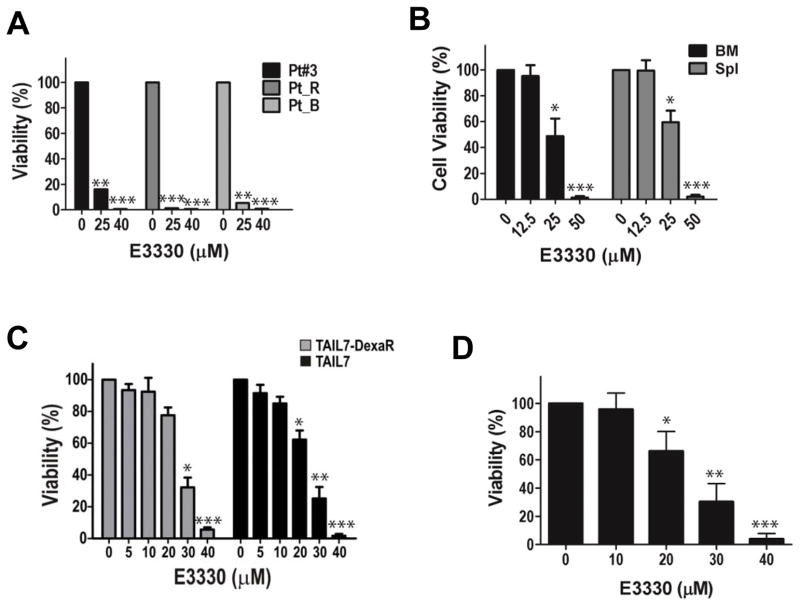
The increasing characterization of childhood acute lymphoblastic leukemia (ALL) has led to the identification of multiple molecular targets but has yet to translate into more effective targeted therapies, particularly for high-risk, relapsed T-cell ALL. Searching for master regulators controlling multiple signaling pathways in T-ALL, we investigated the multifunctional protein redox factor-1 (Ref-1/APE1), which acts as a signaling "node" by exerting redox regulatory control of transcription factors important in leukemia. Leukemia patients' transcriptome databases showed increased expression in T-ALL of Ref-1 and other genes of the Ref-1/SET interactome. Validation studies demonstrated that Ref-1 is expressed in high-risk leukemia T cells, including in patient biopsies. Ref-1 redox function is active in leukemia T cells, regulating the Ref-1 target NF-κB, and inhibited by the redox-selective Ref-1 inhibitor E3330. Ref-1 expression is not regulated by Notch signaling, but is upregulated by glucocorticoid treatment. E3330 disrupted Ref-1 redox activity in functional studies and resulted in marked inhibition of leukemia cell viability, including T-ALL lines representing different genotypes and risk groups. Potent leukemia cell inhibition was seen in primary cells from ALL patients, relapsed and glucocorticoid-resistant T-ALL cells, and cells from a murine model of Notch-induced leukemia. Ref-1 redox inhibition triggered leukemia cell apoptosis and downregulation of survival genes regulated by Ref-1 targets. For the first time, this work identifies Ref-1 as a novel molecular effector in T-ALL and demonstrates that Ref-1 redox inhibition results in potent inhibition of leukemia T cells, including relapsed T-ALL. These data also support E3330 as a specific Ref-1 small-molecule inhibitor for leukemia. .
儿童急性淋巴细胞白血病(ALL)特征的日益明确已促成多个分子靶点的识别,但尚未转化为更有效的靶向治疗方法,尤其是针对高危、复发的T细胞ALL。为寻找控制T-ALL中多个信号通路的主调控因子,我们研究了多功能蛋白氧化还原因子-1(Ref-1/APE1),它通过对白血病中重要的转录因子进行氧化还原调节控制,充当信号“节点”。白血病患者的转录组数据库显示,Ref-1以及Ref-1/SET相互作用组的其他基因在T-ALL中的表达增加。验证研究表明,Ref-1在高危白血病T细胞中表达,包括在患者活检组织中。Ref-1的氧化还原功能在白血病T细胞中具有活性,调节Ref-1的靶标核因子κB(NF-κB),并被氧化还原选择性Ref-1抑制剂E3330抑制。Ref-1的表达不受Notch信号通路调控,但受糖皮质激素治疗上调。在功能研究中,E3330破坏了Ref-1的氧化还原活性,并导致白血病细胞活力受到显著抑制,包括代表不同基因型和风险组的T-ALL细胞系。在ALL患者的原代细胞、复发和糖皮质激素耐药的T-ALL细胞以及Notch诱导白血病小鼠模型的细胞中均观察到强效的白血病细胞抑制作用。Ref-1氧化还原抑制引发白血病细胞凋亡,并下调由Ref-1靶标调控的存活基因。这项工作首次将Ref-1鉴定为T-ALL中的一种新型分子效应物,并证明Ref-1氧化还原抑制导致白血病T细胞受到强效抑制,包括复发的T-ALL。这些数据也支持E3330作为一种针对白血病的特异性Ref-1小分子抑制剂。