Chong June See, Doorbar John
Department of Pathology, University of Cambridge, Cambridge, CB2 1QP, UK.
Department of Pathology, University of Cambridge, Cambridge, CB2 1QP, UK.
Tumour Virus Res. 2024 Dec;18:200297. doi: 10.1016/j.tvr.2024.200297. Epub 2024 Nov 13.
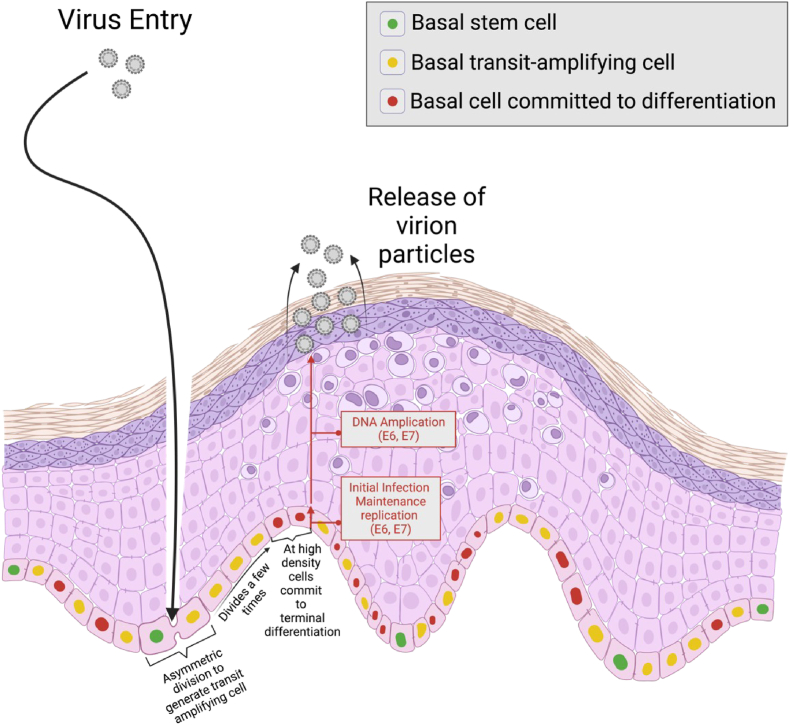
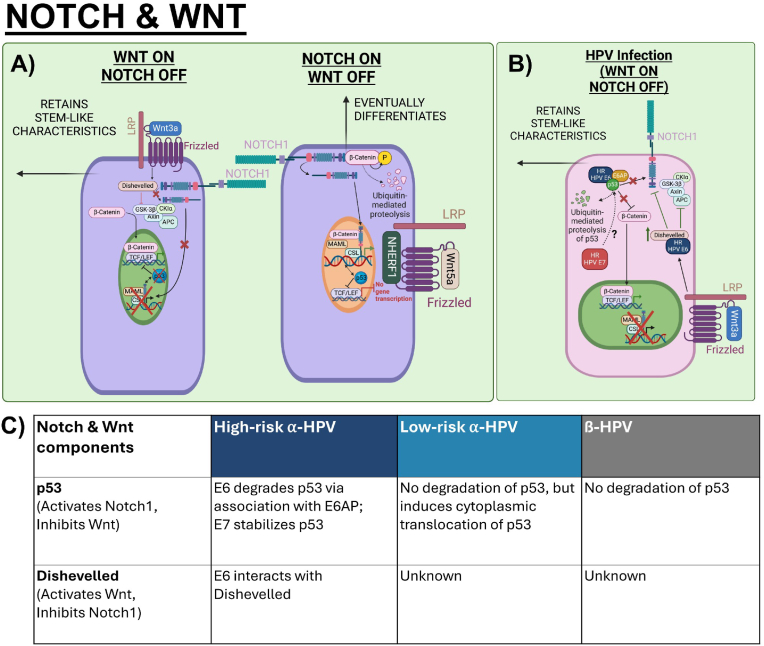
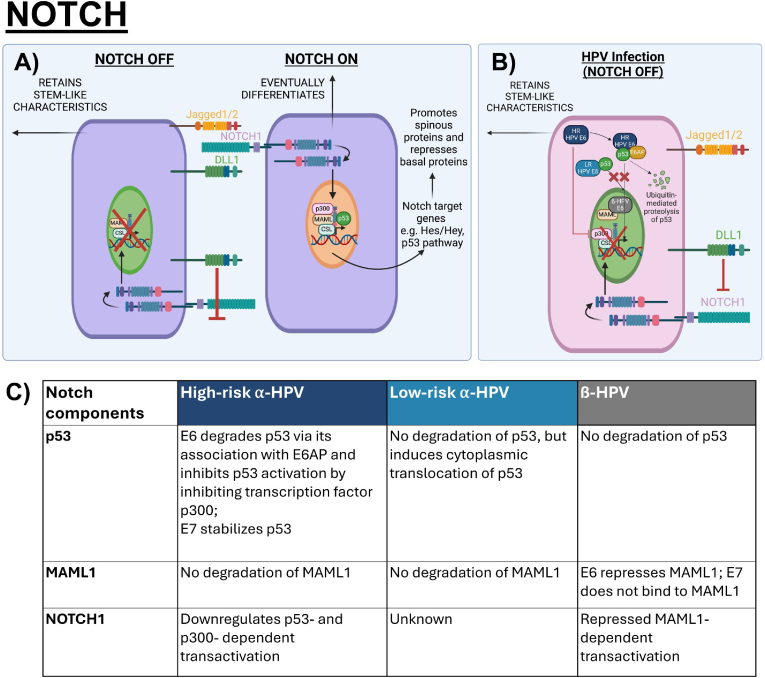
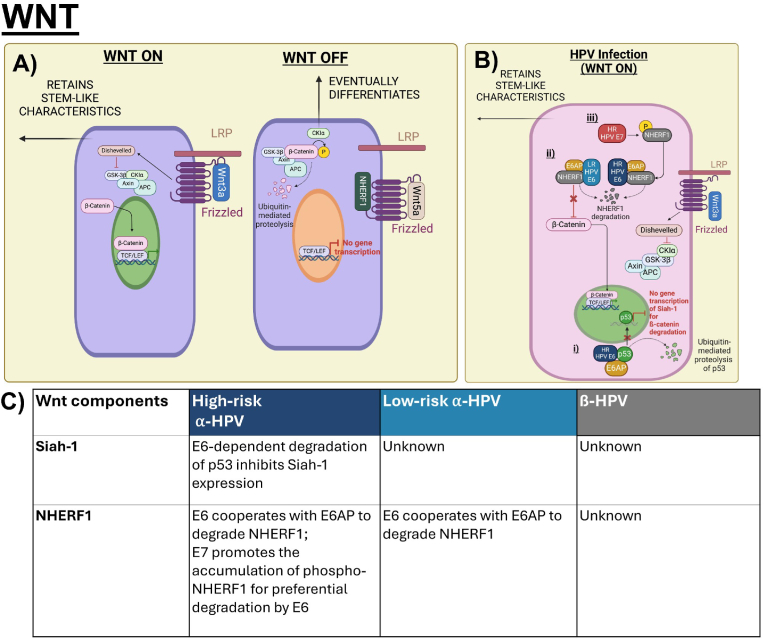
Highly conserved signalling pathways such as Notch and Wnt are essential in the regulation of differentiation and proliferation processes during adult tissue homeostasis. Human papillomaviruses (HPVs) have evolved with humans to manipulate these signalling pathways to establish a basal reservoir of infected cells by limiting HPV-infected keratinocyte differentiation whilst ensuring that differentiating cells are in a replication-competent state. Here, we focus on the canonical Notch and Wnt signalling pathways and their crosstalk to ensure cell-fate lineage determination during epithelial homeostasis. We then examine how HPVs use their E6 and E7 proteins to inhibit differentiation and maintain stem-like characteristics using Notch and Wnt in HPV-infected cells. Determining the functions of E6 and E7 in the maintenance of the infected cell reservoir, and the molecular crosstalk between Notch and Wnt is vital for our understanding of HPV persistence, and may represent an important factor in the development of therapeutic agents for HPV-associated disease.
高度保守的信号通路,如Notch和Wnt信号通路,在成体组织稳态期间的分化和增殖过程调控中至关重要。人乳头瘤病毒(HPV)与人类共同进化,通过操纵这些信号通路,在限制HPV感染的角质形成细胞分化的同时确保分化细胞处于复制 competent 状态,从而建立受感染细胞的基础储存库。在此,我们聚焦于经典的Notch和Wnt信号通路及其相互作用,以确保上皮稳态期间的细胞命运谱系决定。然后,我们研究HPV如何利用其E6和E7蛋白在HPV感染的细胞中通过Notch和Wnt信号通路抑制分化并维持干细胞样特征。确定E6和E7在维持受感染细胞储存库中的功能以及Notch和Wnt之间的分子相互作用,对于我们理解HPV持续性至关重要,并且可能是开发HPV相关疾病治疗药物的一个重要因素。 (注:“replication-competent”此处可能有误,推测可能是“replication-competent state”即“复制活性状态”,但按照要求未做修改。)