School of Biomedical Sciences, Li Ka Shing Faculty of Medicine, The University of Hong Kong, Hong Kong SAR, China.
Centre for Translational Stem Cell Biology, Hong Kong SAR, China.
Nat Commun. 2024 Nov 14;15(1):9868. doi: 10.1038/s41467-024-54152-x.
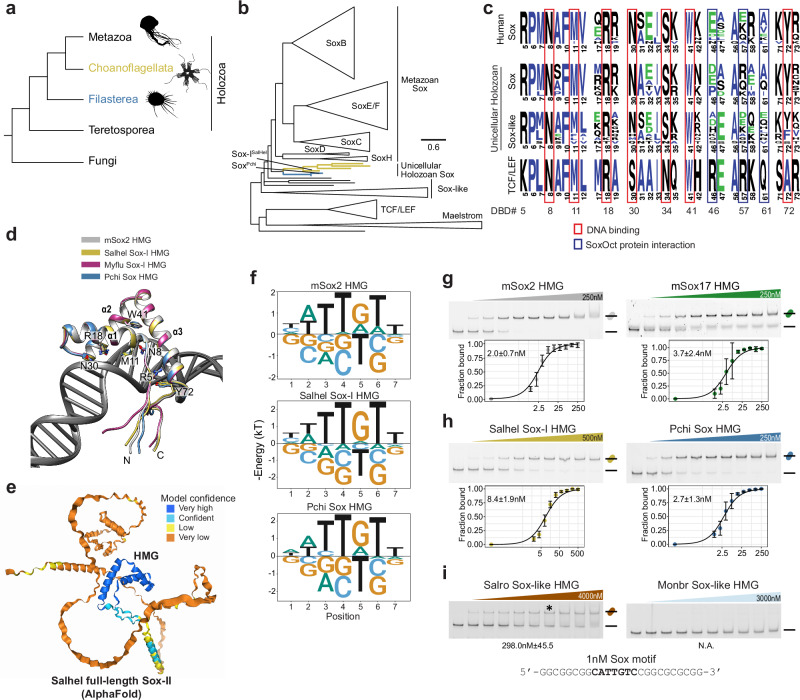
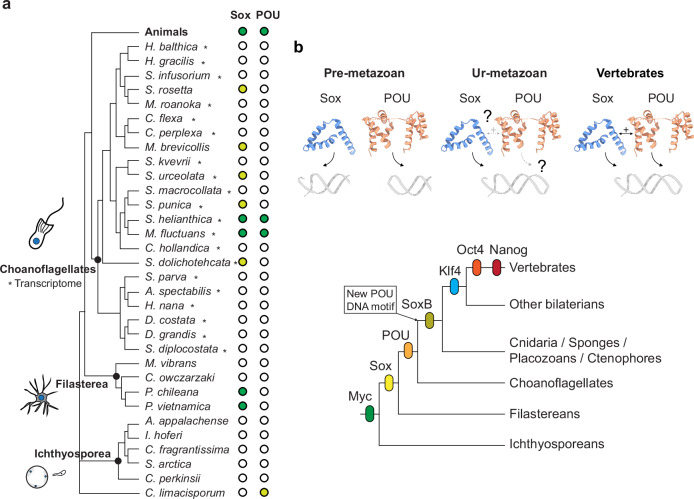
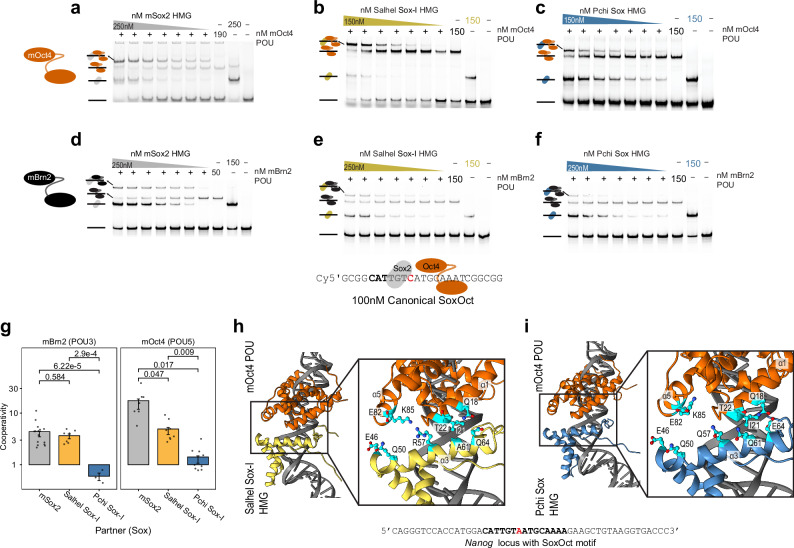
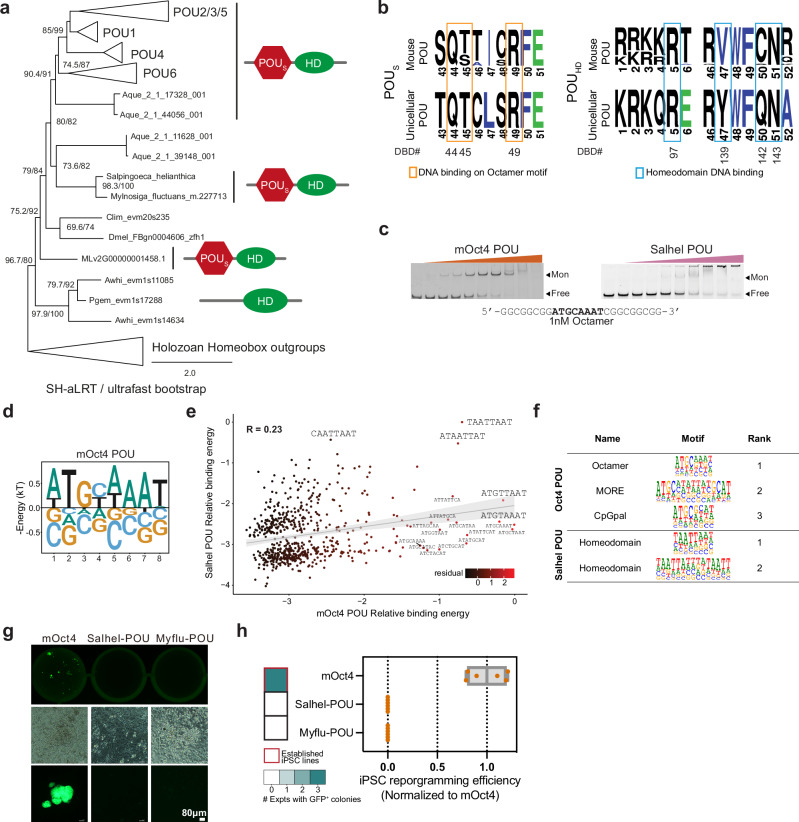
Stem cells are a hallmark of animal multicellularity. Sox and POU transcription factors are associated with stemness and were believed to be animal innovations, reported absent in their unicellular relatives. Here we describe unicellular Sox and POU factors. Choanoflagellate and filasterean Sox proteins have DNA-binding specificity similar to mammalian Sox2. Choanoflagellate-but not filasterean-Sox can replace Sox2 to reprogram mouse somatic cells into induced pluripotent stem cells (iPSCs) through interacting with the mouse POU member Oct4. In contrast, choanoflagellate POU has a distinct DNA-binding profile and cannot generate iPSCs. Ancestrally reconstructed Sox proteins indicate that iPSC formation capacity is pervasive among resurrected sequences, thus loss of Sox2-like properties fostered Sox family subfunctionalization. Our findings imply that the evolution of animal stem cells might have involved the exaptation of a pre-existing set of transcription factors, where pre-animal Sox was biochemically similar to extant Sox, whilst POU factors required evolutionary innovations.
干细胞是动物多细胞性的标志。Sox 和 POU 转录因子与干细胞有关,被认为是动物的创新,而在其单细胞亲属中不存在。在这里,我们描述了单细胞 Sox 和 POU 因子。领鞭毛虫和有孔虫的 Sox 蛋白具有与哺乳动物 Sox2 相似的 DNA 结合特异性。领鞭毛虫 Sox 蛋白(而非有孔虫 Sox 蛋白)可以通过与小鼠 POU 成员 Oct4 相互作用,将小鼠体细胞重编程为诱导多能干细胞(iPSCs)。相比之下,领鞭毛虫 POU 蛋白具有独特的 DNA 结合谱,不能生成 iPSCs。重建的祖先 Sox 蛋白表明,iPSC 形成能力在复活的序列中普遍存在,因此 Sox2 样特性的丧失促进了 Sox 家族的亚功能化。我们的发现表明,动物干细胞的进化可能涉及一组预先存在的转录因子的适应,其中前动物 Sox 在生化上与现存的 Sox 相似,而 POU 因子则需要进化创新。