Department of Molecular and Cellular Sports Medicine, Institute of Cardiovascular Research and Sports Medicine, German Sport University, Cologne, Germany.
Department of Human Biology, Institute of Nutrition and Translational Research in Metabolism, Maastricht University Medical Centre, Maastricht, The Netherlands.
Sci Rep. 2024 Nov 14;14(1):28079. doi: 10.1038/s41598-024-79385-0.
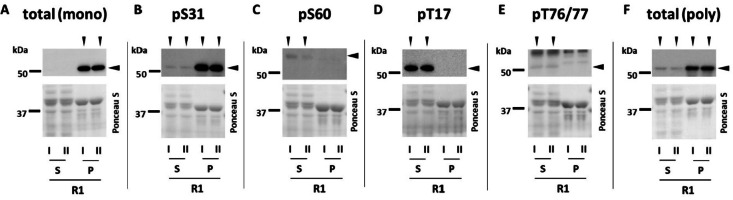
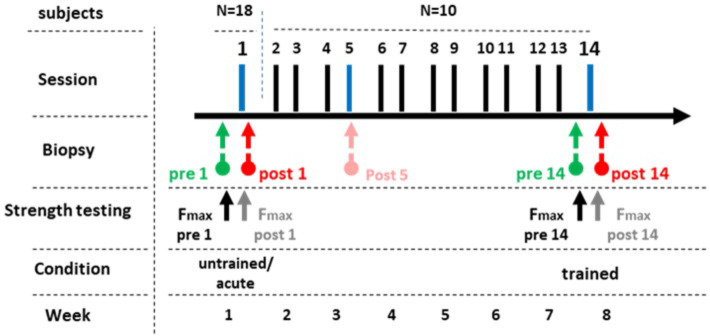
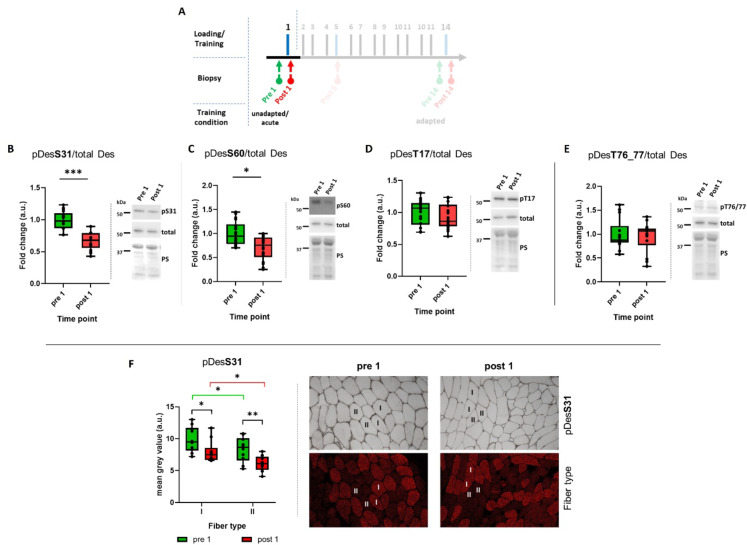
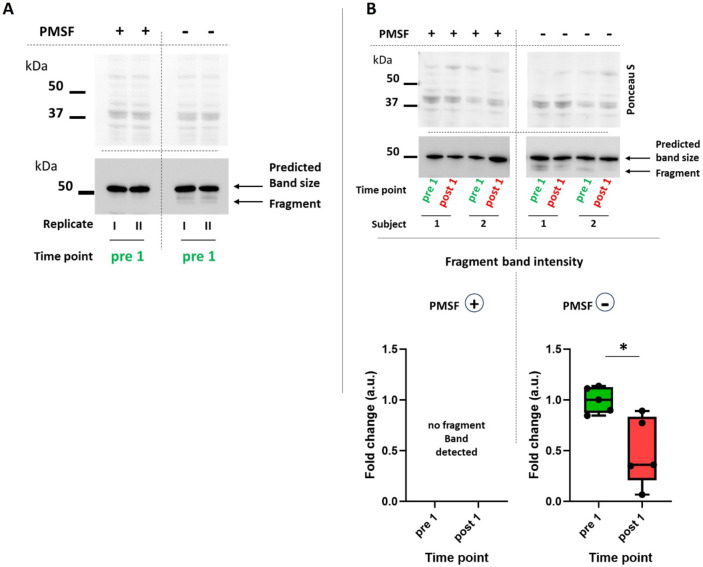
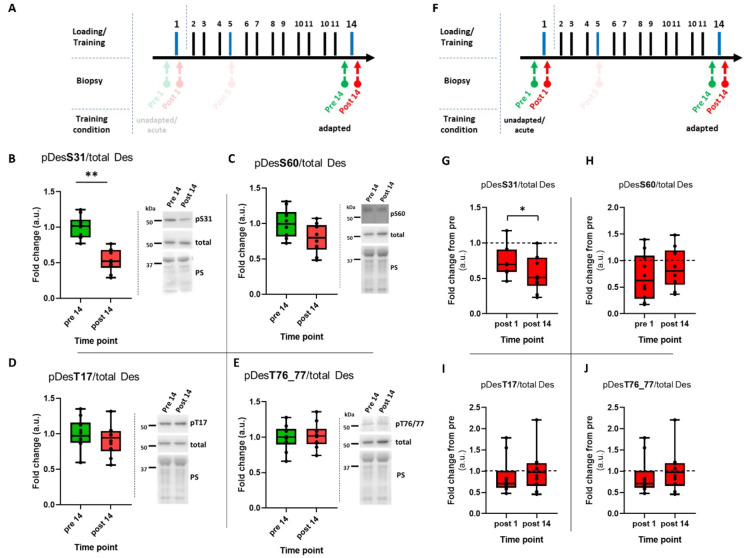
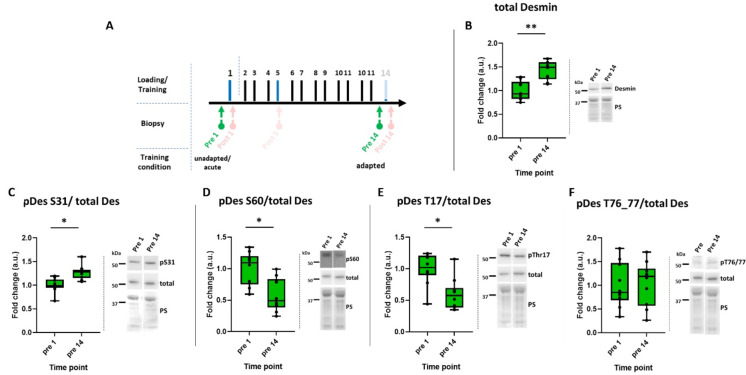
Desmin intermediate filaments play a crucial role in stress transmission and mechano-protection. The loss of its integrity triggers myofibril breakdown and muscle atrophy for which desmin phosphorylation (Des) is a priming factor. We investigated whether eccentric accentuated resistance exercise (RE) influences the regulation of Des, effecting its susceptibility to cleavage. Ten healthy persons performed 14 RE-sessions (2 per week). Muscle biopsies were collected in both untrained and trained conditions at rest (pre 1, pre 14) and one hour after RE (post 1, post 14). Western blotting and immunohistochemistry were utilized to assess desmin content, phosphorylation at several sites and susceptibility to cleavage. In untrained condition (pre 1, post 1), RE induced dephosphorylation of serin 31 and 60. Trained muscle exhibited more pronounced dephosphorylation at Serin 31 post-RE. Dephosphorylation was accompanied by reduced susceptibility of desmin to cleavage. Additionally, training increased total desmin content, upregulated baseline serine 31 phosphorylation and attenuated pDes at serine 60 and threonine 17. Our findings suggest that acute and repeated RE changes the phosphorylation pattern of desmin and its susceptibility to cleavage, highlighting Des as an adaptive mechanism in skeletal muscle, contributing to the proteostatic regulation in response to recurring stress.
结蛋白中间丝在传递应激和机械保护方面发挥着关键作用。其完整性的丧失会引发肌原纤维断裂和肌肉萎缩,而结蛋白磷酸化(Des)是引发这种现象的一个关键因素。我们研究了离心增强型抗阻运动(RE)是否会影响结蛋白的调节,从而影响其对切割的敏感性。10 名健康人进行了 14 次 RE 训练(每周 2 次)。在未训练和训练状态下(训练前 1 次,训练前 14 次),以及 RE 后 1 小时(训练后 1 次,训练后 14 次),采集肌肉活检。利用 Western blot 和免疫组化技术评估结蛋白含量、多个位点的磷酸化水平和对切割的敏感性。在未训练状态下(训练前 1 次,训练后 1 次),RE 导致丝氨酸 31 和 60 去磷酸化。训练后的肌肉在 RE 后 Serin 31 位点表现出更明显的去磷酸化。去磷酸化伴随着结蛋白对切割敏感性的降低。此外,训练增加了总结蛋白含量,上调了基础 Serin 31 磷酸化水平,并减弱了 pDes 在丝氨酸 60 和苏氨酸 17 位点的磷酸化。我们的研究结果表明,急性和重复的 RE 改变了结蛋白的磷酸化模式及其对切割的敏感性,这表明 Des 是骨骼肌中的一种适应机制,有助于对反复出现的应激做出蛋白稳态调节。