Department of Nephrology, First Medical Center of Chinese PLA General Hospital, Nephrology Institute of the Chinese PLA, State Key Laboratory of Kidney Diseases, National Clinical Research Center for Kidney Diseases, Beijing Key Laboratory of Kidney Disease Research, Beijing, 100853, China.
Healthcare Office of Service Bureau, Agency for Offices Administration, Central Military Commission, People's Republic of China, Beijing, 100034.
Stem Cell Res Ther. 2024 Nov 14;15(1):427. doi: 10.1186/s13287-024-04025-3.
Although mesenchymal stem cells (MSCs) have been proven to be appropriate candidates for the treatment of AKI-CKD, their efficacy is limited and variable. Astilbin (AST) had a protective effect on MSCs from oxidative stress via ROS-scavenging, however, whether it can improve MSCs' renoprotection and the underlying mechanism need to be elucidated.
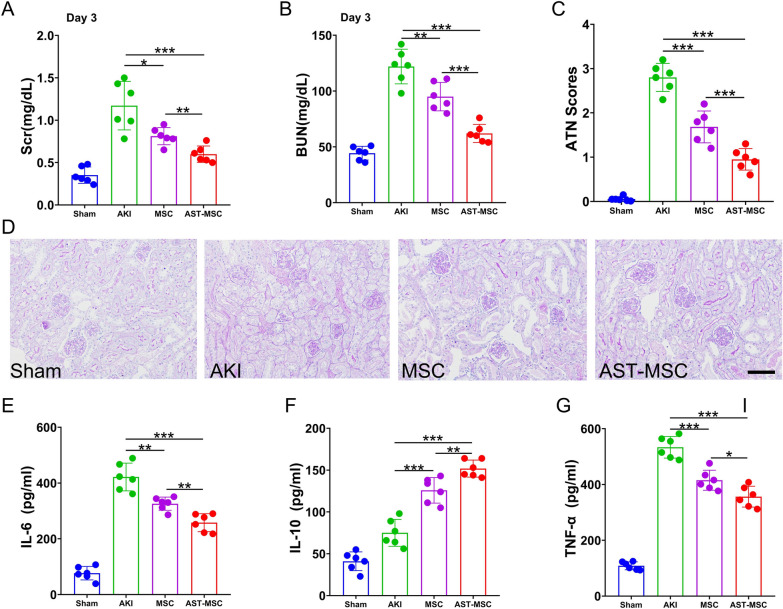
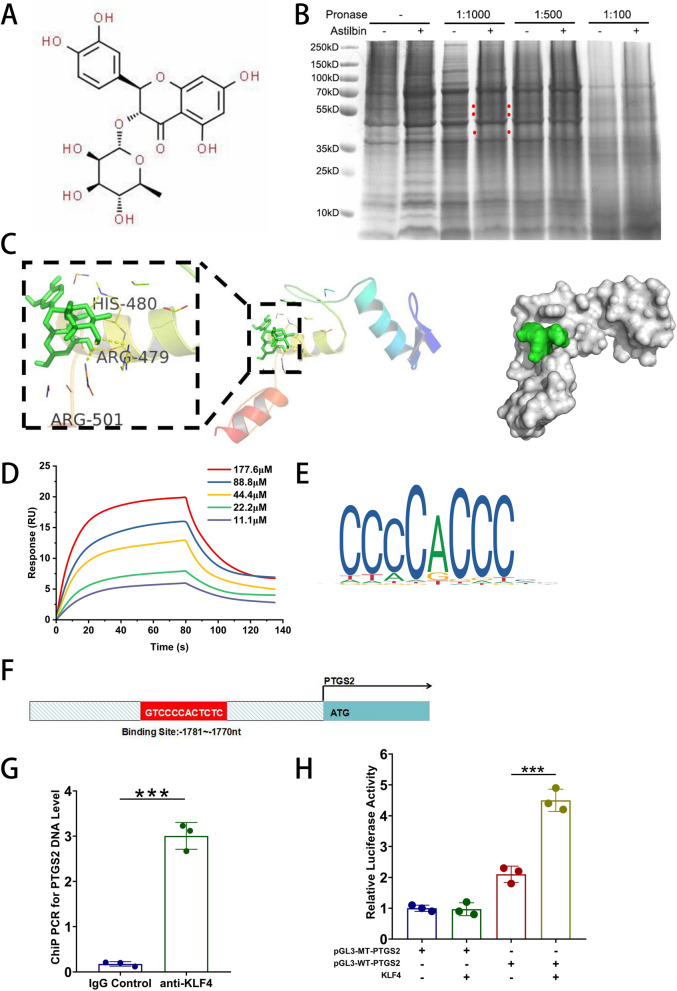
AST-pretreated MSCs were administered intravenously into the ischemia-reperfusion injury mice models and the renal function, pathological changes and inflammation. Were evaluated. In addition, DARTS, molecular docking, surface plasma resonance(SPR), dual-luciferase reporter gene assay and the ChIP-PCR were utilized to explore the potential signaling pathways through which AST exert renal protective effects on MSCs.
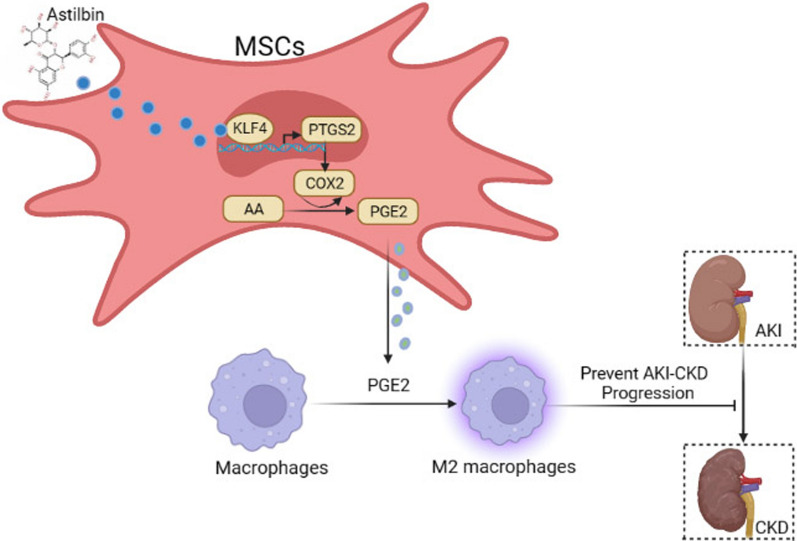
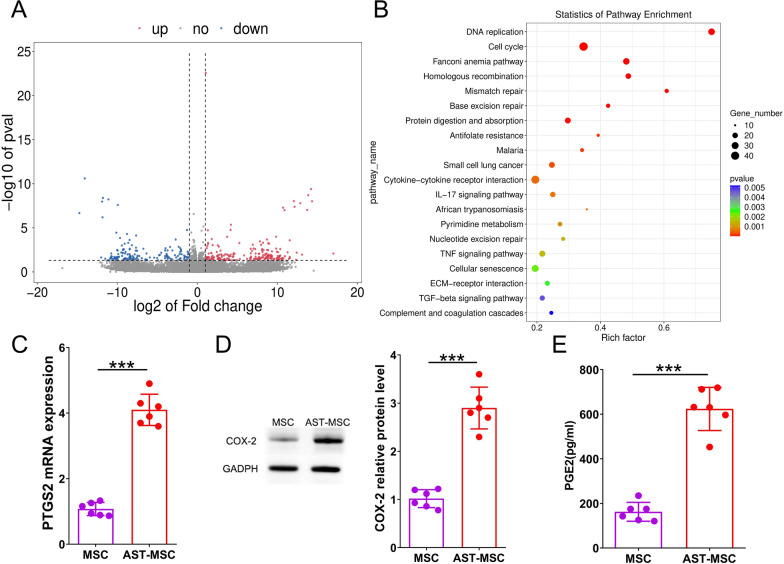
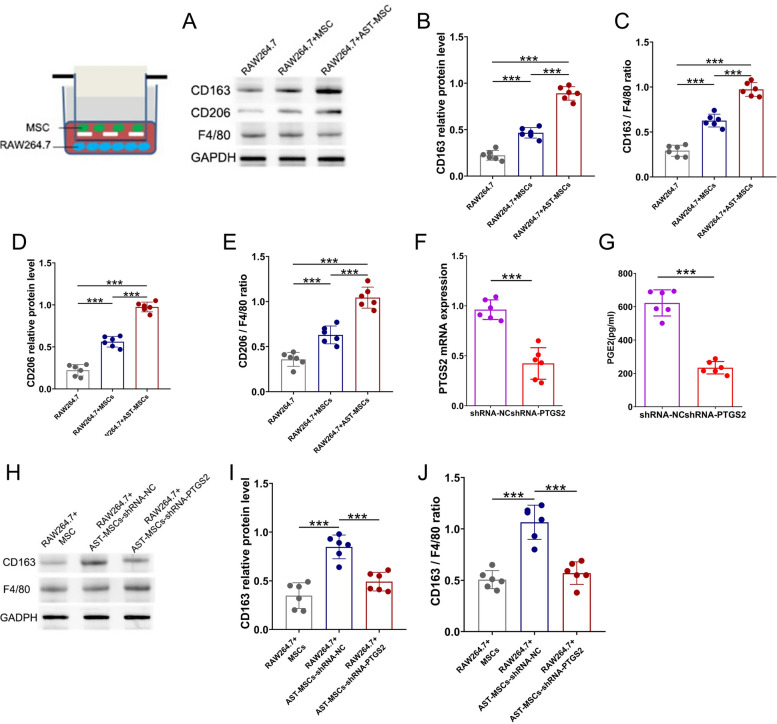
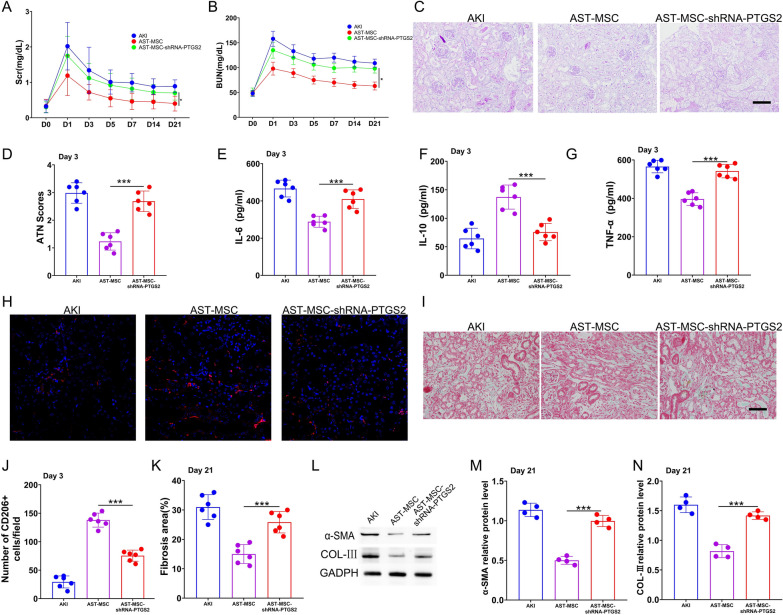
AST-pretreated MSCs markedly improved kidney function, reduced kidney pathological injury and inflammation in AKI and AKI-CKD mice. RNA-seq results showed that PTGS2 related pathway was significantly up-regulated in MSCs after AST pretreatment. DARTS assay, molecular docking and SPR assay revealed that AST could bind with the transcriptional factor of Kruppel-Like Factor 4(KLF4) protein. The promoter of PTGS2 had the binding and transcriptional activation by KLF4. Furthermore, AST pretreatment promoted the secretion of PGE2 in MSCs. And then the westren blot results showed that the protein levels of CD163 and CD206 were upregulated after coculture in AST-pretreated MSCs, indicating that the polarization of RAW264.7 cells towards M2-like macrophages was induced. Knockdown of PTGS2 reversed the ability of AST-pretreated MSCs in converting macrophages to M2 phenotype and reducing their therapeutic effects on AKI-CKD mice.
AST pretreatment enhances the efficacy of MSCs on AKI and AKI-CKD mice by inducing of M2-like phenotype polarization in macrophages through the PTGS2-mediated pathway. This approach not only provides a novel strategy to strengthen the capability of MSCs but also helps elucidate the beneficial effects of the Chinese herbal medicine AST.
间充质干细胞(MSCs)已被证明是治疗急性肾损伤-慢性肾脏病(AKI-CKD)的合适候选细胞,但疗效有限且存在差异。紫云英苷(AST)通过清除活性氧簇(ROS)对 MSCs 氧化应激具有保护作用,然而,AST 是否能提高 MSCs 的肾脏保护作用及其潜在机制仍需阐明。
将 AST 预处理的 MSCs 静脉注射到缺血再灌注损伤的小鼠模型中,评估肾功能、病理变化和炎症情况。此外,还利用 DARTS、分子对接、表面等离子体共振(SPR)、双荧光素酶报告基因检测和 ChIP-PCR 来探讨 AST 对 MSCs 发挥肾脏保护作用的潜在信号通路。
AST 预处理的 MSCs 可显著改善 AKI 和 AKI-CKD 小鼠的肾功能,减轻肾脏病理损伤和炎症。RNA-seq 结果显示,AST 预处理后 MSCs 中 PTGS2 相关通路显著上调。DARTS 实验、分子对接和 SPR 实验表明,AST 可与转录因子 Kruppel 样因子 4(KLF4)蛋白结合。PTGS2 的启动子可被 KLF4 结合并激活转录。此外,AST 预处理可促进 MSCs 分泌 PGE2。Western blot 结果显示,在 AST 预处理的 MSCs 共培养后,RAW264.7 细胞的 CD163 和 CD206 蛋白水平上调,表明 RAW264.7 细胞向 M2 样巨噬细胞极化。PTGS2 敲低后,AST 预处理 MSCs 诱导巨噬细胞向 M2 表型转化及改善 AKI-CKD 小鼠治疗效果的能力被逆转。
AST 预处理通过 PTGS2 介导的通路诱导巨噬细胞向 M2 样表型极化,增强 MSCs 对 AKI 和 AKI-CKD 小鼠的疗效。该方法不仅为增强 MSCs 的能力提供了一种新策略,也有助于阐明中药 AST 的有益作用。