Joshi Maithili, Zhao Zongmin, Mitragotri Samir
John A. Paulson School of Engineering and Applied Sciences Harvard University Allston Massachusetts USA.
Wyss Institute for Biologically Inspired Engineering at Harvard University Boston Massachusetts USA.
Bioeng Transl Med. 2024 May 1;9(6):e10673. doi: 10.1002/btm2.10673. eCollection 2024 Nov.
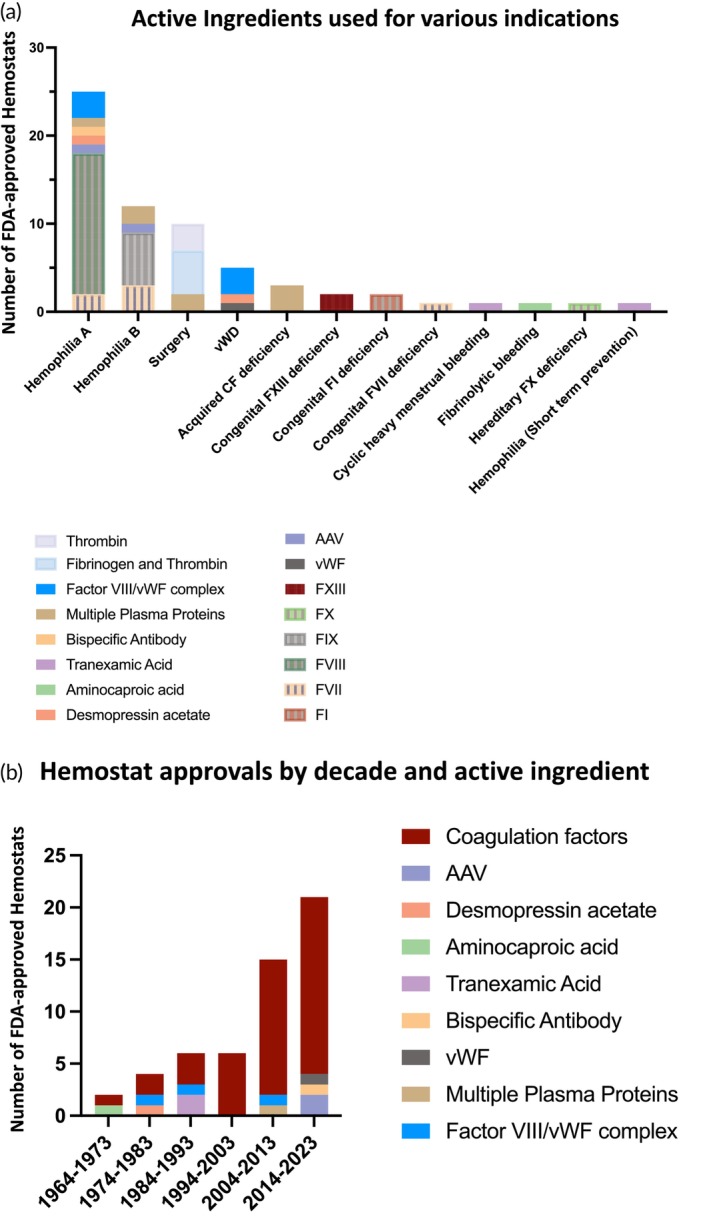
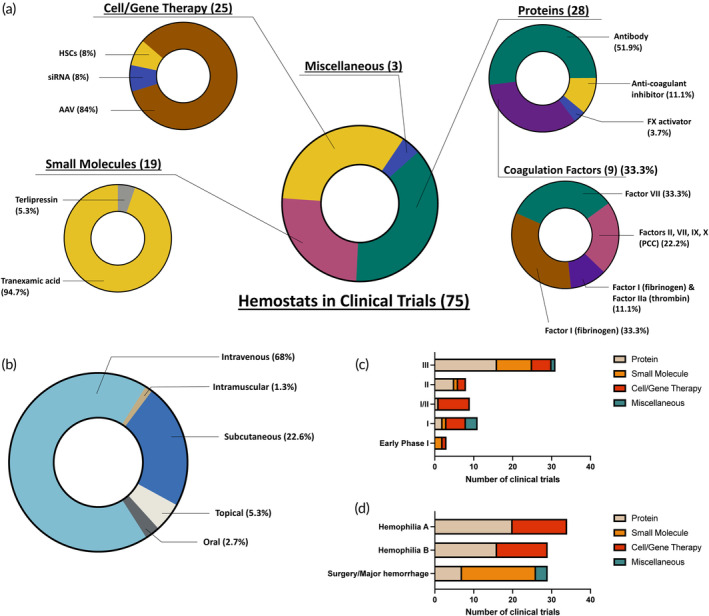
Given the prevalence of hematological conditions, surgeries, and trauma incidents, hemostats-therapeutics designed to control and arrest bleeding-are an important tool in patient care. The prophylactic and therapeutic use of hemostats markedly enhances survival rates and improves the overall quality of life of patients suffering from these conditions. Since their inception in the 1960s, hemostats have witnessed remarkable progress in terms of the active ingredients utilized, therapeutic outcomes, demonstrated efficacy, and the storage stability. In this review, we provide a comprehensive analysis of commercially available hemostats approved by the FDA, along with newer investigative hemostats currently in active clinical trials. We delve into the modality of active ingredients, route of administration, formulation type, and disease indications of these approved and investigative hemostats. Further, we analyze the trends observed in the hemostat actives for Hemophilia A and B, concluding with insights into the emerging patterns and noteworthy developments to watch for in this dynamic field.
鉴于血液学疾病、手术和创伤事件的普遍性,旨在控制和止血的止血剂——治疗药物——是患者护理中的重要工具。止血剂的预防性和治疗性使用显著提高了生存率,并改善了患有这些疾病的患者的整体生活质量。自20世纪60年代问世以来,止血剂在所用活性成分、治疗效果、已证实的疗效和储存稳定性方面都取得了显著进展。在本综述中,我们对美国食品药品监督管理局(FDA)批准的市售止血剂以及目前正在进行积极临床试验的新型研究性止血剂进行了全面分析。我们深入探讨了这些已批准和研究性止血剂的活性成分模式、给药途径、剂型类型和疾病适应症。此外,我们分析了甲型和乙型血友病止血剂活性成分的观察趋势,最后对这一动态领域中出现的模式和值得关注的重要发展进行了深入分析。