Department of Neurodegenerative Disease, UCL Queen Square Institute of Neurology, London, UK.
Dementia Research Institute at UCL, London, UK.
Acta Neuropathol. 2024 Nov 15;148(1):65. doi: 10.1007/s00401-024-02820-z.
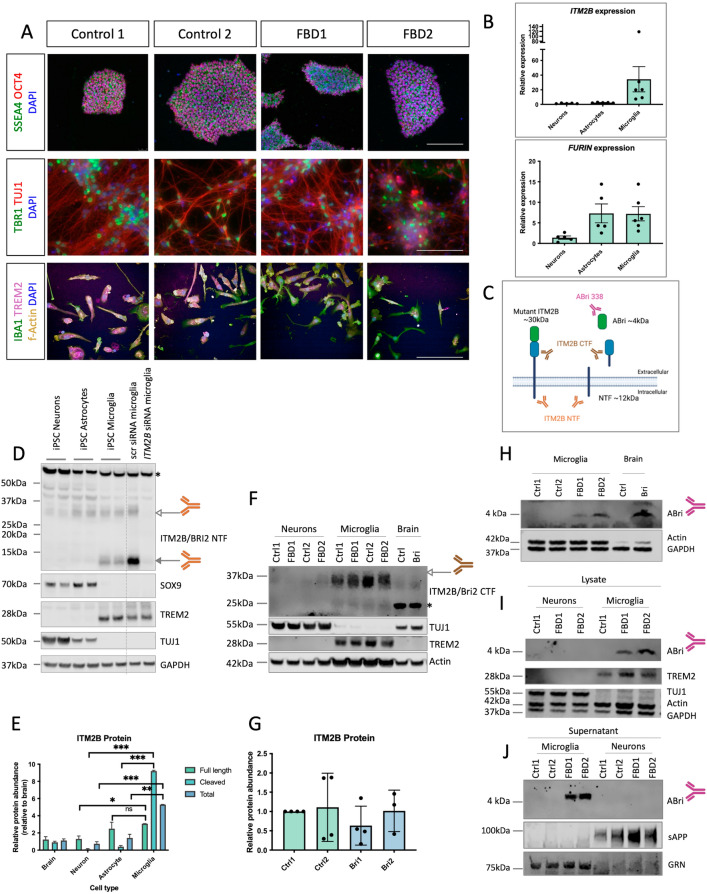
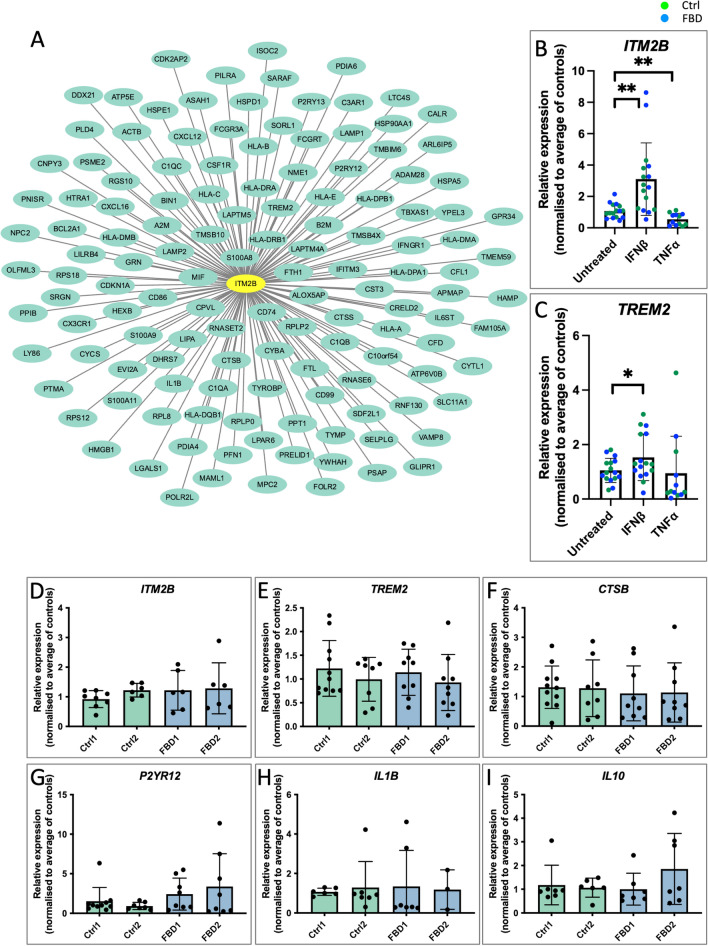
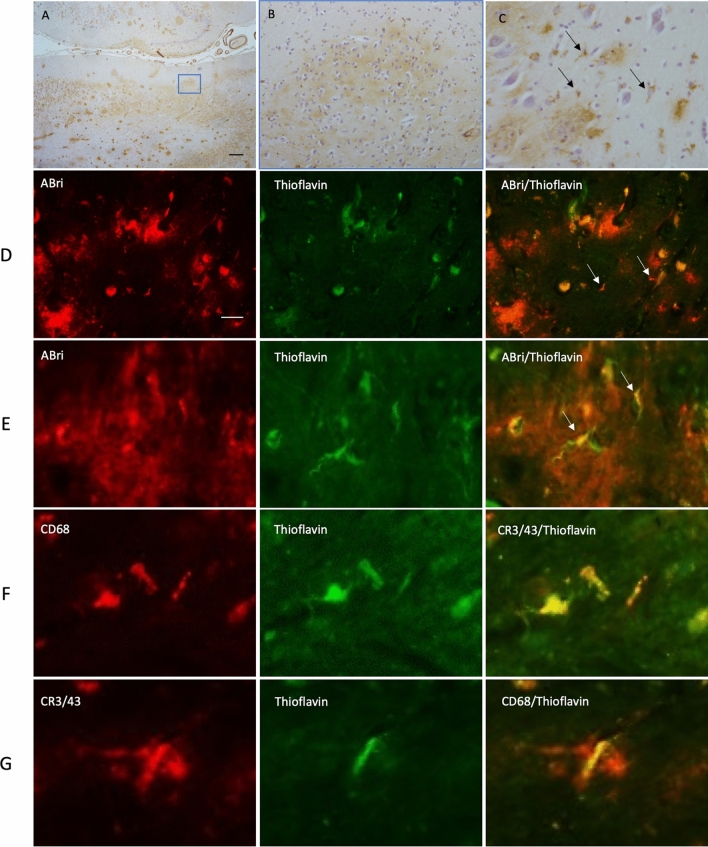
Mutations in ITM2B cause familial British, Danish, Chinese, and Korean dementias. In familial British dementia (FBD), a mutation in the stop codon of the ITM2B gene (also known as BRI2) causes a C-terminal cleavage fragment of the ITM2B/BRI2 protein to be extended by 11 amino acids. This fragment, termed amyloid-Bri (ABri), is highly insoluble and forms extracellular plaques in the brain. ABri plaques are accompanied by tau pathology, neuronal cell death and progressive dementia, with striking parallels to the aetiology and pathogenesis of Alzheimer's disease. The molecular mechanisms underpinning FBD are ill-defined. Using patient-derived induced pluripotent stem cells, we show that expression of ITM2B/BRI2 is 34-fold higher in microglia than neurons and 15-fold higher in microglia compared with astrocytes. This cell-specific enrichment is supported by expression data from both mouse and human brain tissue. ITM2B/BRI2 protein levels are higher in iPSC-microglia compared with neurons and astrocytes. The ABri peptide was detected in patient iPSC-derived microglial lysates and conditioned media but was undetectable in patient-derived neurons and control microglia. The pathological examination of post-mortem tissue supports the presence of ABri in microglia that are in proximity to pre-amyloid deposits. Finally, gene co-expression analysis supports a role for ITM2B/BRI2 in disease-associated microglial responses. These data demonstrate that microglia are major contributors to the production of amyloid forming peptides in FBD, potentially acting as instigators of neurodegeneration. Additionally, these data also suggest ITM2B/BRI2 may be part of a microglial response to disease, motivating further investigations of its role in microglial activation. These data have implications for our understanding of the role of microglia and the innate immune response in the pathogenesis of FBD and other neurodegenerative dementias including Alzheimer's disease.
ITM2B 基因突变导致家族性英国、丹麦、中国和韩国痴呆症。在家族性英国痴呆症 (FBD) 中,ITM2B 基因的终止密码子突变导致 ITM2B/BRI2 蛋白的 C 末端裂解片段延伸 11 个氨基酸。这个片段,称为淀粉样蛋白-Bri (ABri),高度不溶,并在大脑中形成细胞外斑块。ABri 斑块伴随着 tau 病理学、神经元细胞死亡和进行性痴呆,与阿尔茨海默病的病因和发病机制有惊人的相似之处。FBD 的分子机制尚不清楚。使用患者来源的诱导多能干细胞,我们发现 ITM2B/BRI2 的表达在小胶质细胞中比神经元高 34 倍,比星形胶质细胞高 15 倍。这种细胞特异性富集得到了来自小鼠和人脑组织的表达数据的支持。与神经元和星形胶质细胞相比,iPSC-小胶质细胞中的 ITM2B/BRI2 蛋白水平更高。ABri 肽在患者 iPSC 衍生的小胶质细胞裂解物和条件培养基中被检测到,但在患者来源的神经元和对照小胶质细胞中无法检测到。死后组织的病理检查支持 ABri 存在于靠近淀粉样前体沉积的小胶质细胞中。最后,基因共表达分析支持 ITM2B/BRI2 在与疾病相关的小胶质细胞反应中的作用。这些数据表明,小胶质细胞是 FBD 中产生淀粉样形成肽的主要贡献者,可能是神经退行性变的引发者。此外,这些数据还表明 ITM2B/BRI2 可能是小胶质细胞对疾病反应的一部分,这促使进一步研究其在小胶质细胞激活中的作用。这些数据对我们理解小胶质细胞的作用以及先天免疫反应在 FBD 和包括阿尔茨海默病在内的其他神经退行性痴呆症的发病机制中的作用具有重要意义。