Department of Psychiatry and Neurochemistry, Sahlgrenska Academy, University of Gothenburg, Mölndal, Sweden.
Department of Neuroscience, Physiology and Pharmacology, University College London, London, UK.
J Neurochem. 2022 Nov;163(3):233-246. doi: 10.1111/jnc.15694. Epub 2022 Sep 25.
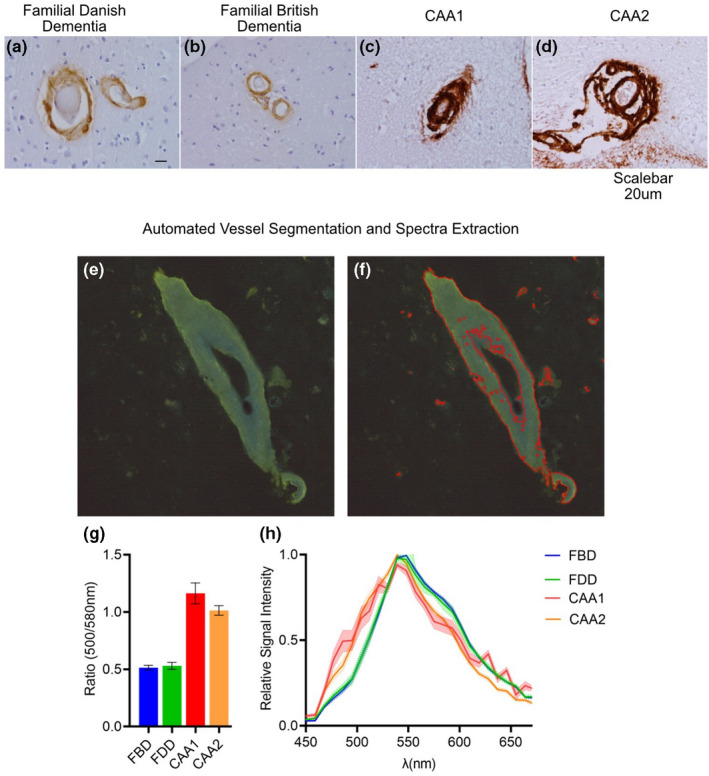
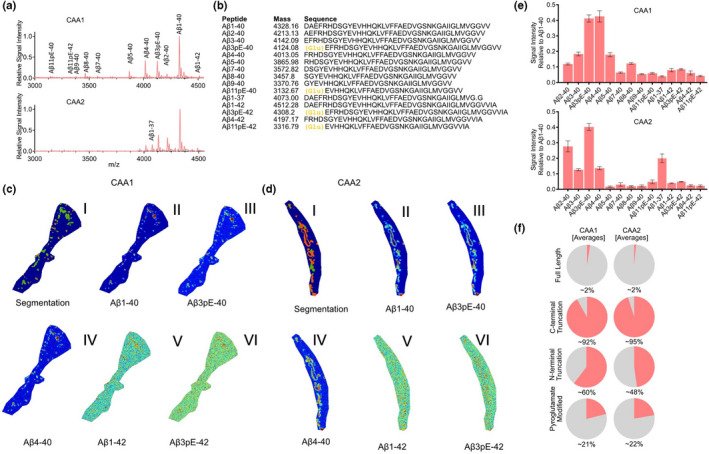
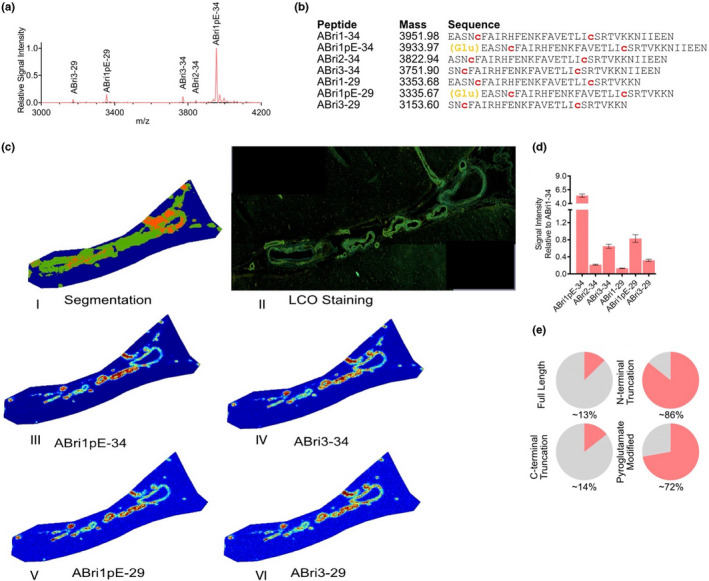
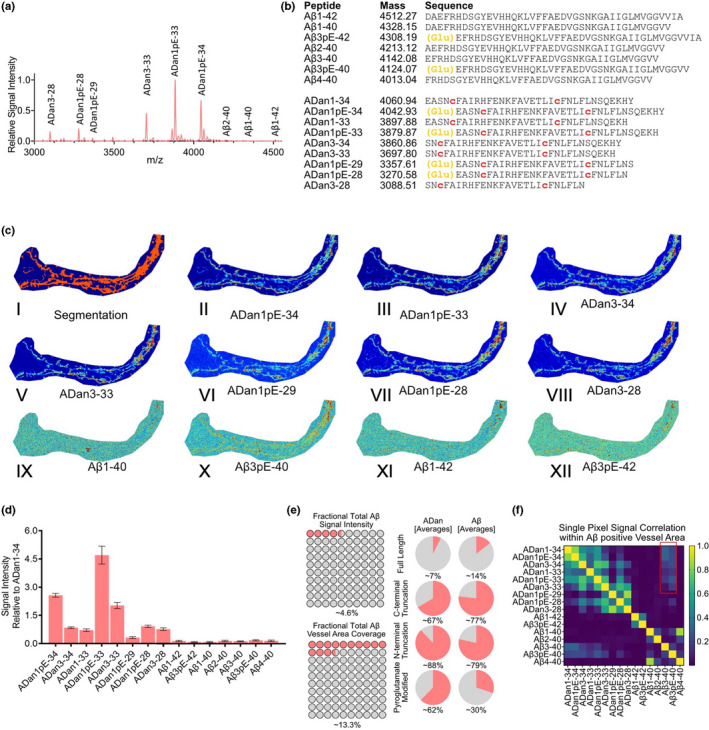
Familial British dementia (FBD) and familial Danish dementia (FDD) are autosomal dominant forms of dementia caused by mutations in the integral membrane protein 2B (ITM2B, also known as BRI2) gene. Secretase processing of mutant BRI2 leads to secretion and deposition of BRI2-derived amyloidogenic peptides, ABri and ADan that resemble APP/β-amyloid (Aβ) pathology, which is characteristic of Alzheimer's disease (AD). Amyloid pathology in FBD/FDD manifests itself predominantly in the microvasculature by ABri/ADan containing cerebral amyloid angiopathy (CAA). While ABri and ADan peptide sequences differ only in a few C-terminal amino acids, CAA in FDD is characterized by co-aggregation of ADan with Aβ, while in contrast no Aβ deposition is observed in FBD. The fact that FDD patients display an earlier and more severe disease onset than FBD suggests a potential role of ADan and Aβ co-aggregation that promotes a more rapid disease progression in FDD compared to FBD. It is therefore critical to delineate the chemical signatures of amyloid aggregation in these two vascular dementias. This in turn will increase the knowledge on the pathophysiology of these diseases and the pathogenic role of heterogenous amyloid peptide interactions and deposition, respectively. Herein, we used matrix-assisted laser desorption/ionization mass spectrometry imaging (MALDI-MSI) in combination with hyperspectral, confocal microscopy based on luminescent conjugated oligothiophene probes (LCO) to delineate the structural traits and associated amyloid peptide patterns of single CAA in postmortem brain tissue of patients with FBD, FDD as well as sporadic CAA without AD (CAA+) that show pronounced CAA without parenchymal plaques. The results show that CAA in both FBD and FDD consist of N-terminally truncated- and pyroglutamate-modified amyloid peptide species (ADan and ABri), but that ADan peptides in FDD are also extensively C-terminally truncated as compared to ABri in FBD, which contributes to hydrophobicity of ADan species. Further, CAA in FDD showed co-deposition with Aβ x-42 and Aβ x-40 species. CAA+ vessels were structurally more mature than FDD/FBD CAA and contained significant amounts of pyroglutamated Aβ. When compared with FDD, Aβ in CAA+ showed more C-terminal and less N-terminally truncations. In FDD, ADan showed spatial co-localization with Aβ3pE-40 and Aβ3-40 but not with Aβx-42 species. This suggests an increased aggregation propensity of Aβ in FDD that promotes co-aggregation of both Aβ and ADan. Further, CAA maturity appears to be mainly governed by Aβ content based on the significantly higher 500/580 patterns observed in CAA+ than in FDD and FBD, respectively. Together this is the first study of its kind on comprehensive delineation of Bri2 and APP-derived amyloid peptides in single vascular plaques in both FDD/FBD and sporadic CAA that provides new insight in non-AD-related vascular amyloid pathology. Cover Image for this issue: https://doi.org/10.1111/jnc.15424.
家族性英国痴呆症(FBD)和家族性丹麦痴呆症(FDD)是由整合膜蛋白 2B(ITM2B,也称为 BRI2)基因突变引起的显性遗传性痴呆症。突变的 BRI2 的蛋白水解加工导致 BRI2 衍生的淀粉样肽 ABri 和 ADan 的分泌和沉积,这些肽类似于淀粉样前体蛋白/β-淀粉样肽(Aβ)病理学,这是阿尔茨海默病(AD)的特征。FBD/FDD 的淀粉样蛋白病理学主要通过含有 ABri/ADan 的脑淀粉样血管病(CAA)在微血管中表现出来。虽然 ABri 和 ADan 肽序列仅在几个 C 末端氨基酸上有所不同,但 FDD 中的 CAA 特征是 ADan 与 Aβ的共聚集,而在 FBD 中则观察不到 Aβ沉积。FDD 患者的发病年龄比 FBD 更早且更严重,这表明 ADan 和 Aβ共聚集可能在 FDD 中促进疾病更快进展,而在 FBD 中则没有。因此,描绘这两种血管性痴呆症中淀粉样蛋白聚集的化学特征至关重要。这反过来又将增加对这些疾病病理生理学的了解,并分别增加对异质淀粉样肽相互作用和沉积的致病作用的了解。在此,我们使用基质辅助激光解吸/电离质谱成像(MALDI-MSI)结合基于发光共轭寡聚噻吩探针(LCO)的高光谱、共聚焦显微镜,描绘了 FBD、FDD 和无 AD 的散发性 CAA(CAA+)患者死后脑组织中单 CAA 的结构特征和相关淀粉样肽模式,这些 CAA 表现为明显的 CAA 而无实质斑块。结果表明,FBD 和 FDD 中的 CAA 均由 N 端截断和焦谷氨酸修饰的淀粉样肽组成(ADan 和 ABri),但 FDD 中的 ADan 肽比 FBD 中的 ABri 更广泛地 C 端截断,这有助于 ADan 物种的疏水性。此外,FDD 中的 CAA 与 Aβ x-42 和 Aβ x-40 物种共沉积。FDD/FBD CAA+的血管结构更成熟,含有大量焦谷氨酸化的 Aβ。与 FDD 相比,CAA+中的 Aβ 具有更多的 C 末端和更少的 N 末端截断。在 FDD 中,ADan 与 Aβ3pE-40 和 Aβ3-40 表现出空间共定位,但与 Aβx-42 物种没有共定位。这表明 FDD 中 Aβ 的聚集倾向增加,促进了 Aβ 和 ADan 的共聚集。此外,CAA 的成熟度似乎主要取决于 Aβ 含量,因为 CAA+中的 500/580 模式明显高于 FDD 和 FBD。总的来说,这是首次对 FDD/FBD 和散发性 CAA 中单血管斑块中 Bri2 和 APP 衍生淀粉样肽进行全面描绘的研究,为非 AD 相关血管淀粉样蛋白病理学提供了新的见解。本期封面图片:https://doi.org/10.1111/jnc.15424.