College of Plant Protection, China Agricultural University, Beijing, 100193, China.
School of Food and Agriculture, University of Maine, Orono, ME, 04469, USA.
J Nanobiotechnology. 2024 Nov 16;22(1):717. doi: 10.1186/s12951-024-02938-y.
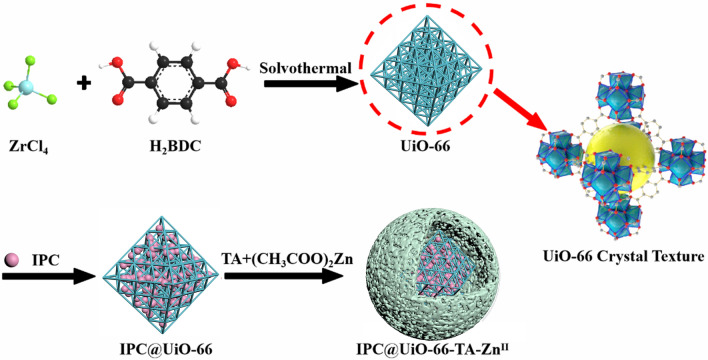
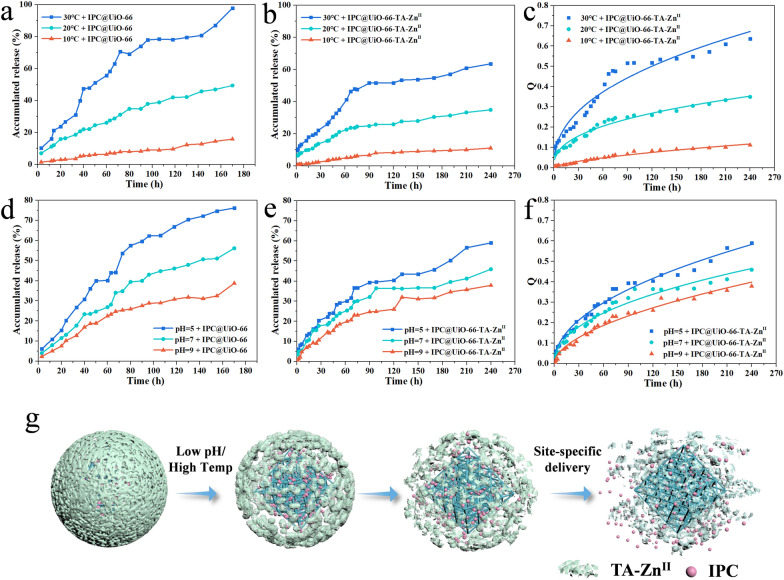
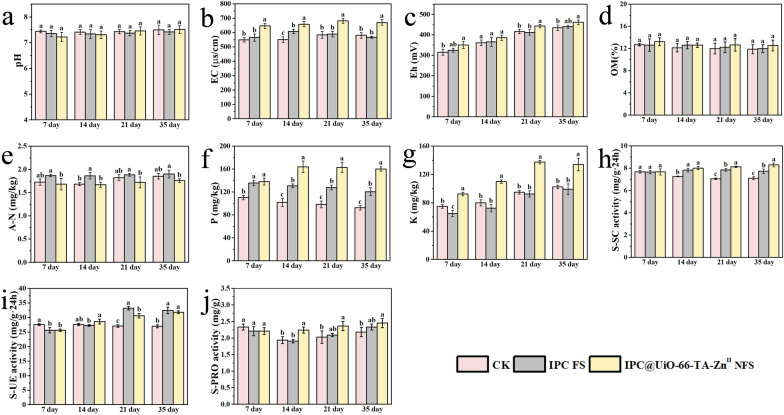
Seed coating with fungicides is a common practice in controlling seed-borne diseases, but conventional methods often result in high toxicity to plants and soil. In this study, a nanoparticle formulation was successfully developed using the metal-organic framework UiO-66 as a carrier of the fungicide ipconazole (IPC), with a tannic acid (TA)-Zn coating serving as a protective layer. The IPC@UiO-66-TA-Zn nanoparticles provided a controlled release, triggered and regulated by environmental factors such as pH and temperature. This formulation efficiently controlled the proliferation of Fusarium fujikuroi spores, with high penetration into both rice roots and fungal mycelia. The product exhibited high antifungal activity, achieving control efficacy rates of 84.09% to 93.10%, low biotoxicity, and promoted rice growth. Compared to the IPC flowable suspension formula, IPC@UiO-66-TA-Zn improved the physicochemical properties and enzymatic activities in soil. Importantly, it showed potential for mitigating damage to beneficial soil bacteria. This study provides a promising approach for managing plant diseases using nanoscale fungicides in seed treatment.
种子包衣用杀菌剂是控制种传病害的常用方法,但传统方法往往对植物和土壤具有高毒性。在这项研究中,成功地使用金属有机骨架 UiO-66 作为杀菌剂咪鲜胺(IPC)的载体,并用单宁酸(TA)-Zn 涂层作为保护层,开发了一种纳米颗粒制剂。IPC@UiO-66-TA-Zn 纳米颗粒提供了一种由 pH 值和温度等环境因素触发和调节的控制释放。该制剂有效地控制了藤仓镰刀菌孢子的增殖,对水稻根系和真菌菌丝有很高的穿透力。该产品表现出高的抗真菌活性,达到 84.09%至 93.10%的控制效果率,低生物毒性,并促进了水稻的生长。与 IPC 可流动悬浮剂配方相比,IPC@UiO-66-TA-Zn 改善了土壤的物理化学性质和酶活性。重要的是,它显示出减轻有益土壤细菌损伤的潜力。本研究为利用纳米级杀菌剂进行种子处理来管理植物病害提供了一种有前景的方法。