Brangulis Kalvis, Malfetano Jill, Marcinkiewicz Ashley L, Wang Alan, Chen Yi-Lin, Lee Jungsoon, Liu Zhuyun, Yang Xiuli, Strych Ulrich, Bottazzi Maria-Elena, Pal Utpal, Hsieh Ching-Lin, Chen Wen-Hsiang, Lin Yi-Pin
Latvian Biomedical Research and Study Centre, Riga, Latvia.
Division of Infectious Diseases, Wadsworth Center, NYSDOH, Albany, NY, USA.
bioRxiv. 2024 Oct 28:2024.10.23.619738. doi: 10.1101/2024.10.23.619738.
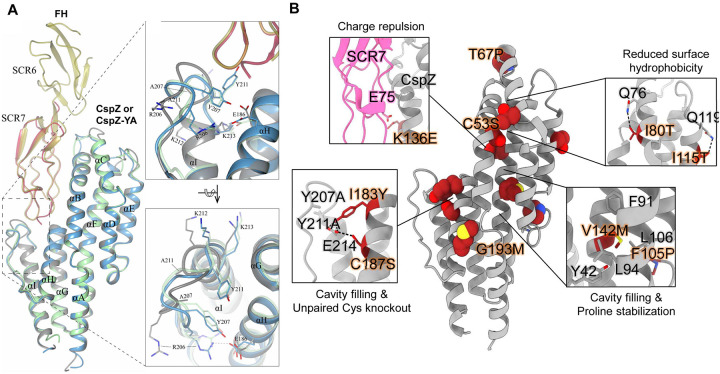
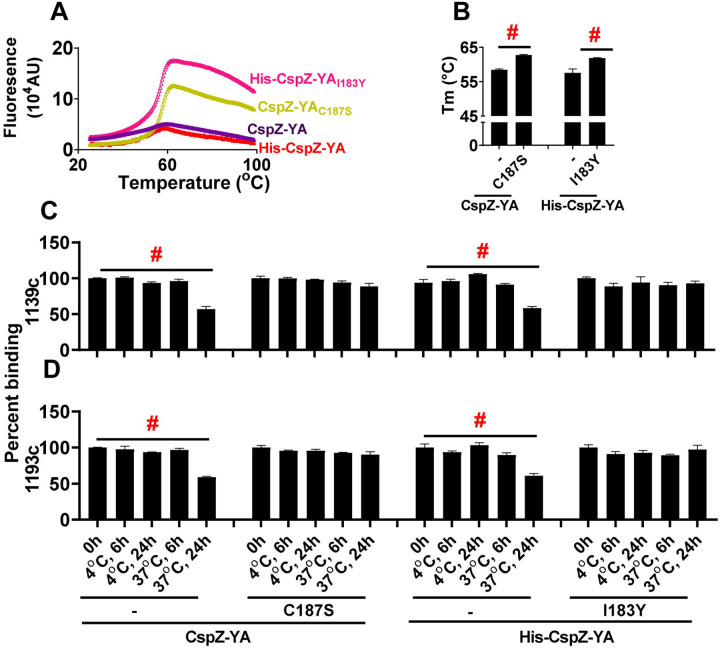
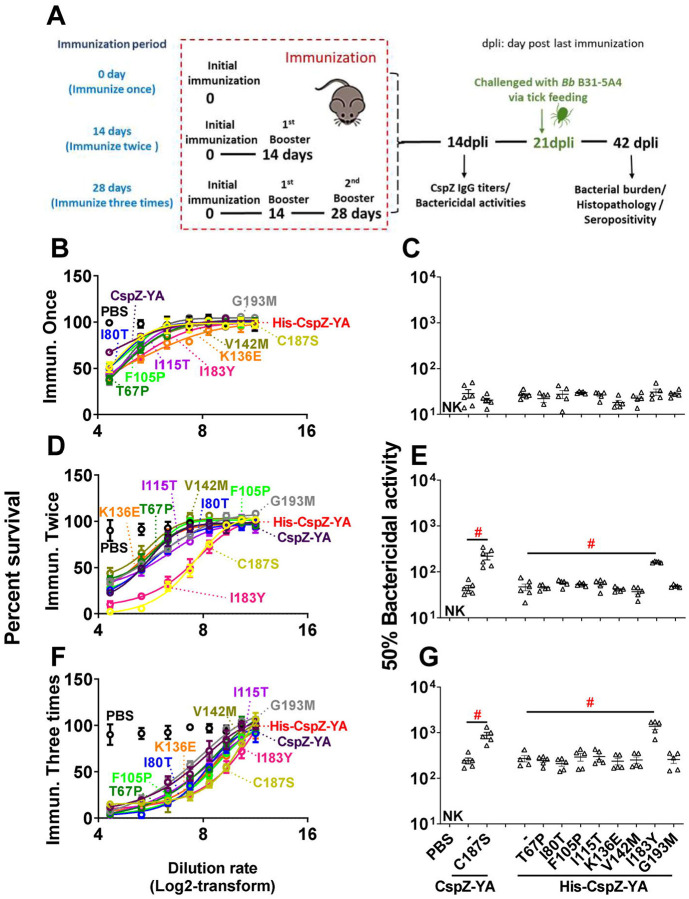
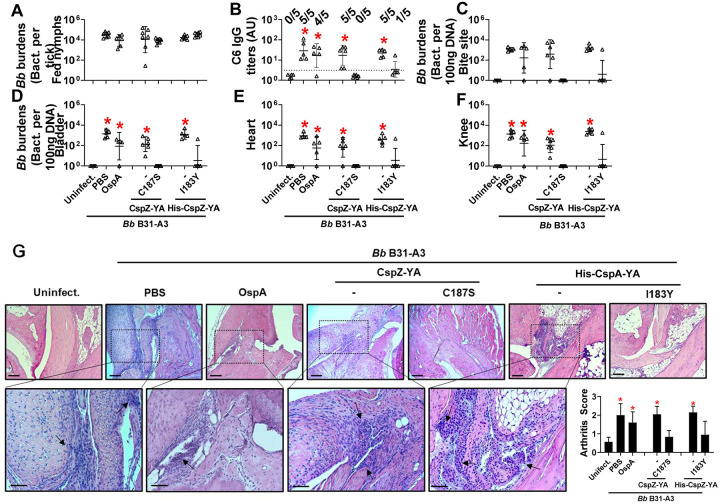
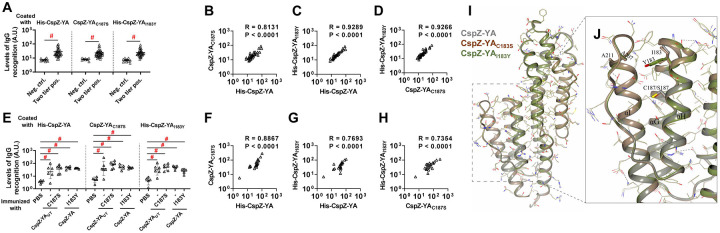
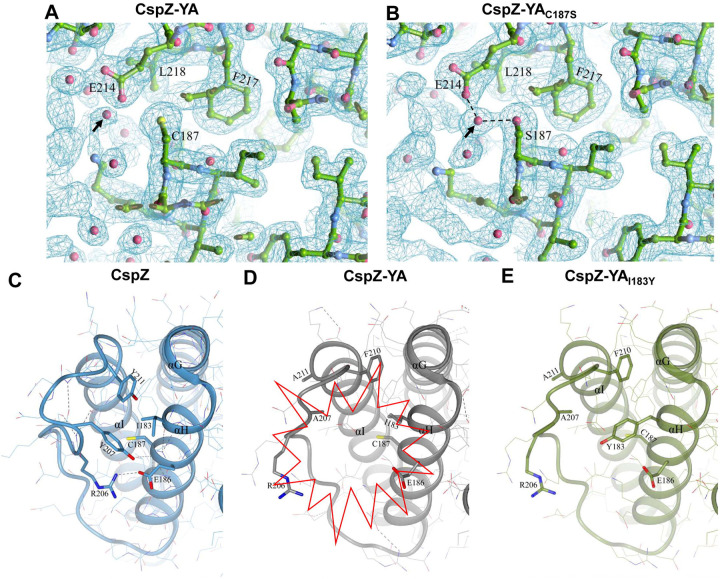
The quality of protective immunity plays a critical role in modulating vaccine efficacy, with native antigens often not able to trigger sufficiently strong immune responses for pathogen killing. This warrants creation of structure-based vaccine design, leveraging high-resolution antigen structures for mutagenesis to improve protein stability and efficient immunization strategies. Here, we investigated the mechanisms underlying structure-based vaccine design using CspZ-YA, a vaccine antigen from , the bacteria causing Lyme disease (LD), the most common vector-borne disease in the Northern Hemisphere. Compared to wild-type CspZ-YA, we found CspZ-YA and CspZ-YA required lower immunization frequency to protect mice from LD-associated manifestations and bacterial colonization. We observed indistinguishable human and mouse antigenicity between wild-type and mutant CspZ-YA proteins after native infection or active immunization. This supports our newly generated, high-resolution structures of CspZ-YA and CspZ-YA, showing no altered surface epitopes after mutagenesis. However, CspZ-YA and CspZ-YA favored the interactions between helices H and I, consistent with their elevated thermostability. Such findings are further strengthened by increasing ability of protective CspZ-YA monoclonal antibodies in binding to CspZ-YA at a physiological temperature (37°C). Overall, this study demonstrated enhanced intramolecular interactions improved long-term stability of antigens while maintaining protective epitopes, providing a mechanism for structure-based vaccine design. These findings can ultimately be extended to other vaccine antigens against newly emerging pathogens for the improvement of protective immunity.
保护性免疫的质量在调节疫苗效力方面起着关键作用,天然抗原往往无法引发足够强烈的免疫反应来杀灭病原体。这就需要基于结构的疫苗设计,利用高分辨率抗原结构进行诱变,以提高蛋白质稳定性并采用有效的免疫策略。在此,我们利用来自引起莱姆病(LD)的细菌的疫苗抗原CspZ - YA,研究了基于结构的疫苗设计的潜在机制。莱姆病是北半球最常见的媒介传播疾病。与野生型CspZ - YA相比,我们发现CspZ - YA和CspZ - YA所需的免疫频率更低,就能保护小鼠免受与LD相关的症状和细菌定植。在自然感染或主动免疫后,我们观察到野生型和突变型CspZ - YA蛋白之间的人和小鼠抗原性没有差异。这支持了我们新生成的CspZ - YA和CspZ - YA的高分辨率结构,表明诱变后表面表位没有改变。然而,CspZ - YA和CspZ - YA有利于螺旋H和I之间的相互作用,这与其提高的热稳定性一致。保护性CspZ - YA单克隆抗体在生理温度(37°C)下与CspZ - YA结合能力的增强进一步强化了这些发现。总体而言,本研究表明增强的分子内相互作用在维持保护性表位的同时提高了抗原的长期稳定性,为基于结构的疫苗设计提供了一种机制。这些发现最终可扩展到针对新出现病原体的其他疫苗抗原,以改善保护性免疫。