Salaûn Alexandre, Tarris Georges, Bonnotte Bernard, Cottin Yves
Department of Cardiology, Dijon Bourgogne University Hospital, France.
Department of Anatomical Pathology, Dijon Bourgogne University Hospital, France.
Eur Heart J Case Rep. 2024 Nov 15;8(11):ytae587. doi: 10.1093/ehjcr/ytae587. eCollection 2024 Nov.
Eosinophilic myocarditis is a life-threatening condition with a heterogeneous clinical presentation and aetiology. Cases of drug-induced or parasitic myocarditis have been reported but there is scant literature on the involvement of treatments, such as doxycycline, and eosinophil degranulation due to parasitic lysis.
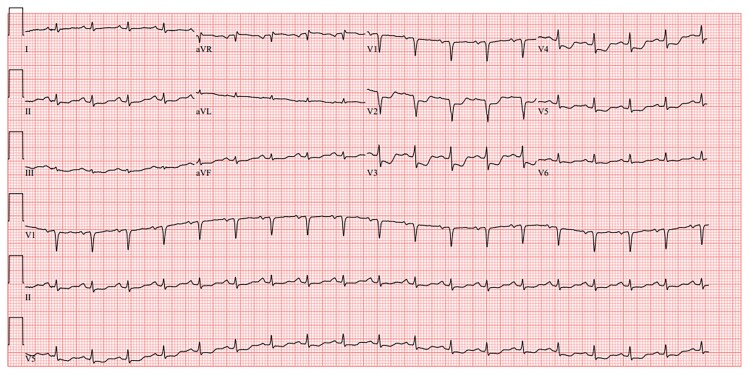
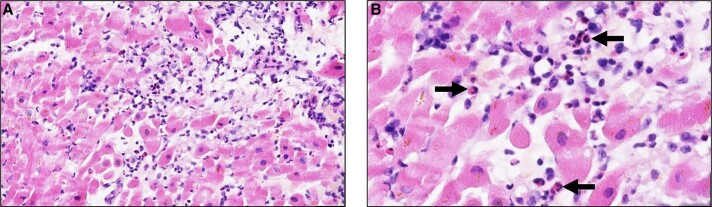
Here, we report the case of a 59-year-old man without a relevant past medical history who developed a skin rash with hepatic cytolysis and mild eosinophilia. No aetiology was found despite an exhaustive work-up, but a parasitic infestation was suspected in view of the patient's daily contact with freshwater environments. A few days after doxycycline administration, the patient's clinical state worsened rapidly leading to a ventricular electrical storm-related cardiogenic shock requiring mechanical support. After initiation of high-dose corticosteroid therapy, cardiac function normalized promptly allowing for withdrawal of the mechanical support. An endomyocardial biopsy led to the diagnosis of eosinophilic myocarditis, which was congruent with the cardiac magnetic resonance imaging data.
The main aetiologies reported for eosinophilic myocarditis are often allergic reactions, such as DRESS syndrome in developed countries, or infections, especially due to parasites in other countries. Drugs such as tuberculosis medications, antipsychotics, and antiepileptics have been implicated, as well as antibiotics, e.g. minocycline, but there has been no case of doxycycline-related eosinophilic myocarditis reported to date. Parasitic lysis is known to induce the activation of eosinophils and their on-site degranulation but no case has been reported on myocarditis due to parasitic lysis after administration of antiparasitic drugs.
嗜酸性粒细胞性心肌炎是一种危及生命的疾病,临床表现和病因具有异质性。已有药物性或寄生虫性心肌炎的病例报道,但关于多西环素等治疗药物的影响以及寄生虫裂解导致嗜酸性粒细胞脱颗粒的文献却很少。
在此,我们报告一例59岁男性患者,既往无相关病史,出现皮疹伴肝细胞溶解和轻度嗜酸性粒细胞增多。尽管进行了详尽的检查,但未发现病因,鉴于患者日常接触淡水环境,怀疑存在寄生虫感染。给予多西环素几天后,患者临床状态迅速恶化,导致与室性电风暴相关的心源性休克,需要机械支持。开始高剂量皮质类固醇治疗后,心脏功能迅速恢复正常,得以撤除机械支持。心内膜心肌活检确诊为嗜酸性粒细胞性心肌炎,这与心脏磁共振成像数据相符。
报道的嗜酸性粒细胞性心肌炎的主要病因通常是过敏反应,如发达国家的药物超敏反应综合征,或感染,尤其是其他国家的寄生虫感染。已涉及的药物包括抗结核药、抗精神病药和抗癫痫药,以及抗生素,如米诺环素,但迄今为止尚无多西环素相关嗜酸性粒细胞性心肌炎的病例报道。已知寄生虫裂解可诱导嗜酸性粒细胞活化及其在局部脱颗粒,但尚未有服用抗寄生虫药物后因寄生虫裂解导致心肌炎的病例报道。