Mizuno Nobuyuki, Kobayashi Fuminori, Morita Takumi, Handa Hirokazu
Institute of Crop Science, National Agriculture and Food Research Organization, 2-1-2 Kannondai, Tsukuba, Ibaraki 305-8518, Japan.
Graduate School of Life and Environmental Sciences, Kyoto Prefectural University, 1-5 Shimogamo-hangicho, Sakyo, Kyoto 606-8522, Japan.
Breed Sci. 2024 Jun;74(3):259-273. doi: 10.1270/jsbbs.23064. Epub 2024 Jun 25.
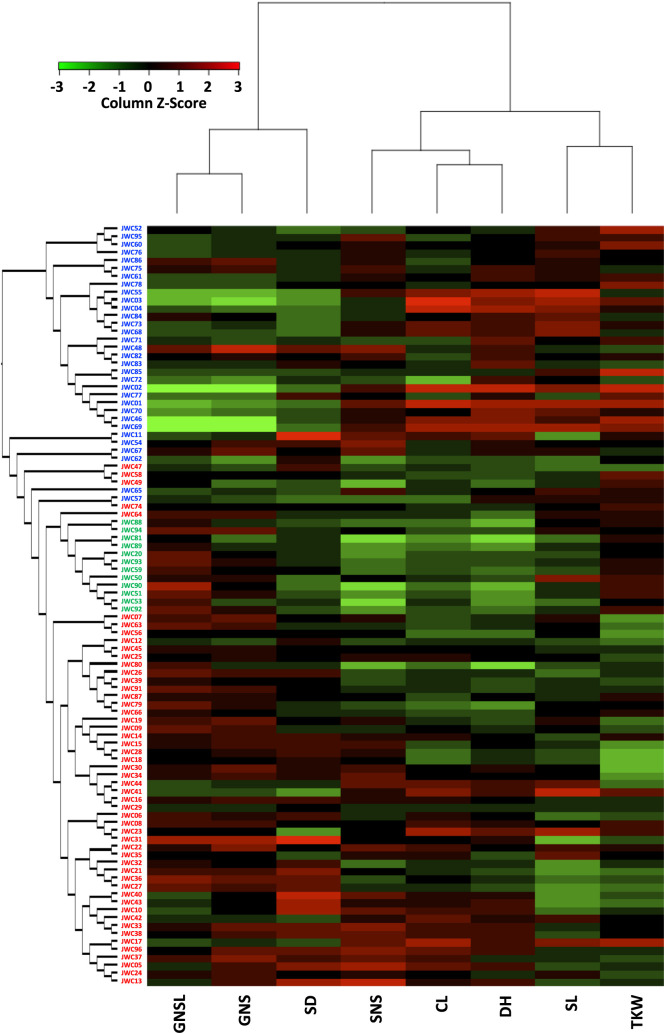
Combining high-throughput genotyping data with the latest wheat genomic information provided more detailed information on the genetic diversity of the Japanese wheat core collection (JWC). Analysis of genomic population structure divided the JWC accessions into three populations: northeast Japan accessions, native and southwest Japan accessions, and modern accessions showing mixed breeding patterns. This indicates that Japanese wheat varieties have a background of native genomes from southwest Japan incorporating valuable genes from various exotic lines, which is supported by the history of Japanese wheat breeding. Association analyses of several agronomic traits have revealed how genes or alleles have been selected in Japanese wheat breeding and how they differ from those in other regions of the world. This analysis of the JWC collection is expected to contribute not only to the elucidation of genetic diversity in Japanese wheat accessions but also to future wheat breeding by providing a new genetic resource.
将高通量基因分型数据与最新的小麦基因组信息相结合,能提供关于日本小麦核心种质(JWC)遗传多样性的更详细信息。基因组群体结构分析将JWC种质分为三个群体:日本东北部种质、本土及日本西南部种质,以及呈现混合育种模式的现代种质。这表明日本小麦品种具有来自日本西南部的本土基因组背景,并融入了来自各种外来品系的宝贵基因,日本小麦育种历史也证实了这一点。对多个农艺性状的关联分析揭示了日本小麦育种中基因或等位基因是如何被选择的,以及它们与世界其他地区的差异。对JWC种质的这一分析不仅有望有助于阐明日本小麦种质的遗传多样性,还能通过提供新的遗传资源为未来的小麦育种做出贡献。