Liu Guangdong, Yang Cui, Wang Xin, Chen Xi, Cai Huaibin, Le Weidong
Institute of Neurology, Sichuan Academy of Medical Sciences-Sichuan Provincial People's Hospital, School of Medicine, University of Electronic Science and Technology of China, Chengdu 610054, China.
Transgenic Section, Laboratory of Neurogenetics, National Institute on Aging, National Institutes of Health, Bethesda, MD 20892, USA.
iScience. 2024 Oct 18;27(11):111194. doi: 10.1016/j.isci.2024.111194. eCollection 2024 Nov 15.
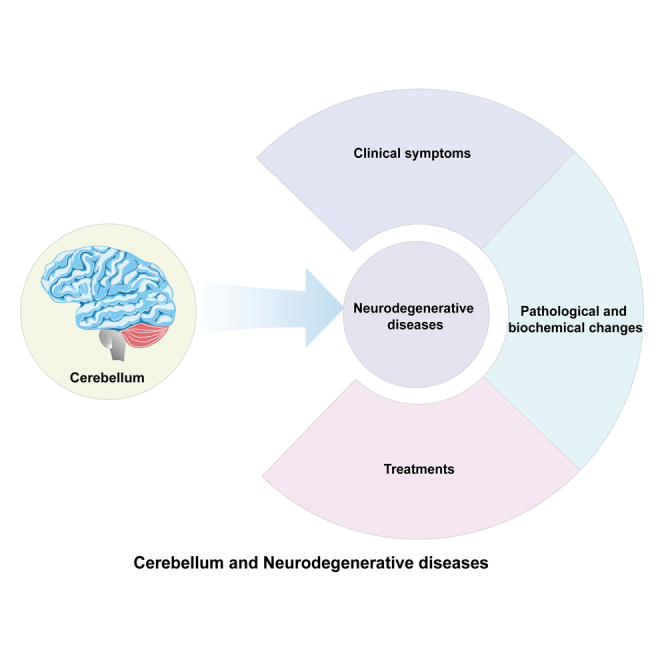
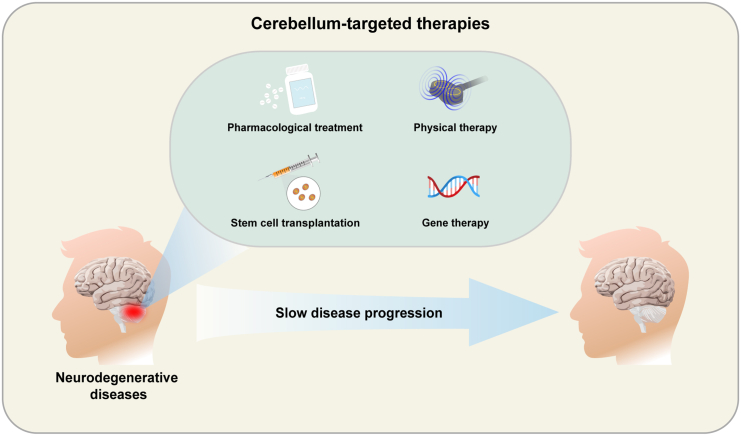
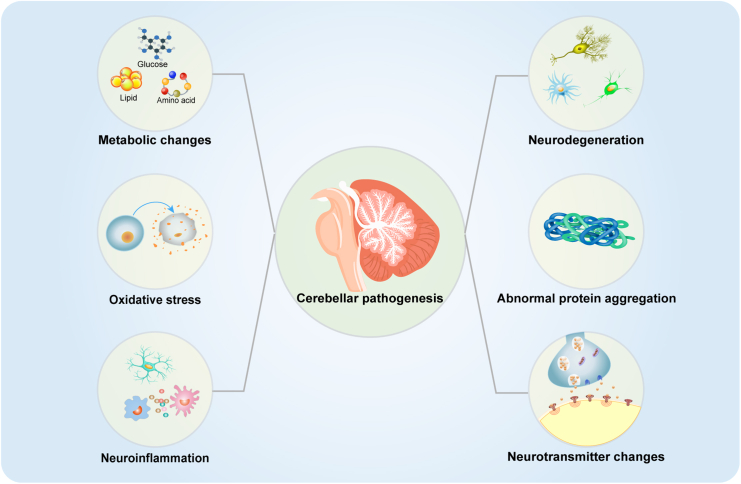
Neurodegenerative diseases (NDs) are a group of neurological disorders characterized by the progressive dysfunction of neurons and glial cells, leading to their structural and functional degradation in the central and/or peripheral nervous system. Historically, research on NDs has primarily focused on the brain, brain stem, or spinal cord associated with disease-related symptoms, often overlooking the role of the cerebellum. However, an increasing body of clinical and biological evidence suggests a significant connection between the cerebellum and NDs. In several NDs, cerebellar pathology and biochemical changes may start in the early disease stages. This article provides a comprehensive update on the involvement of the cerebellum in the clinical features and pathogenesis of multiple NDs, suggesting that the cerebellum is involved in the onset and progression of NDs through various mechanisms, including specific neurodegeneration, neuroinflammation, abnormal mitochondrial function, and altered metabolism. Additionally, this review highlights the significant therapeutic potential of cerebellum-related treatments for NDs.
神经退行性疾病(NDs)是一组神经系统疾病,其特征是神经元和神经胶质细胞进行性功能障碍,导致它们在中枢和/或周围神经系统中的结构和功能退化。从历史上看,对神经退行性疾病的研究主要集中在与疾病相关症状有关的大脑、脑干或脊髓,常常忽视小脑的作用。然而,越来越多的临床和生物学证据表明小脑与神经退行性疾病之间存在重要联系。在几种神经退行性疾病中,小脑病理和生化变化可能在疾病早期就开始了。本文全面更新了小脑在多种神经退行性疾病的临床特征和发病机制中的作用,表明小脑通过各种机制参与神经退行性疾病的发生和发展,这些机制包括特定的神经变性、神经炎症、线粒体功能异常和代谢改变。此外,本综述强调了与小脑相关的治疗方法对神经退行性疾病具有显著的治疗潜力。