Department of Anesthesia of the Second Affiliated Hospital and CNTTI of College of Pharmacy, Chongqing Medical University, Chongqing 400016, China.
Basic Medicine Research and Innovation Center for Novel Target and Therapeutic Intervention, Ministry of Education, Chongqing 400016, China.
Proc Natl Acad Sci U S A. 2024 Nov 26;121(48):e2409841121. doi: 10.1073/pnas.2409841121. Epub 2024 Nov 18.
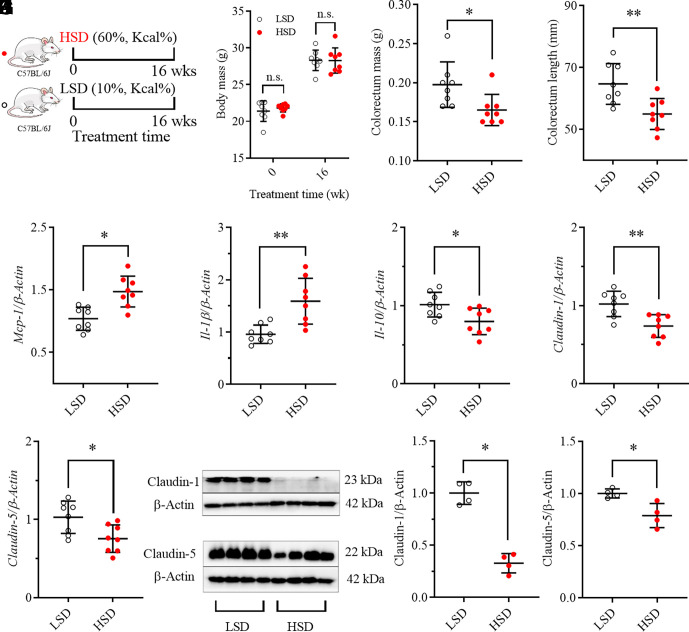
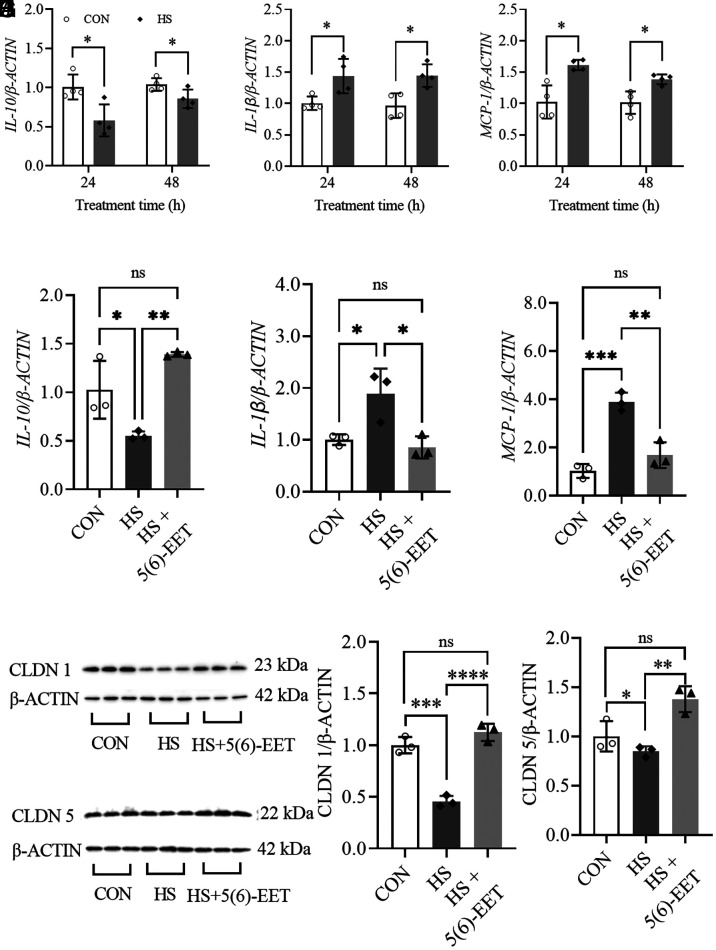
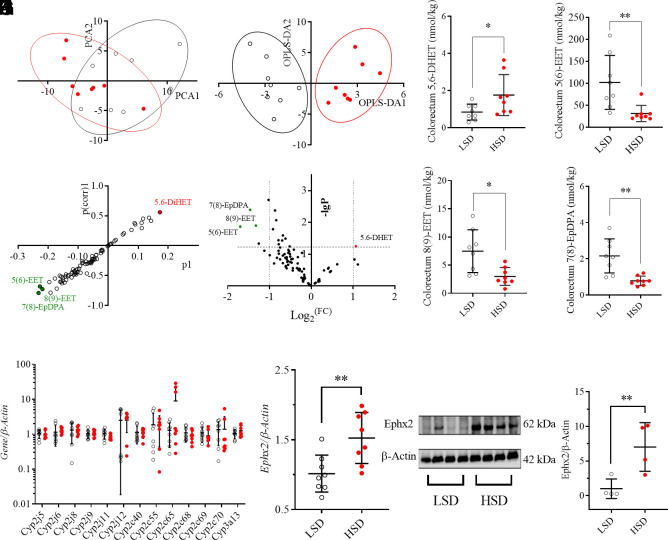
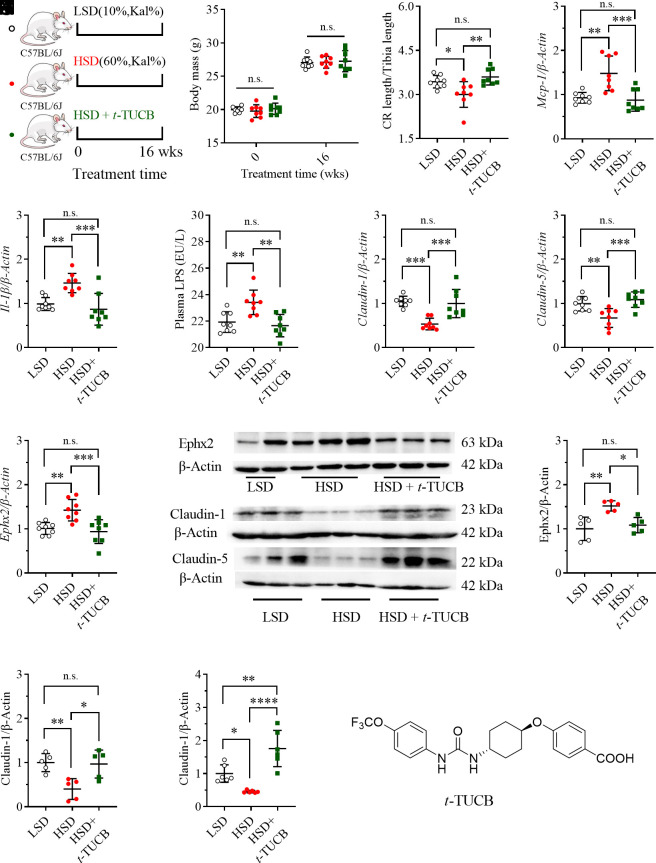
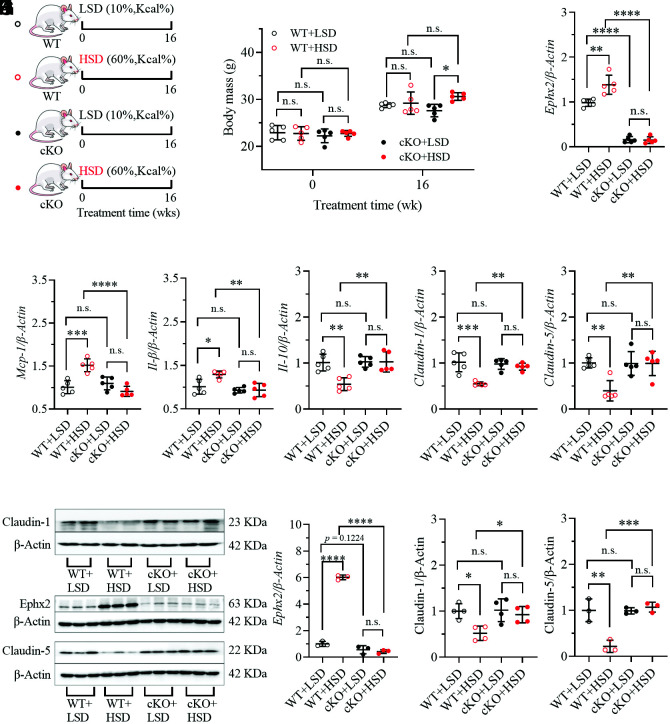
Highsucrose diet (HSD) was reported as a causative factor for multiorgan injuries. The underlying mechanisms and therapeutic strategies remain largely uncharted. In the present study, by using a metabolomics approach, we identified the soluble epoxide hydrolase (sEH) as a therapeutic target for HSD-mediated gut barrier dysfunction. Specifically, 16-week feeding on an HSD caused gut barrier dysfunction, such as colon inflammation and tight junction impairment in a murine model. A metabolomics analysis of mouse colon tissue showed a decrease in the 5(6)-epoxyeicosatrienoic acid [5(6)-EET] level and an increase in soluble epoxide hydrolase, which is related to HSD-mediated injuries to the gut barrier. The mice treated with a chemical inhibitor of sEH and the mice with genetic intervention by intestinal-specific knockout of the sEH gene significantly attenuated HSD-caused intestinal injuries by reducing HSD-mediated colon inflammation and improving the impaired tight junction caused by an HSD. Further, in vitro studies showed that treatment with 5(6)-EET, but not its hydrolytic product 5,6-dihydroxyeicosatrienoic acid (5,6-DiHET), significantly ablated high sucrose-caused intestinal epithelial inflammation and impaired tight junction. Additionally, 5(6)-EET is anti-inflammatory and improves gut epithelial tight junction while 5,6-DiHET cannot do so. This study presents an underlying mechanism of and a therapeutic strategy for the gut barrier dysfunction caused by an HSD.
高糖饮食(HSD)被报道为多器官损伤的一个致病因素。但其潜在机制和治疗策略在很大程度上仍未被探索。在本研究中,我们通过代谢组学方法,确定了可溶性环氧化物水解酶(sEH)是治疗 HSD 介导的肠道屏障功能障碍的一个治疗靶点。具体来说,在小鼠模型中,16 周的 HSD 喂养会导致肠道屏障功能障碍,如结肠炎症和紧密连接损伤。对小鼠结肠组织的代谢组学分析显示,5(6)-环氧二十碳三烯酸[5(6)-EET]水平降低,可溶性环氧化物水解酶增加,这与 HSD 介导的肠道屏障损伤有关。用 sEH 的化学抑制剂治疗的小鼠和肠道特异性敲除 sEH 基因的小鼠通过减少 HSD 介导的结肠炎症和改善 HSD 引起的受损紧密连接,显著减轻了 HSD 引起的肠道损伤。此外,体外研究表明,用 5(6)-EET 处理,而不是其水解产物 5,6-二羟基二十碳三烯酸(5,6-DiHET),可显著减轻高蔗糖引起的肠道上皮炎症和受损的紧密连接。此外,5(6)-EET 具有抗炎作用,并改善肠道上皮细胞紧密连接,而 5,6-DiHET 则不能。本研究为 HSD 引起的肠道屏障功能障碍提供了一个潜在的机制和治疗策略。