Clinical Translational Research Center of Aggregation-Induced Emission, The Second Affiliated Hospital, School of Medicine, The Chinese University of Hong Kong, Shenzhen (CUHK-Shenzhen), Shenzhen, Guangdong, 518172, China.
School of Science and Engineering, Shenzhen Institute of Aggregate Science and Technology, The Chinese University of Hong Kong, Shenzhen (CUHK-Shenzhen), Shenzhen, Guangdong, 518172, China.
Nat Commun. 2024 Nov 19;15(1):9999. doi: 10.1038/s41467-024-54291-1.
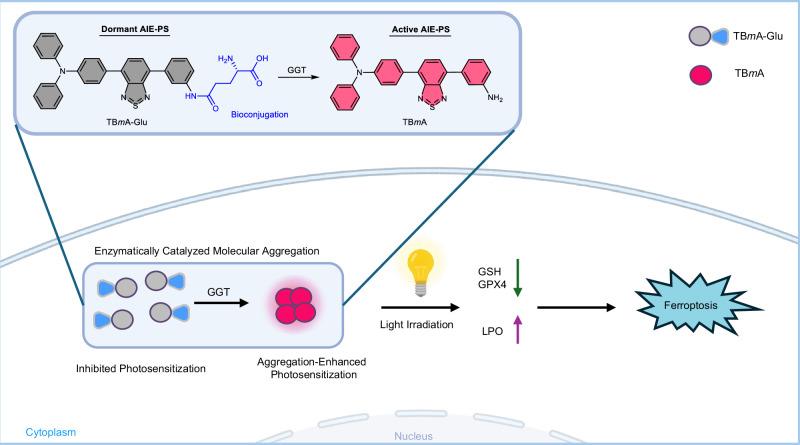
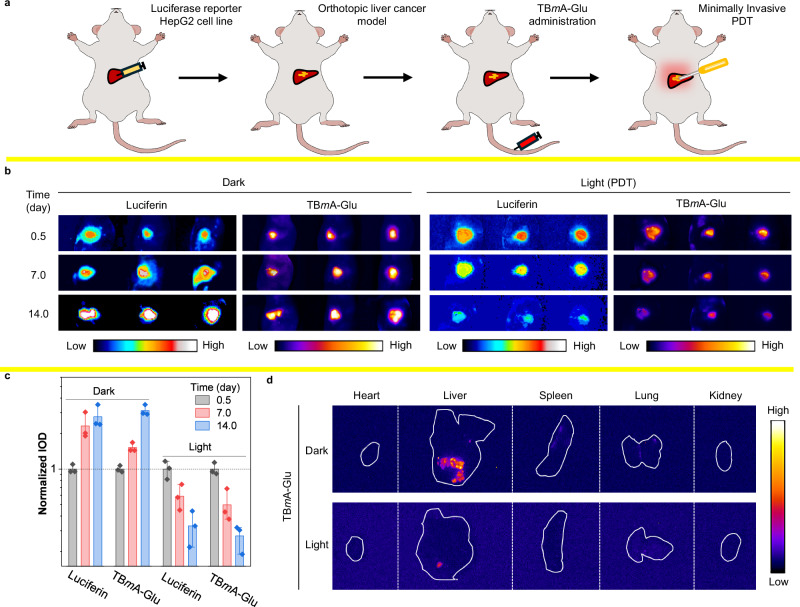
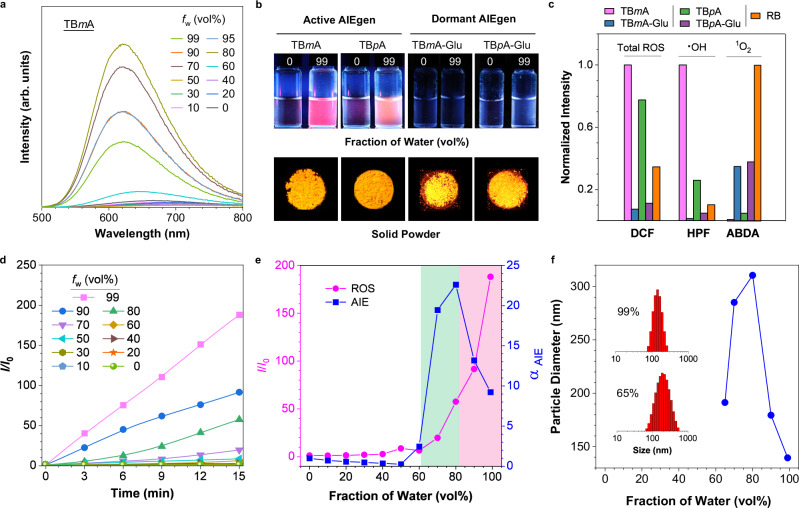
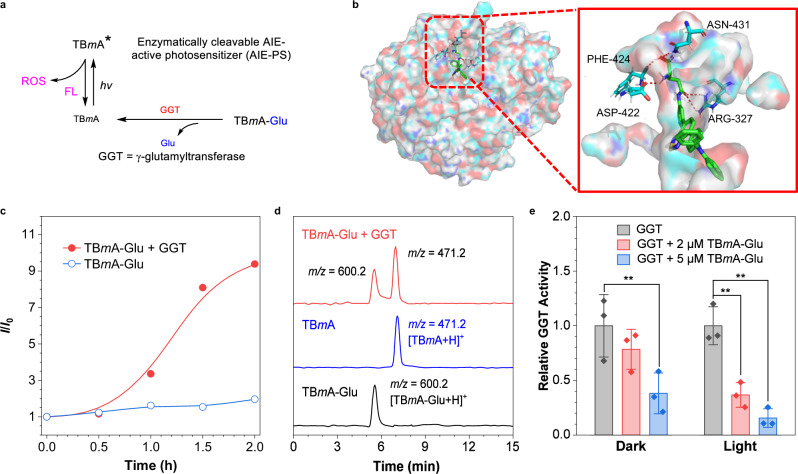
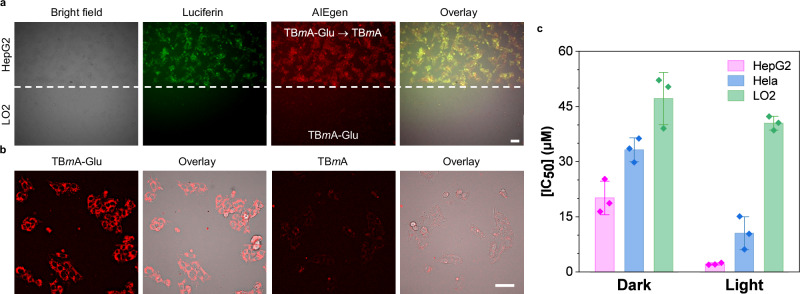
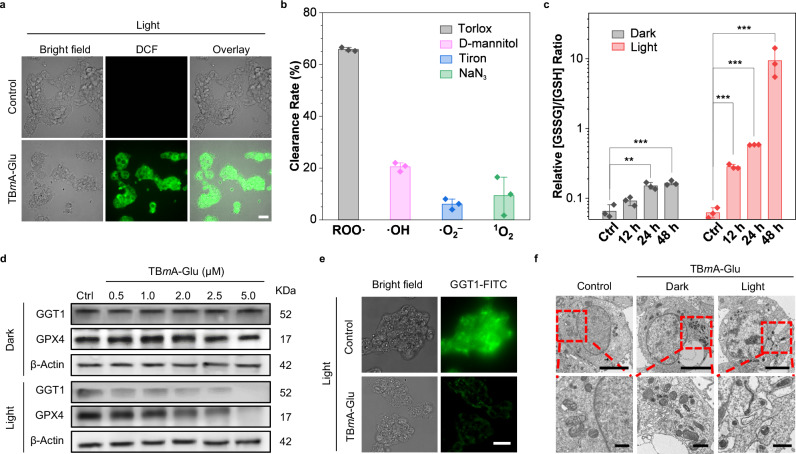
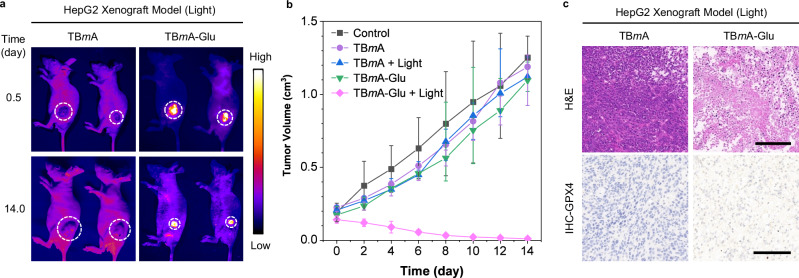
The dynamic modulation of the aggregation process of small molecules represents an important research objective for scientists. However, the complex and dynamic nature of internal environments in vivo impedes controllable aggregation processes of single molecules. In this study, we successfully achieve tumor-targeted aggregation of an aggregation-induced emission photosensitizer (AIE-PS), TBmA, with the catalysis of a tumor-overexpressed enzyme, γ-Glutamyl Transferase (GGT). Mechanistic investigations reveal that TBmA-Glu can be activated by GGT through cleavage of the γ-glutamyl bond and releasing TBmA. The poor water solubility of TBmA induces its aggregation, leading to aggregation-enhanced emission and photodynamic activities. The TBmA-Glu not only induces glutathione (GSH) depletion through GGT photo-degradation but also triggers lipid peroxidation accumulation and ferroptosis in cancer cells through photodynamic therapy. Finally, the in vivo studies conducted on female mice using both tumor xenograft and orthotopic liver cancer models have also demonstrated the significant anti-cancer effects of TBmA-Glu. The exceptional cancer-targeting ability and therapeutic efficiency demonstrated by this GGT activatable AIE-PS highlights enzymatic-mediated modulation as an effective approach for regulating small molecule aggregation intracellularly, thereby advancing innovative therapeutic strategies for various diseases.
小分子聚集过程的动态调控是科学家的重要研究目标。然而,体内内部环境的复杂性和动态性阻碍了单个分子可控聚集过程的实现。在本研究中,我们成功地实现了聚集诱导发光光敏剂(AIE-PS)TBmA 的肿瘤靶向聚集,其过程由肿瘤过表达的酶 γ-谷氨酰转移酶(GGT)催化。机制研究表明,TBmA-Glu 可以通过 GGT 切割 γ-谷氨酰键并释放 TBmA 而被激活。TBmA 的不良水溶性诱导其聚集,从而导致聚集增强的发射和光动力活性。TBmA-Glu 不仅通过 GGT 光降解诱导谷胱甘肽(GSH)耗竭,而且通过光动力治疗在癌细胞中引发脂质过氧化积累和铁死亡。最后,在使用肿瘤异种移植和原位肝癌模型的雌性小鼠体内研究中,也证明了 TBmA-Glu 具有显著的抗癌作用。这种由 GGT 激活的 AIE-PS 所表现出的优异的癌症靶向能力和治疗效率突出了酶介导的调节作为一种有效方法,可以在细胞内调节小分子聚集,从而推进各种疾病的创新治疗策略。