Department of Orthopedics, Qilu Hospital of Shandong University, Cheeloo College of Medicine, Shandong University, Jinan, 250012, China.
Department of Joint Surgery, Weifang People's Hospital, Weifang, 261000, Shandong, People's Republic of China.
J Transl Med. 2024 Nov 18;22(1):1039. doi: 10.1186/s12967-024-05814-3.
Mesenchymal stem cells (MSCs) have been proposed to treat osteoarthritis (OA) for many years. However, clinical outcomes have been inconsistent due to biological variation between patients, differences in tissue source and preparation of the MSCs, and type of donor (e.g. allogenic versus autologous). Here, we test the hypothesis that inconsistent clinical outcomes are related to variations in the stemness and senescence of the injected autologous adipose-derived (AD) MSCs.
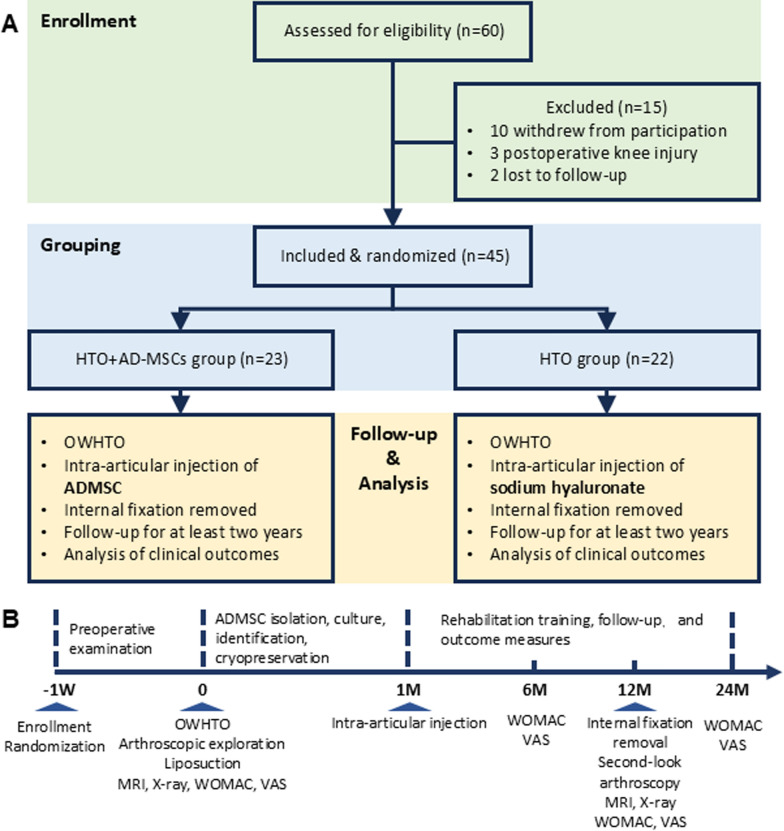
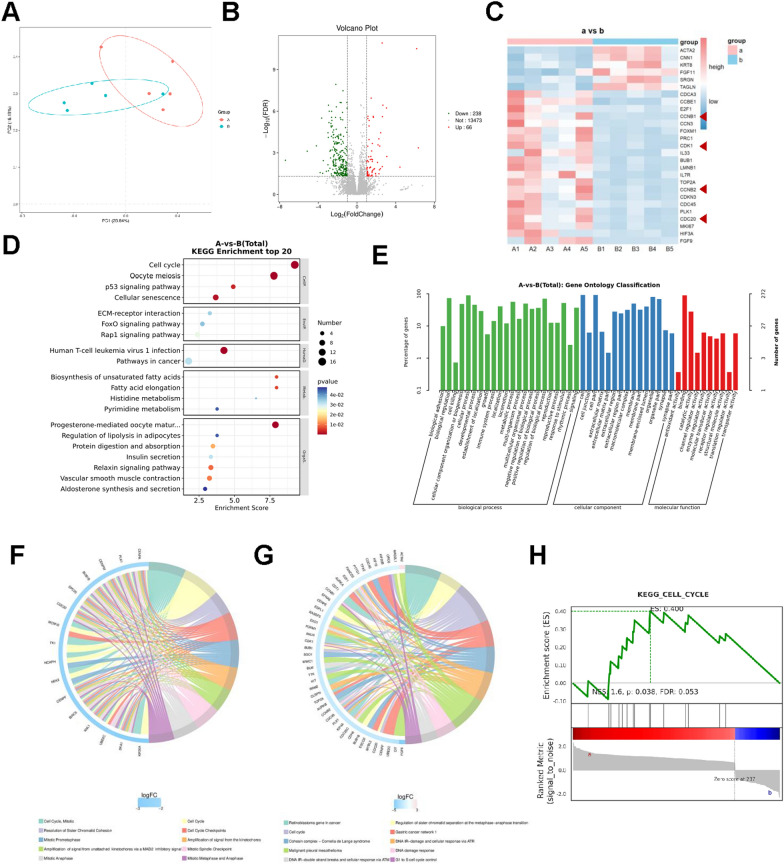
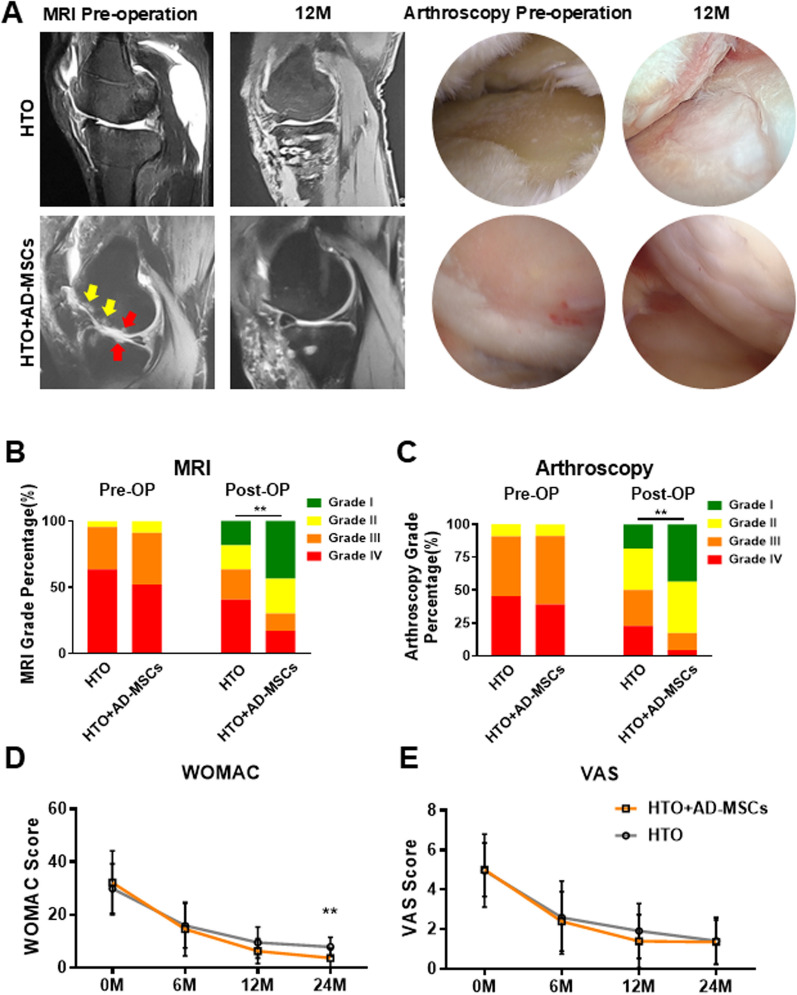
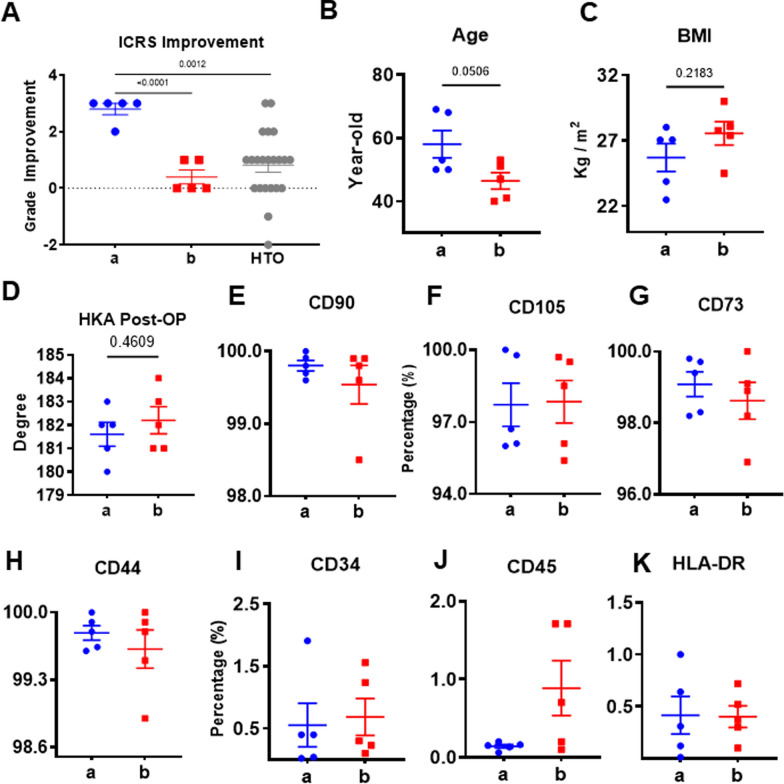
In the prospective randomized trial, 45 knee OA patients were divided into two groups: Group 1 (n = 22) patients treated with high tibial osteotomy (HTO) alone and Group 2 (n = 23) patients treated with HTO followed by intra-articular injection of autologous AD-MSCs (HTO + AD-MSCs). MRI and X-ray were performed pre-operation and 12 months post-operation. WOMAC and VAS score were collected four times, every 6 months over a 24-month follow-up. We observed the proliferation and stemness of AD-MSCs selected from the 5 patients showing the most improvement and from the 5 patients with the least improvement, and completed further in vitro experiments including beta-galactosidase activity, reactive oxygen species and bioinformatic analysis.
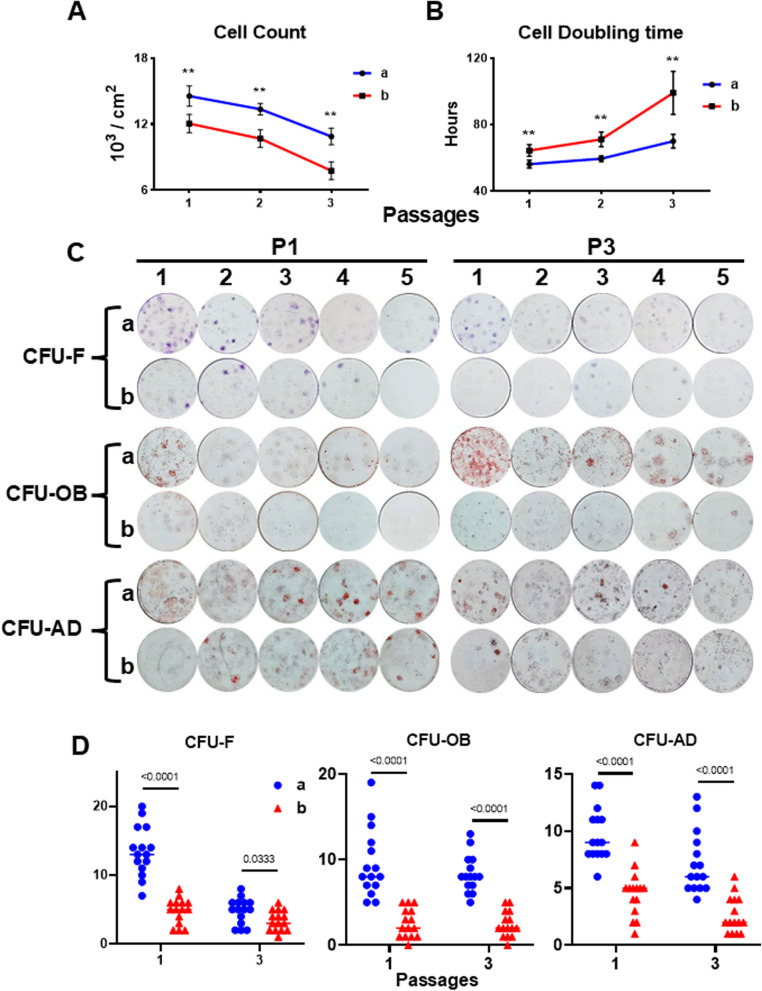
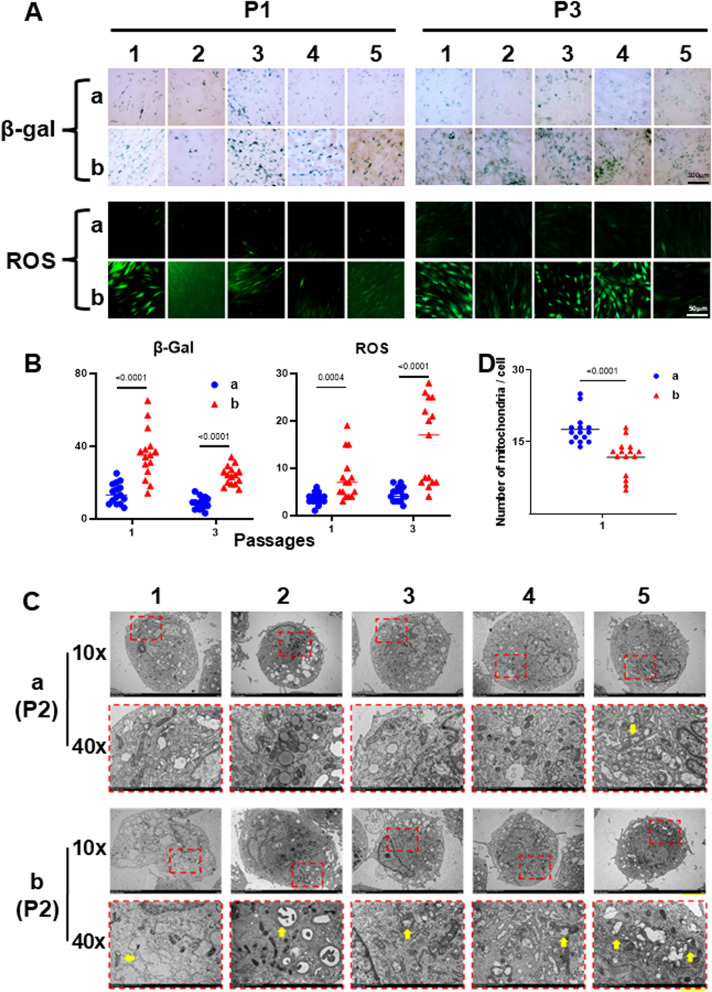
The results showed that patients treated with HTO + AD-MSCs had a significant reduction in knee OA severity as compared to patients treated with HTO alone. Moreover, we discovered that proliferation and colony forming efficiency of AD-MSCs selected from the 5 patients showing the most improvement performed significantly better than cells selected from the 5 patients with the least improvement. AD-MSCs from the patients with the most improvement also had lower amounts of senescent cells and intracellular reactive oxygen species.
Clinical outcomes of autologous AD-MSCs therapy in knee osteoarthritis are correlated with stem cell stemness and senescence. Our study highlights emerging opportunities and trends in precision medicine that could potentially improve autologous MSC-based therapies.
间充质干细胞(MSCs)多年来一直被提议用于治疗骨关节炎(OA)。然而,由于患者之间的生物学变异性、MSCs 的组织来源和制备方式以及供体类型(例如异体与自体)的差异,临床结果一直不一致。在这里,我们检验了这样一个假设,即不一致的临床结果与注射的自体脂肪来源(AD)MSCs 的干性和衰老有关。
在这项前瞻性随机试验中,45 例膝骨关节炎患者分为两组:第 1 组(n=22)患者仅接受胫骨高位截骨术(HTO)治疗,第 2 组(n=23)患者在接受 HTO 后接受关节内注射自体 AD-MSCs(HTO+AD-MSCs)治疗。在术前和术后 12 个月进行 MRI 和 X 射线检查。在 24 个月的随访中,每 6 个月收集一次 WOMAC 和 VAS 评分。我们观察了从 5 例改善最明显的患者和 5 例改善最不明显的患者中选择的 AD-MSCs 的增殖和干性,并完成了进一步的体外实验,包括β-半乳糖苷酶活性、活性氧和生物信息学分析。
结果表明,与单独接受 HTO 治疗的患者相比,接受 HTO+AD-MSCs 治疗的患者膝骨关节炎严重程度显著降低。此外,我们发现,从 5 例改善最明显的患者中选择的 AD-MSCs 的增殖和集落形成效率明显优于从 5 例改善最不明显的患者中选择的 AD-MSCs。改善最明显的患者的 AD-MSCs 也具有较少的衰老细胞和细胞内活性氧。
自体 AD-MSCs 治疗膝骨关节炎的临床结果与干细胞干性和衰老有关。我们的研究强调了精准医学中的新机遇和趋势,这可能会提高基于自体 MSC 的治疗效果。