Department of Clinical Laboratory Medicine, Institute of Medicine, University of Tsukuba, Ibaraki, Japan.
Department of Nephrology, Institute of Medicine, University of Tsukuba, Tsukuba, Ibaraki, Japan.
BMC Nephrol. 2024 Nov 19;25(1):414. doi: 10.1186/s12882-024-03849-8.
Iron deficiency is a major contributor to anaemia in chronic kidney diseases. The association of anaemia and iron deficiency with health-related quality of life in Japanese patients with non-dialysis chronic kidney disease has not been examined. In this study, we evaluated anaemia and iron deficiency in patients with chronic kidney disease G3b-5 and examined their associations with health-related quality of life.
This nationwide cohort study included 2,249 patients with advanced chronic kidney disease receiving nephrologist care from 31 representative facilities throughout Japan; they were randomly selected through stratification by region and facility size and aligned with the Chronic Kidney Disease Outcomes and Practice Patterns Study. Using baseline patient data, we assessed the association of anaemia and iron deficiency with health-related quality of life, employing the 36-item Kidney Disease Quality of Life Questionnaire.
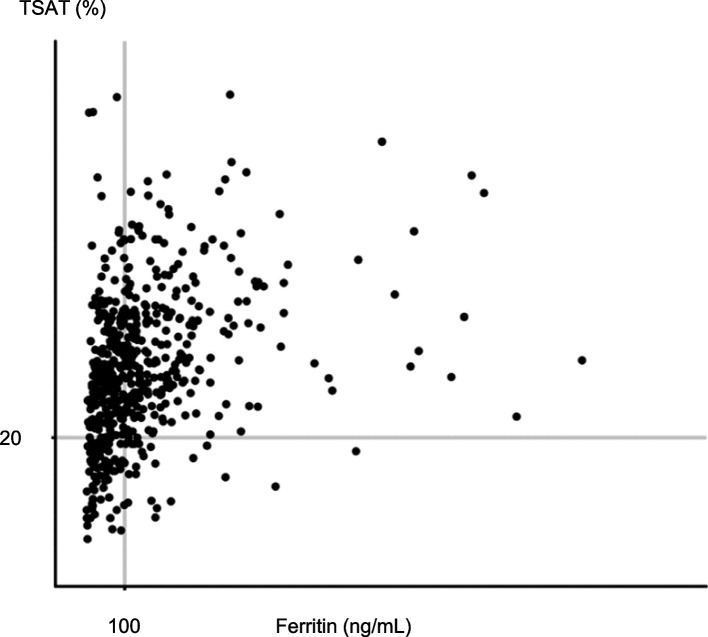
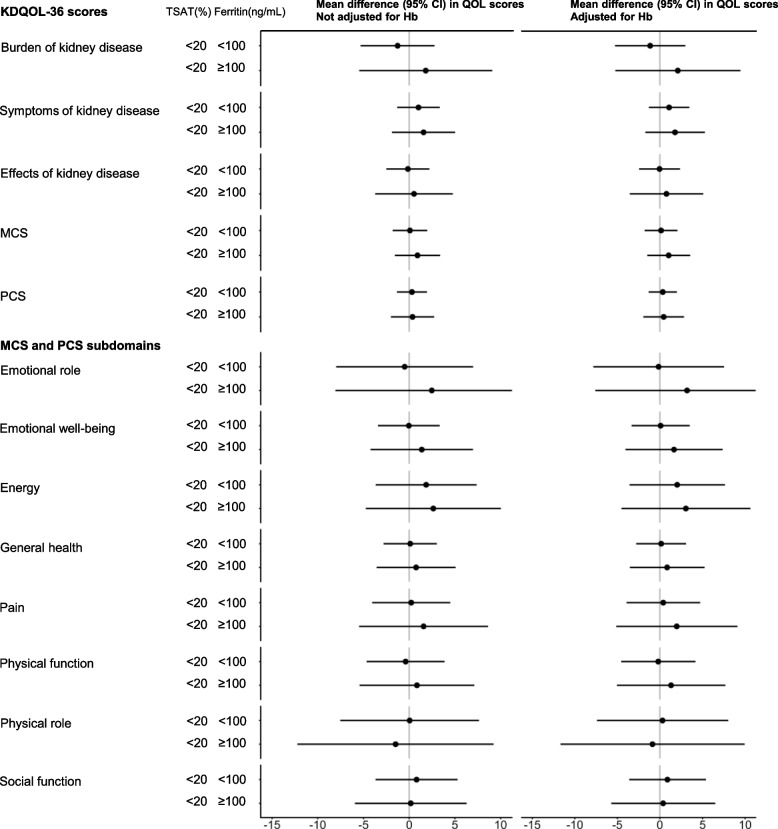
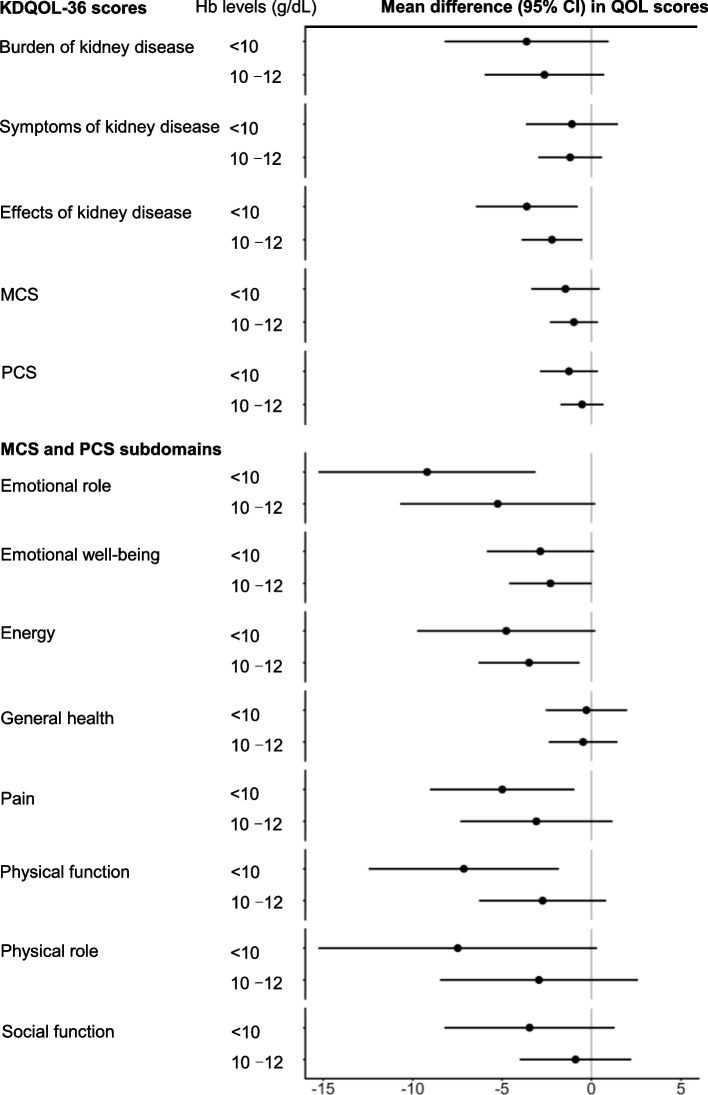
The mean mental and physical component summary scores for all patients were 49 and 47, respectively. Patients with haemoglobin levels < 10 g/dL had worse three kidney disease subscale, mental component summary, physical component summary, and subdomain scores than those with haemoglobin levels > 12 g/dL. Patients with absolute iron deficiency (TSAT < 20% and ferritin < 100 ng/mL) had worse three kidney disease subscale and mental component summary scores than those with functional iron deficiency (TSAT < 20% and ferritin ≥ 100 ng/mL).
Japanese patients with chronic kidney disease G3b-5 with anaemia or absolute iron deficiency had worse health-related quality of life. Our results provide clinical evidence of renal anaemia in Japan and will be useful for international comparisons.
铁缺乏是慢性肾脏病贫血的主要原因。在日本非透析慢性肾脏病患者中,贫血和铁缺乏与健康相关生活质量的关系尚未得到检验。在这项研究中,我们评估了慢性肾脏病 G3b-5 患者的贫血和铁缺乏情况,并考察了它们与健康相关生活质量的关系。
这项全国性队列研究纳入了 2249 名接受来自日本 31 个代表性医疗机构的肾病医生治疗的晚期慢性肾脏病患者;他们是通过按地区和医疗机构规模分层随机选择的,与慢性肾脏病结局和实践模式研究相一致。我们使用基线患者数据,通过 36 项肾脏病生活质量调查问卷评估了贫血和铁缺乏与健康相关生活质量的关系。
所有患者的平均心理和生理成分综合评分分别为 49 和 47。血红蛋白水平<10 g/dL 的患者在肾脏病三个亚量表、心理成分综合评分、生理成分综合评分和亚域评分方面均比血红蛋白水平>12 g/dL 的患者差。绝对铁缺乏(转铁蛋白饱和度<20%和铁蛋白<100ng/mL)的患者在肾脏病三个亚量表和心理成分综合评分方面均比功能性铁缺乏(转铁蛋白饱和度<20%和铁蛋白≥100ng/mL)的患者差。
日本慢性肾脏病 G3b-5 患者贫血或绝对铁缺乏与健康相关生活质量较差有关。我们的研究结果为日本的肾性贫血提供了临床证据,将有助于国际比较。