Drug Discovery Biology, Monash Institute of Pharmaceutical Sciences, Monash University, Parkville, Victoria, Australia.
Department of Diabetes, Central Clinical School, Monash University, Melbourne, Victoria, Australia.
Cardiovasc Diabetol. 2024 Nov 20;23(1):413. doi: 10.1186/s12933-024-02501-x.
Diabetic heart disease may eventually lead to heart failure, a leading cause of mortality in diabetic individuals. The lack of effective treatments for diabetes-induced heart failure may result from a failure to address the underlying pathological processes, including chronic, low-grade inflammation. Previous studies have reported that lipoxin A (LXA), known to promote resolution of inflammation, attenuates diabetes-induced atherosclerosis, but its impact on diabetic hearts has not been sought. Thus, we aimed to determine whether LXA therapeutic treatment attenuates diabetes-induced cardiac pathology.
Six-week-old male apolipoprotein E-deficient (ApoE) mice were followed for 16 weeks after injection of streptozotocin (STZ, 55 mg/kg/day, i.p. for 5 days) to induce type-1 diabetes (T1DM). Treatment with LXA (5 μg/kg, i.p.) or vehicle (0.02% ethanol, i.p.) was administered twice weekly for the final 6 weeks. One week before endpoint, echocardiography was performed within a subset of mice from each group. At the end of the study, mice were euthanized with sodium pentobarbital (100 mg/kg i.p.) and hearts were collected for ex vivo analysis, including histological assessment, gene expression profiling by real-time PCR and protein level measurement by western blot.
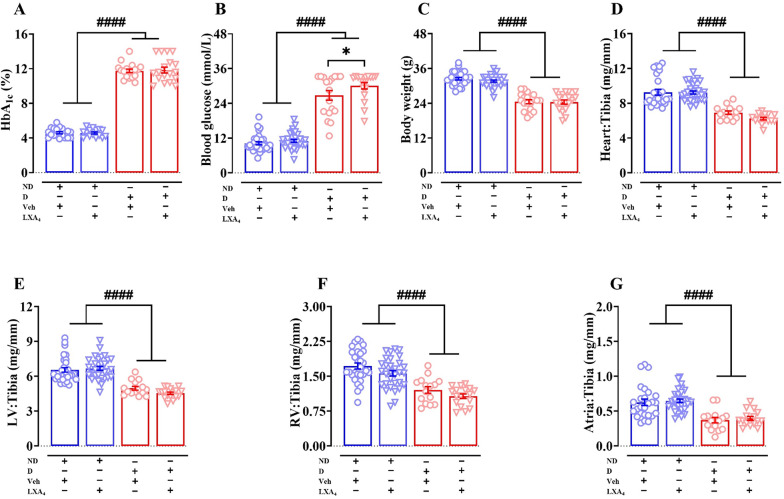
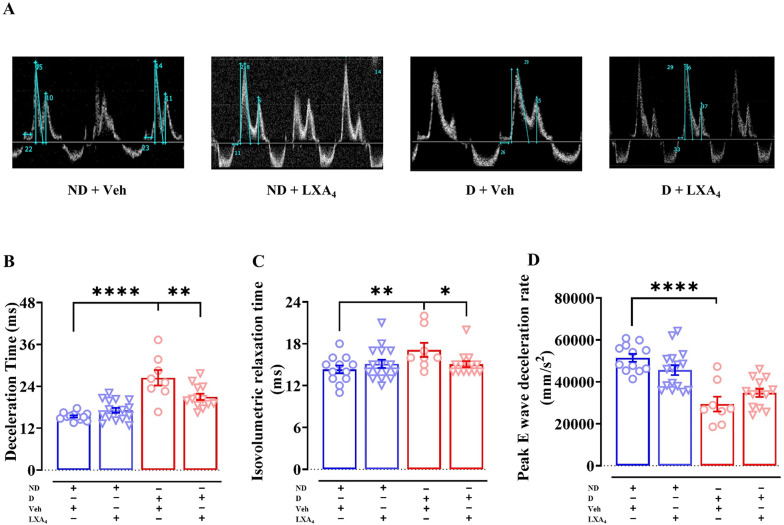
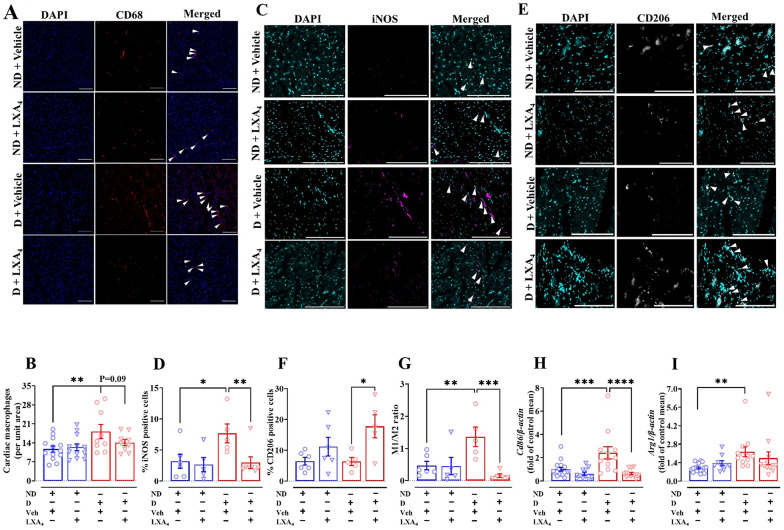
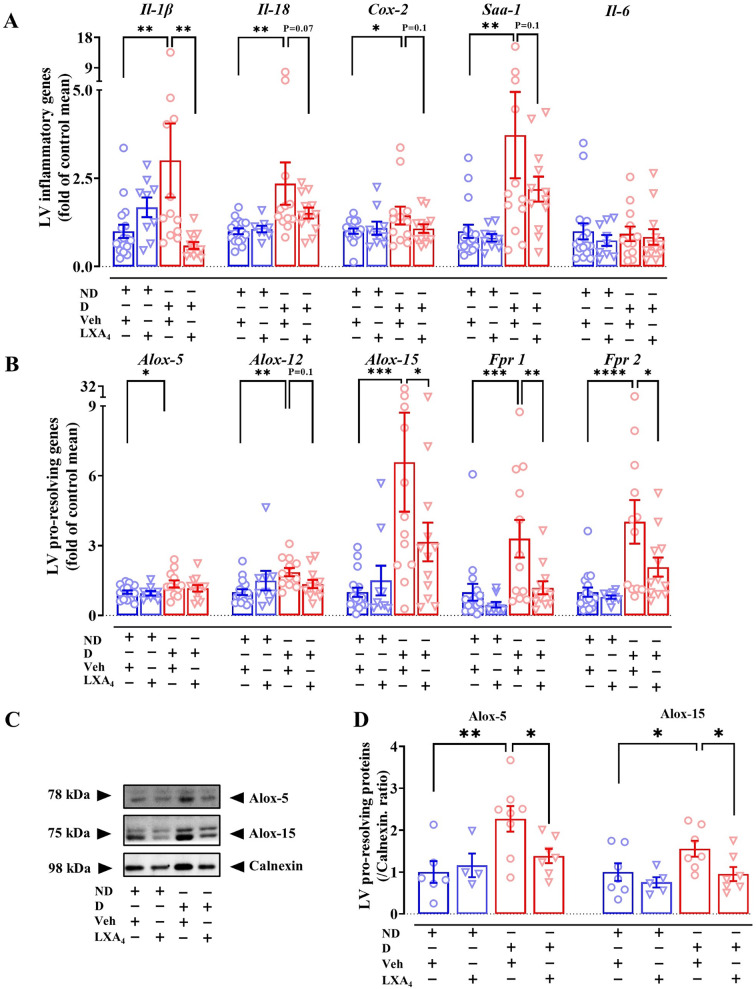
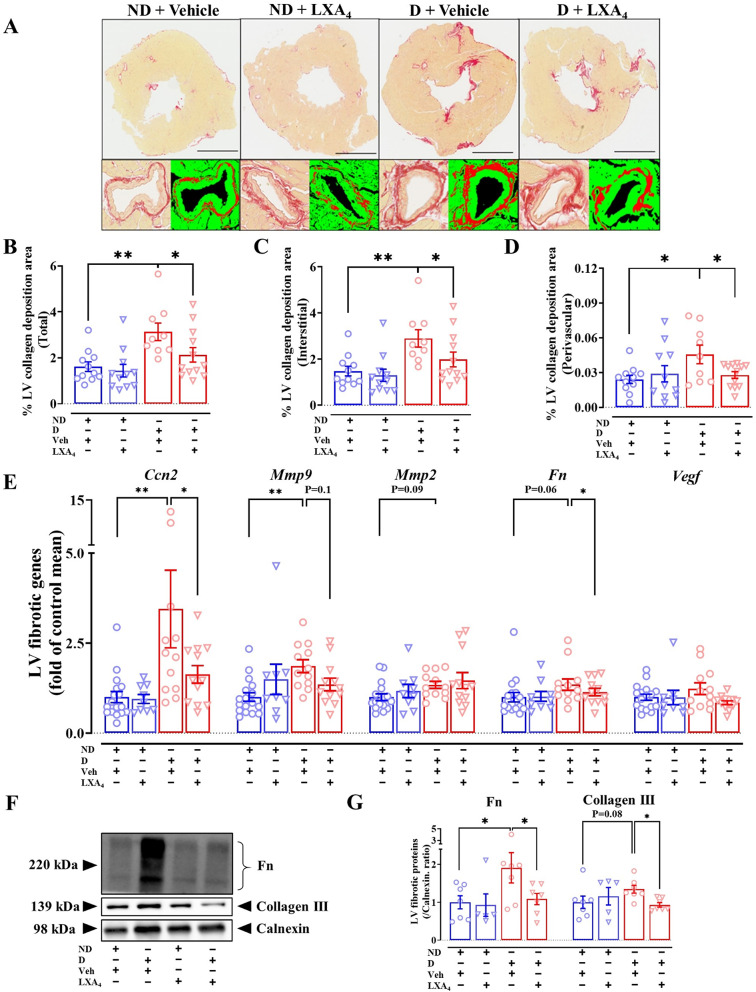
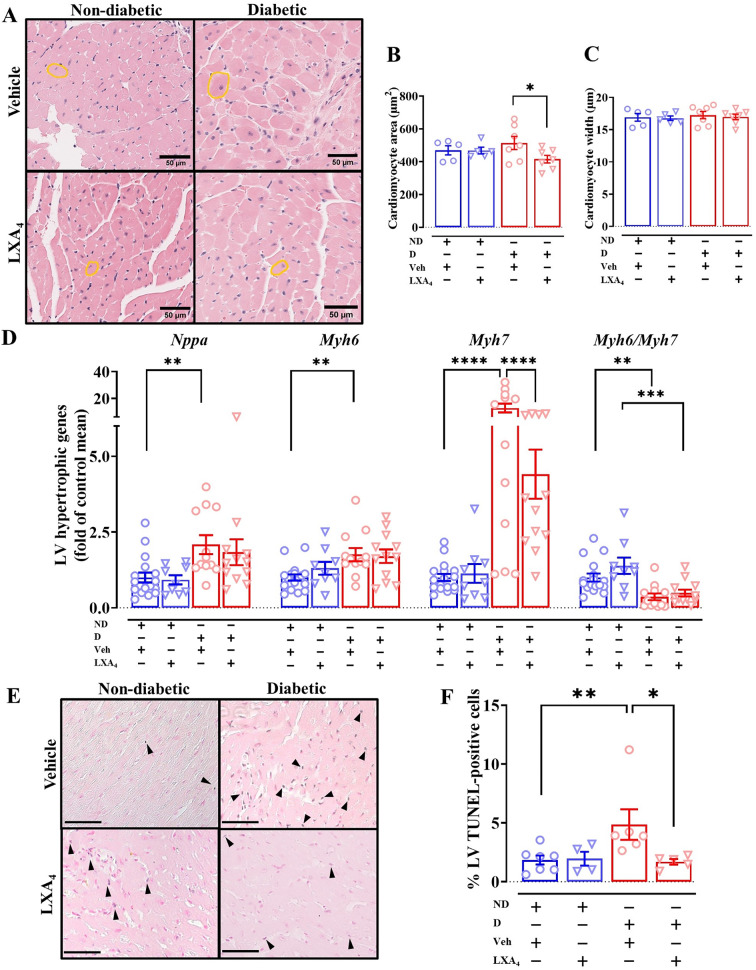
As expected diabetic mice showed a significant elevation in plasma glycated hemoglobin (HbA) and glucose levels, along with reduced body weight. Vehicle-treated diabetic mice exhibited increased cardiac inflammation, macrophage content, and an elevated ratio of M1-like to M2-like macrophage markers. In addition, myocardial fibrosis, cardiomyocytes apoptosis and hypertrophy (at the genetic level) were evident, with echocardiography revealing early signs of left ventricular (LV) diastolic dysfunction. Treatment with LXA ameliorated diabetes-induced cardiac inflammation, pro-inflammatory macrophage polarization and cardiac remodeling (especially myocardial fibrosis and cardiomyocytes apoptosis), with ultimate improvement in cardiac function. Of note, this improvement was independent of glucose control.
These findings demonstrated that LXA treatment attenuated the extent of cardiac inflammation in diabetic hearts, resulting in limited cardiac remodeling and improved LV diastolic function. This supports further exploration of LXA-based therapy for the management of diabetic heart disease. The recent development of stable LXA mimetics holds potential as a novel strategy to treat cardiac dysfunction in diabetes, paving the way for innovative and more effective therapeutic strategies.
糖尿病性心脏病最终可能导致心力衰竭,这是糖尿病患者死亡的主要原因。糖尿病性心力衰竭的治疗方法缺乏有效性,可能是因为未能解决潜在的病理过程,包括慢性、低度炎症。先前的研究报告称,脂氧素 A(LXA)可促进炎症消退,减轻糖尿病诱导的动脉粥样硬化,但尚未研究其对糖尿病心脏的影响。因此,我们旨在确定 LXA 治疗是否能减轻糖尿病引起的心脏病变。
6 周龄雄性载脂蛋白 E 缺陷(ApoE)小鼠在注射链脲佐菌素(STZ,55mg/kg/天,腹腔注射 5 天)诱导 1 型糖尿病(T1DM)后,随访 16 周。最后 6 周,每周两次给予 LXA(5μg/kg,腹腔注射)或载体(0.02%乙醇,腹腔注射)治疗。在每组的一部分小鼠中,在实验终点前一周进行超声心动图检查。在研究结束时,用戊巴比妥钠(100mg/kg 腹腔注射)处死小鼠,收集心脏进行离体分析,包括组织学评估、实时 PCR 基因表达谱分析和 Western blot 蛋白水平测量。
正如预期的那样,糖尿病小鼠的血浆糖化血红蛋白(HbA)和血糖水平显著升高,体重减轻。用载体治疗的糖尿病小鼠表现出心脏炎症增加、巨噬细胞含量增加以及 M1 样和 M2 样巨噬细胞标志物的比值升高。此外,心肌纤维化、心肌细胞凋亡和肥大(在基因水平上)明显,超声心动图显示左心室(LV)舒张功能早期受损。用 LXA 治疗可改善糖尿病引起的心脏炎症、促炎型巨噬细胞极化和心脏重构(特别是心肌纤维化和心肌细胞凋亡),最终改善心脏功能。值得注意的是,这种改善与血糖控制无关。
这些发现表明,LXA 治疗可减轻糖尿病心脏的炎症程度,从而限制心脏重构并改善 LV 舒张功能。这支持进一步探索基于 LXA 的治疗方法来治疗糖尿病性心脏病。最近开发的稳定 LXA 类似物为治疗糖尿病性心脏功能障碍提供了一种新的策略,为创新和更有效的治疗策略铺平了道路。