Miki Kenji, Yagi Mikako, Hatae Ryusuke, Otsuji Ryosuke, Miyazaki Takahiro, Goto Katsuhiro, Setoyama Daiki, Fujioka Yutaka, Sangatsuda Yuhei, Kuga Daisuke, Higa Nayuta, Takajo Tomoko, Hajime Yonezawa, Akahane Toshiaki, Tanimoto Akihide, Hanaya Ryosuke, Kunisaki Yuya, Uchiumi Takeshi, Yoshimoto Koji
Department of Neurosurgery, Graduate School of Medical Sciences, Kyushu University, Higashi-Ku, Fukuoka, 812-8582, Japan.
Department of Clinical Chemistry and Laboratory Medicine, Graduate School of Medical Sciences, Kyushu University, Higashi-Ku, Fukuoka, 812-8582, Japan.
Cancer Metab. 2024 Nov 19;12(1):35. doi: 10.1186/s40170-024-00364-0.
Glioblastoma is an aggressive cancer that originates from abnormal cell growth in the brain and requires metabolic reprogramming to support tumor growth. Metabolic reprogramming involves the upregulation of various metabolic pathways. Although the activation of specific metabolic pathways in glioblastoma cell lines has been documented, the comprehensive profile of metabolic reprogramming and the role of each pathway in glioblastoma tissues in patients remain elusive.
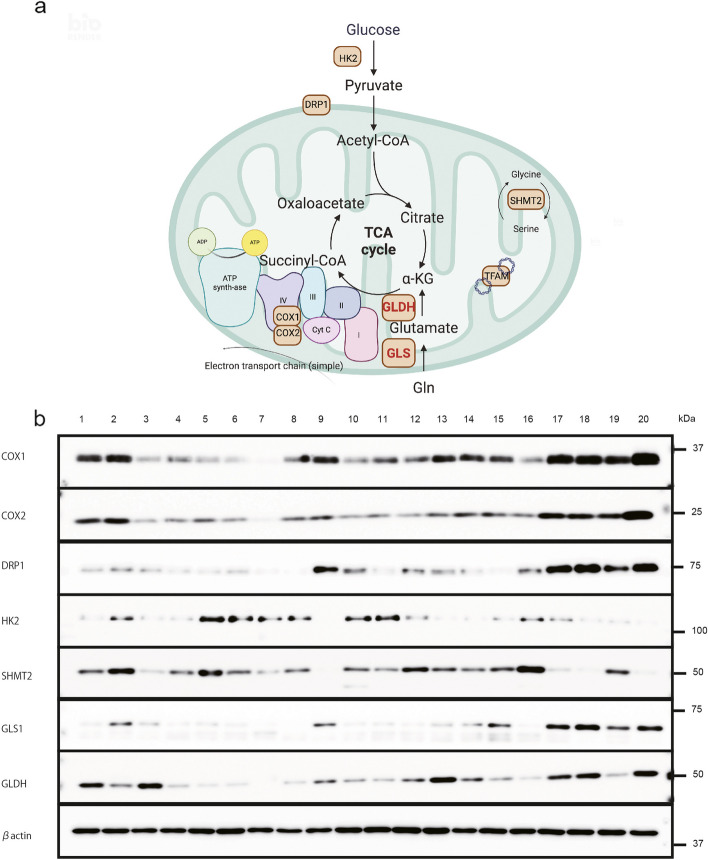
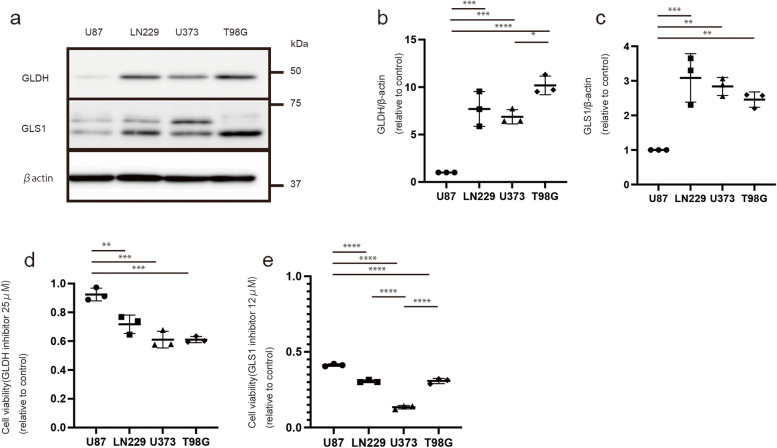
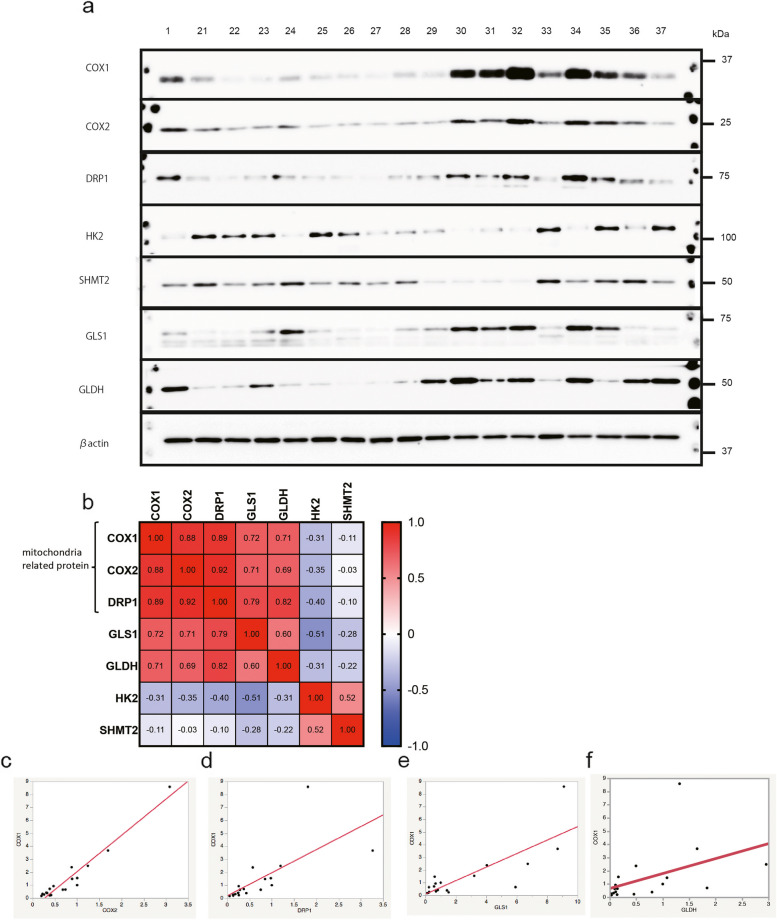
We analyzed 38 glioblastoma tissues. As a test set, we examined 20 tissues from Kyushu University Hospital, focusing on proteins related to several metabolic pathways, including glycolysis, the one-carbon cycle, glutaminolysis, and the mitochondrial tricarboxylic acid cycle. Subsequently, we analyzed an additional 18 glioblastoma tissues from Kagoshima University Hospital as a validation set. We also validated our findings using six cell lines, including U87, LN229, U373, T98G, and two patient-derived cells.
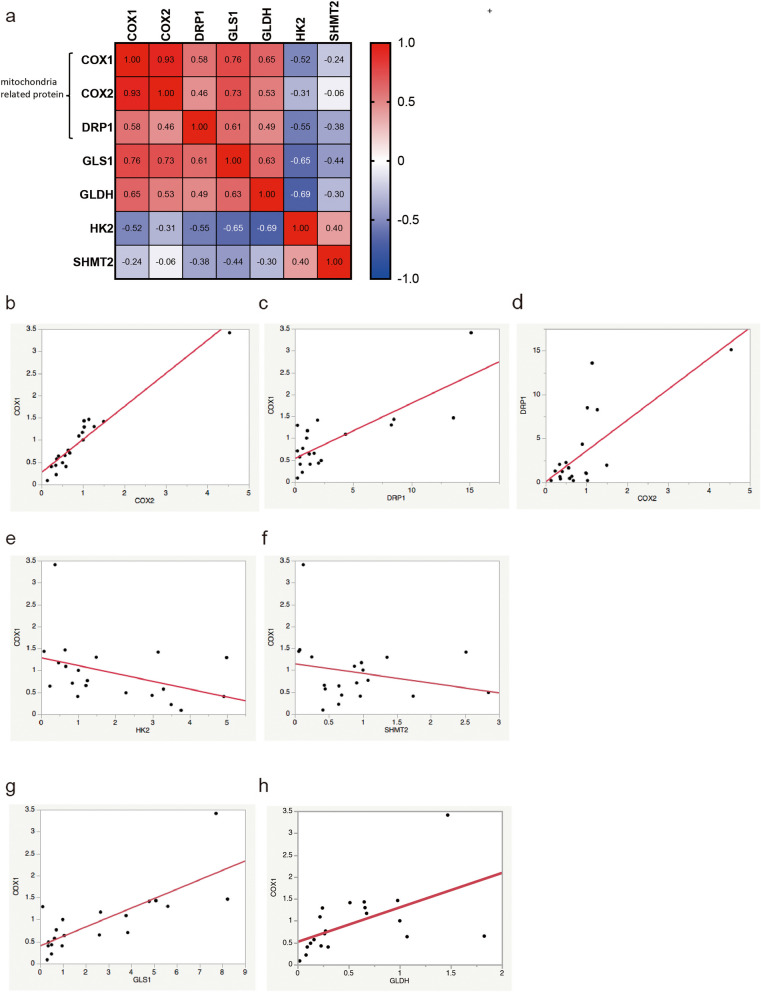
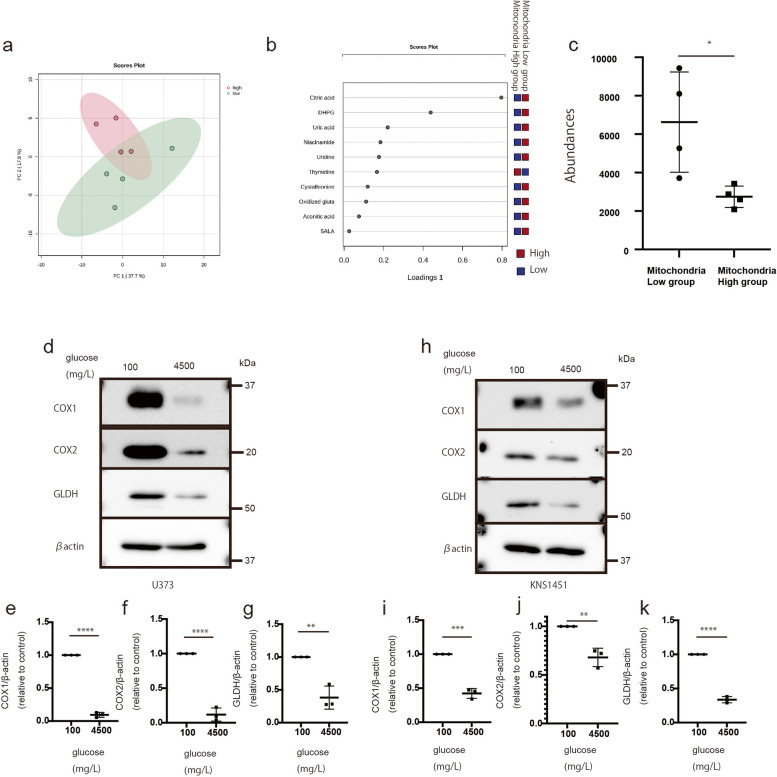
The levels of mitochondria-related proteins (COX1, COX2, and DRP1) were correlated with each other and with glutaminolysis-related proteins (GLDH and GLS1). Conversely, their expression was inversely correlated with that of glycolytic proteins. Notably, inhibiting the glutaminolysis pathway in cell lines with high GLDH and GLS1 expression proved effective in suppressing tumor growth.
Our findings confirm that glioblastoma tissues can be categorized into glycolytic-dominant and mitochondrial-dominant types, as previously reported. The mitochondrial-dominant type is also glutaminolysis-dominant. Therefore, inhibiting the glutaminolysis pathway may be an effective treatment for mitochondrial-dominant glioblastoma.
胶质母细胞瘤是一种侵袭性癌症,起源于大脑中的异常细胞生长,需要代谢重编程来支持肿瘤生长。代谢重编程涉及各种代谢途径的上调。尽管已记录了胶质母细胞瘤细胞系中特定代谢途径的激活,但代谢重编程的全面概况以及各途径在胶质母细胞瘤患者组织中的作用仍不清楚。
我们分析了38个胶质母细胞瘤组织。作为测试集,我们检查了来自九州大学医院的20个组织,重点关注与几种代谢途径相关的蛋白质,包括糖酵解、一碳循环、谷氨酰胺分解和线粒体三羧酸循环。随后,我们分析了来自鹿儿岛大学医院的另外18个胶质母细胞瘤组织作为验证集。我们还使用六种细胞系验证了我们的发现,包括U87、LN229、U373、T98G和两种患者来源的细胞。
线粒体相关蛋白(COX1、COX2和DRP1)的水平彼此相关,并且与谷氨酰胺分解相关蛋白(GLDH和GLS1)相关。相反,它们的表达与糖酵解蛋白的表达呈负相关。值得注意的是,在高表达GLDH和GLS1的细胞系中抑制谷氨酰胺分解途径被证明对抑制肿瘤生长有效。
我们的研究结果证实,胶质母细胞瘤组织可以如先前报道的那样分为糖酵解主导型和线粒体主导型。线粒体主导型也是谷氨酰胺分解主导型。因此,抑制谷氨酰胺分解途径可能是治疗线粒体主导型胶质母细胞瘤的有效方法。