Department of Preclinical Research Division, APRINOIA Therapeutics Inc., Tokyo, Japan.
APRINOIA Therapeutics Inc., Taipei, China.
FASEB J. 2024 Nov 30;38(22):e70160. doi: 10.1096/fj.202401704R.
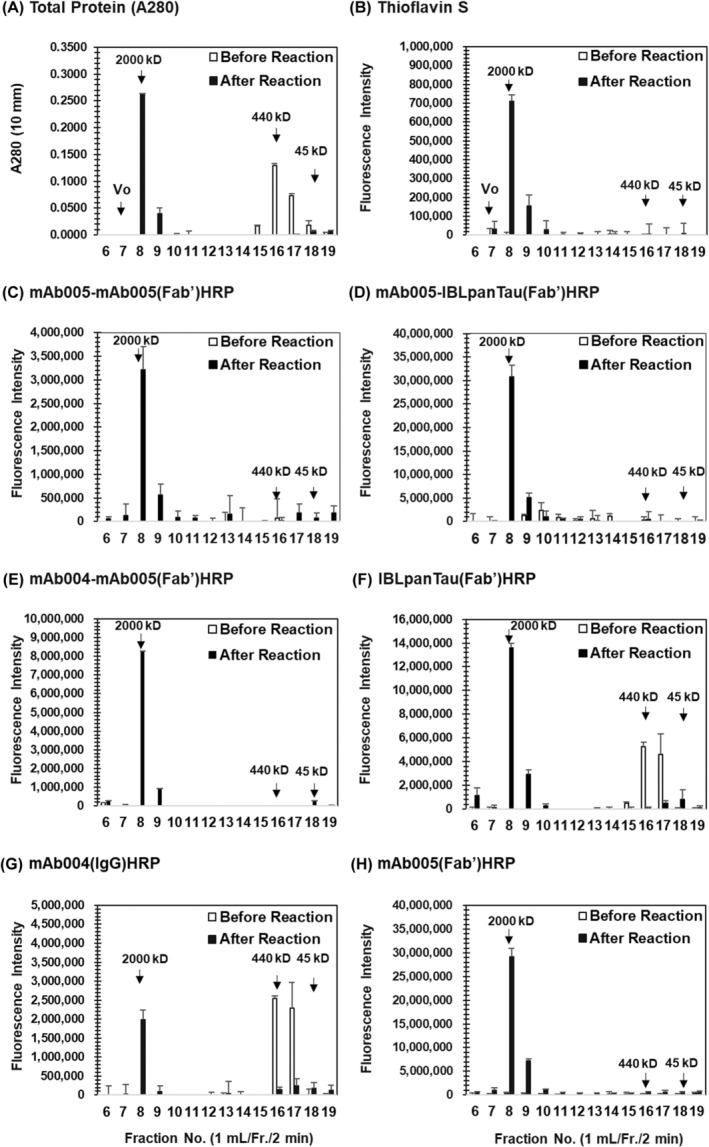
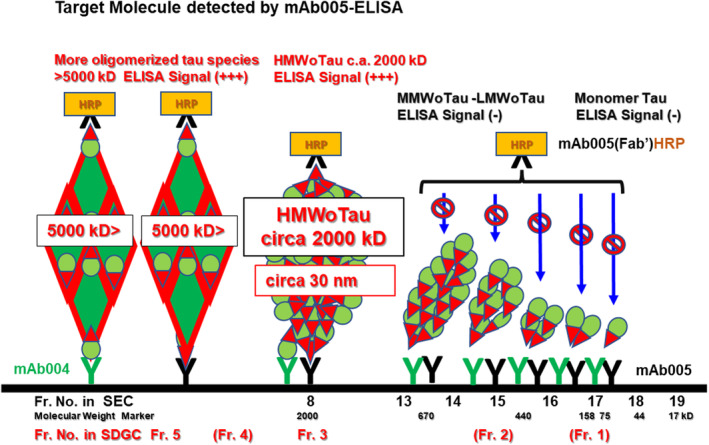
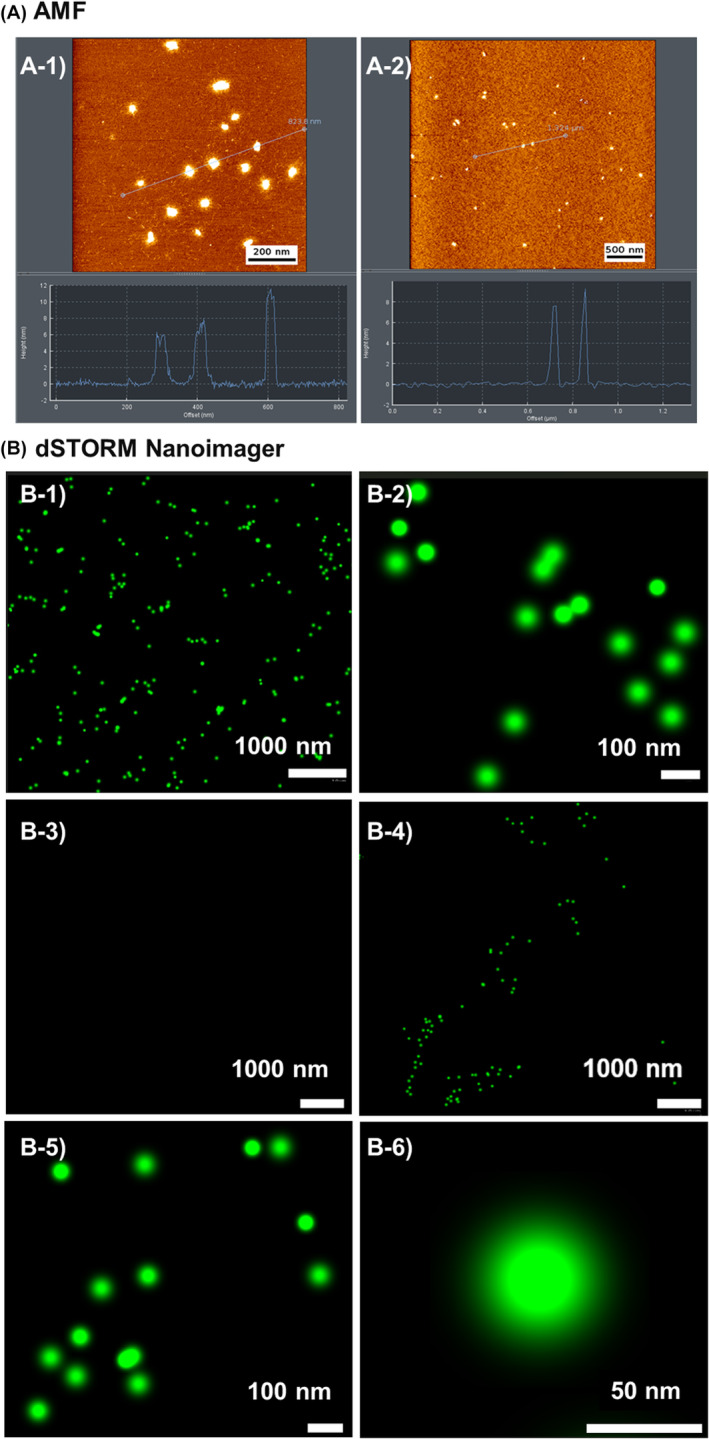
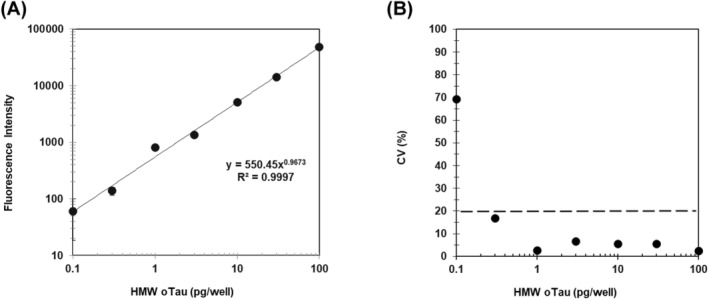
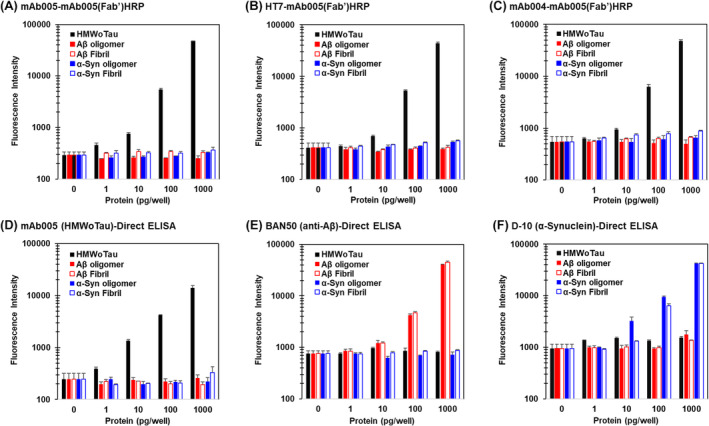
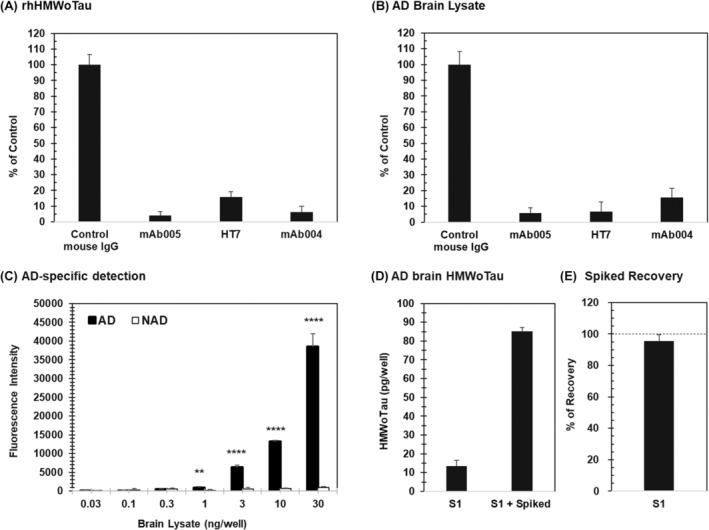
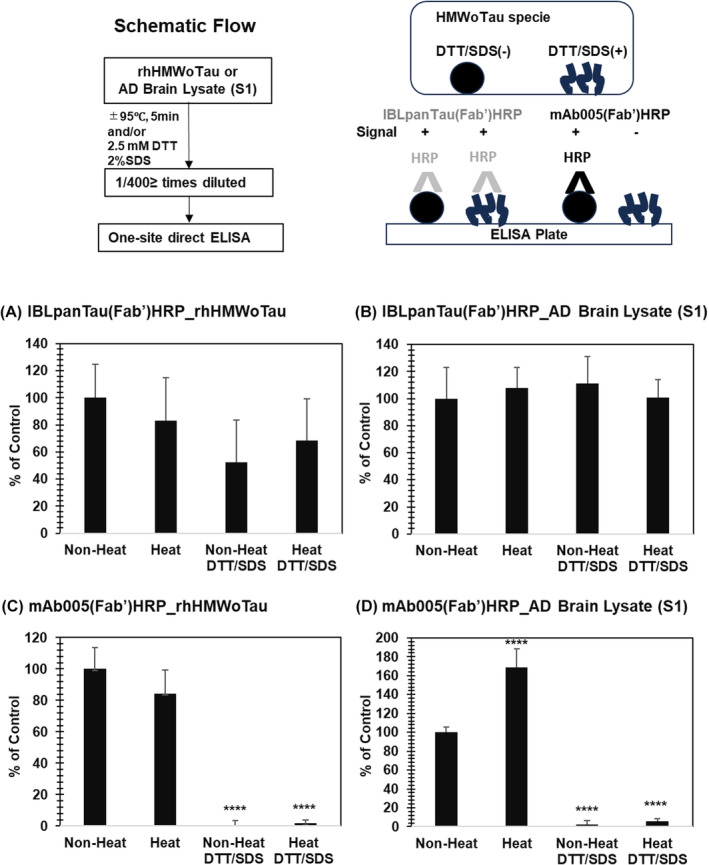
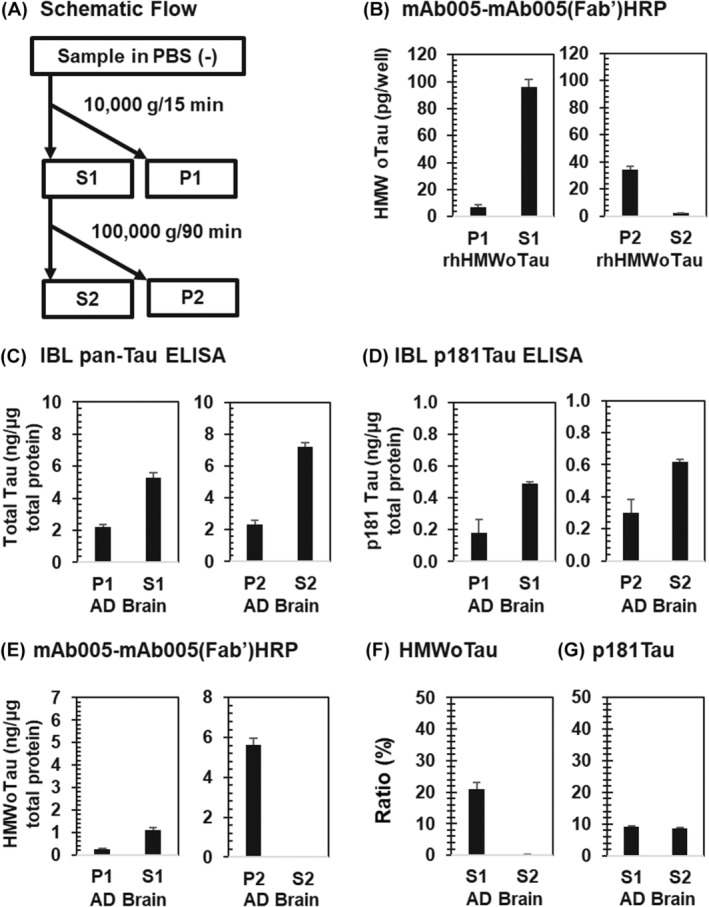
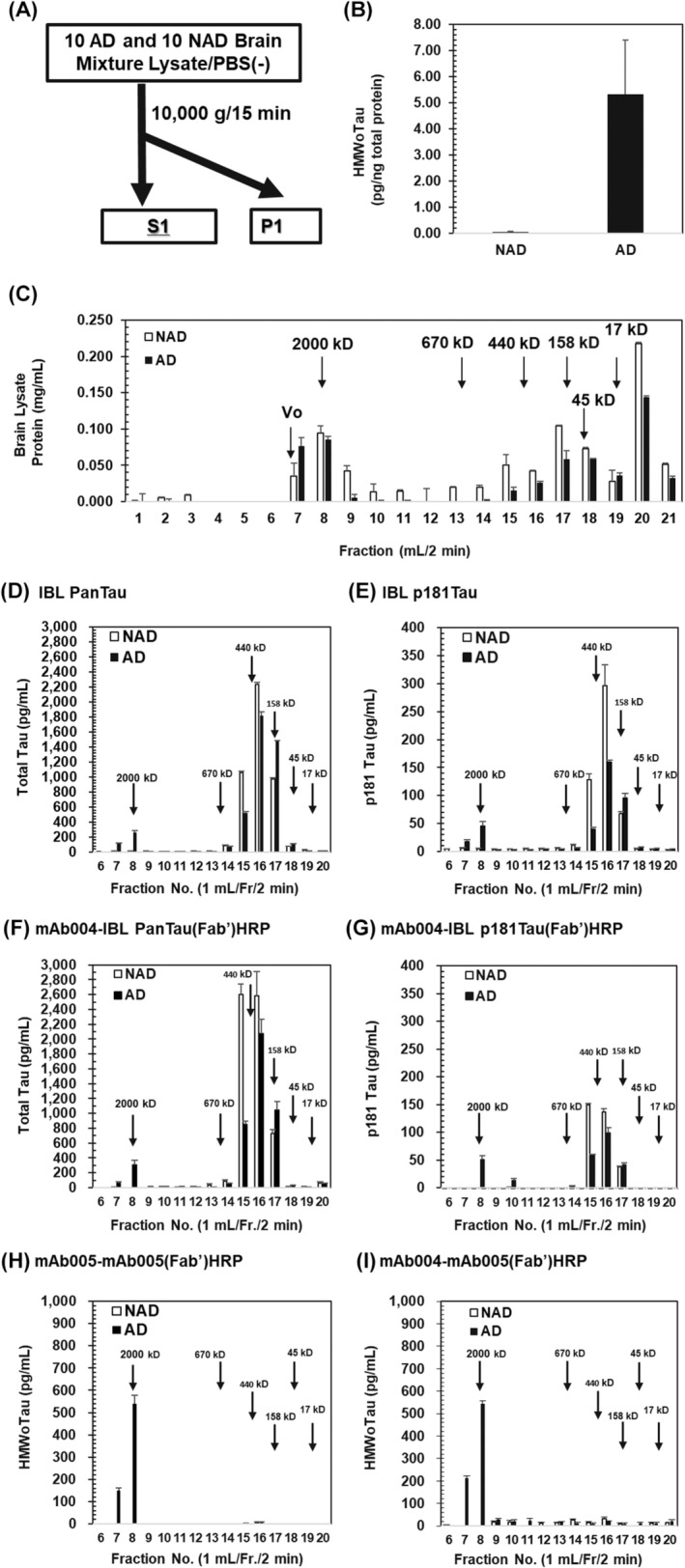
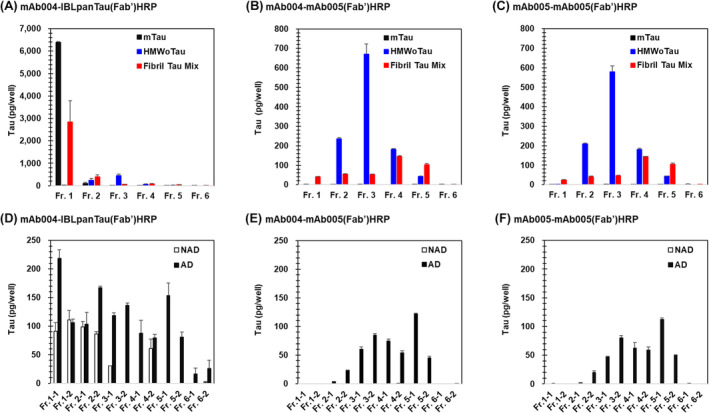
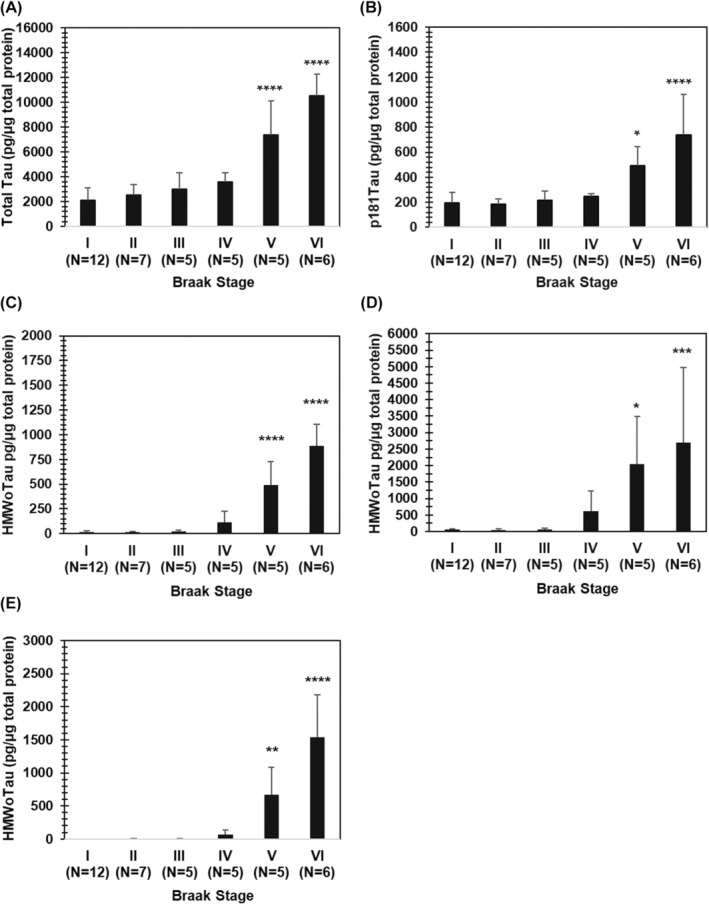
Disease-specific oligomers Tau assay system is anticipated in Alzheimer disease (AD) to elucidate their etiological roles. We developed a highly sensitive and selective ELISA for high-molecular-weight oligomer tau (HMWoTau) with LLOQ of 0.3 pg/well for the first time, using a novel mouse monoclonal antibody APNmAb005. The target molecule was identified as HMWoTau with circa 2000 kD as a minimum size and the more oligomerized species (>5000 kD), in combination analysis with Size-Exclusion-Chromatography and Sucrose-Density-Gradient-Centrifugation for both recombinant human (rh) Tau-derived aggregates and AD brain-lysates in PBS(-). HMWoTau was labeled by Thioflavin S and visualized as a homogeneous globular particle (about 30 nm in diameter) by two different technologies of atomic force microscopy and dSTORM-Nanoimager. Specific quantitation was also confirmed by immune-absorption, rhHMWoTau-spiked, and cross-reactivity studies. APNmAb005 failed to detect the HMWoTau signal by treatment with DTT/SDS under no influence on the pan-tau antibody, indicating its conformation-specific recognition. APNmAb005-ELISA showed AD-specific and statistically significant ELISA signals from 1 ng brain lysate protein/well. Analysis of the frontal neocortex (N = 40, Braak stage I-VI) by ELISA revealed the detection-limit levels of HMWoTau species at stage I-III, and drastic and statistically significant increases at stage V/VI (AD). By contrast, total Tau and p181 Tau showed 1/4-1/5 levels of AD even at Stage I, while both tau species also showed a statistically significant increase in AD. In sum, our novel APNmAb005-ELISA clarified the disease-specific increase in HMWoTau species and will be useful for not only further etiological elucidation but also the potential diagnostics in AD and relevant tauopathy.
疾病特异性寡聚物 Tau 检测系统有望用于阿尔茨海默病(AD),以阐明其病因作用。我们首次使用新型小鼠单克隆抗体 APNmAb005 开发了一种高灵敏度和高选择性的高相对分子质量寡聚 Tau(HMWoTau)ELISA,其最低检测限为 0.3pg/孔。该目标分子被鉴定为 HMWoTau,其相对分子质量约为 2000kD,为最小尺寸,并且是更聚集的物质(>5000kD),结合使用排阻色谱和蔗糖密度梯度离心分析,对重组人(rh)Tau 衍生的聚集物和 AD 脑裂解物在 PBS(-)中的分析结果也是如此。用噻唑黄素 S 标记 HMWoTau,并通过两种不同的原子力显微镜和 dSTORM-Nanoimager 技术将其可视化呈均匀的球形颗粒(直径约 30nm)。通过免疫吸收、rhHMWoTau 加标和交叉反应研究也证实了特异性定量。APNmAb005 在不受 pan-Tau 抗体影响的情况下,用 DTT/SDS 处理后无法检测到 HMWoTau 信号,表明其具有构象特异性识别。APNmAb005-ELISA 显示从 1ng 脑裂解物蛋白/孔中检测到 AD 特异性和统计学上显著的 ELISA 信号。通过 ELISA 对额皮质(N=40,Braak 分期 I-VI)的分析显示,在分期 I-III 可以检测到 HMWoTau 物种的检测限水平,在分期 V/VI(AD)时急剧增加且具有统计学意义。相比之下,即使在分期 I 时,总 Tau 和 p181 Tau 也只有 AD 的 1/4-1/5 水平,而这两种 tau 物种在 AD 中也显示出统计学上显著的增加。总之,我们的新型 APNmAb005-ELISA 阐明了疾病特异性 HMWoTau 物种的增加,这不仅有助于进一步阐明病因,而且对 AD 和相关 tau 病的潜在诊断也具有重要意义。