Tiernan Chelsea T, Combs Benjamin, Cox Kristine, Morfini Gerardo, Brady Scott T, Counts Scott E, Kanaan Nicholas M
Department of Translational Science and Molecular Medicine, Michigan State University, Grand Rapids, MI 49503, USA.
Department of Anatomy and Cell Biology, University of Illinois at Chicago, IL 60612, USA.
Exp Neurol. 2016 Sep;283(Pt A):318-29. doi: 10.1016/j.expneurol.2016.06.030. Epub 2016 Jun 30.
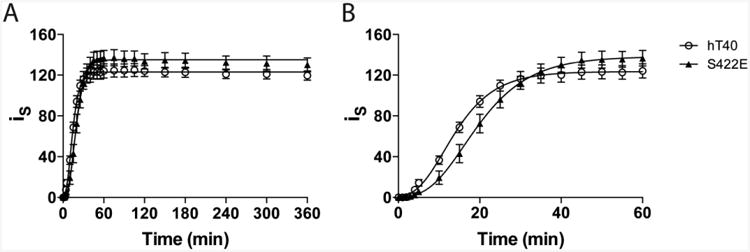
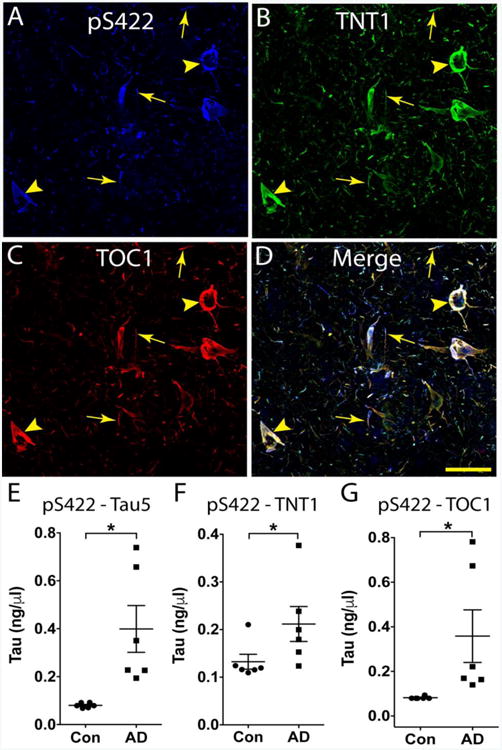
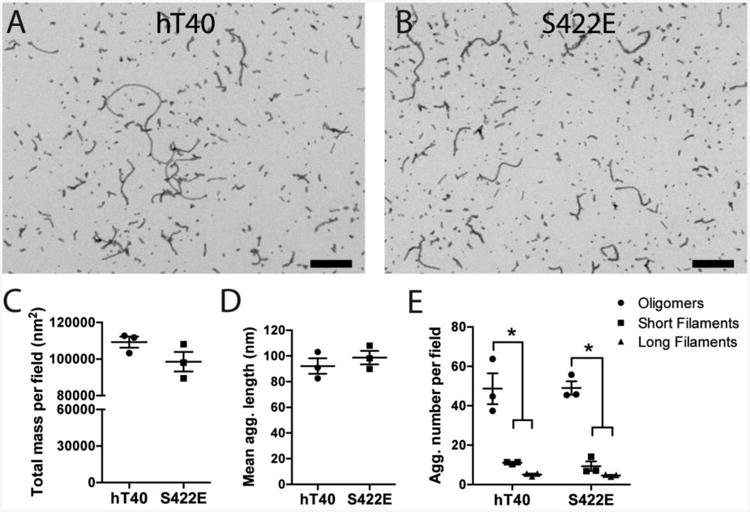
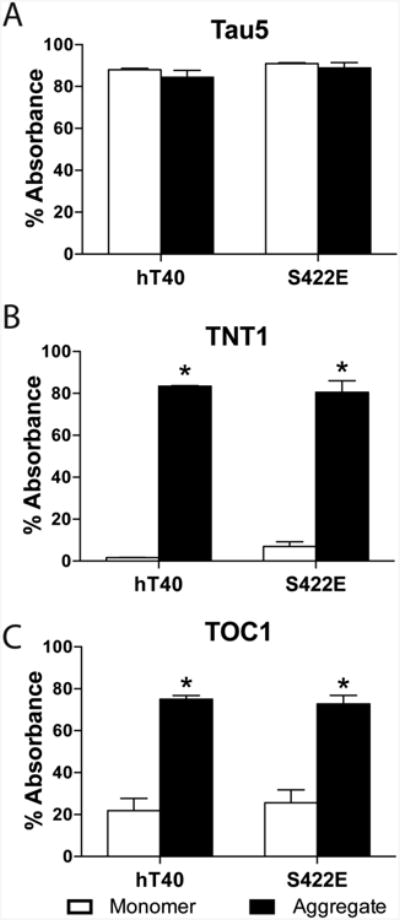
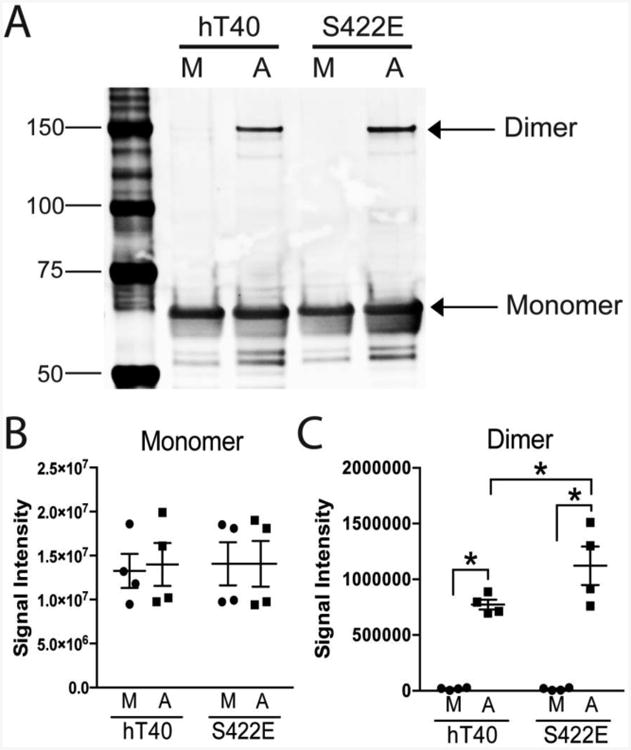
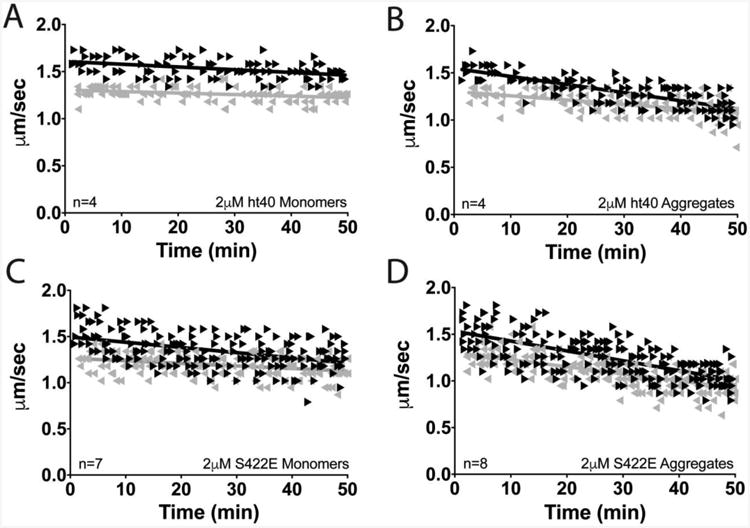
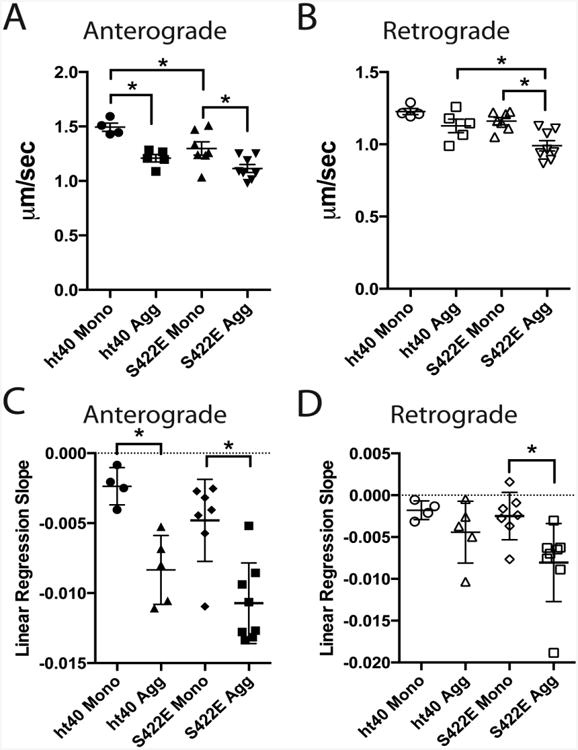
In Alzheimer's disease (AD), tau undergoes numerous modifications, including increased phosphorylation at serine-422 (pS422). In the human brain, pS422 tau protein is found in prodromal AD, correlates well with cognitive decline and neuropil thread pathology, and appears associated with increased oligomer formation and exposure of the N-terminal phosphatase-activating domain (PAD). However, whether S422 phosphorylation contributes to toxic mechanisms associated with disease-related forms of tau remains unknown. Here, we report that S422-pseudophosphorylated tau (S422E) lengthens the nucleation phase of aggregation without altering the extent of aggregation or the types of aggregates formed. When compared to unmodified tau aggregates, the S422E modification significantly increased the amount of SDS-stable tau dimers, despite similar levels of immunoreactivity with an oligomer-selective antibody (TOC1) and another antibody that reports PAD exposure (TNT1). Vesicle motility assays in isolated squid axoplasm further revealed that S422E tau monomers inhibited anterograde, kinesin-1 dependent fast axonal transport (FAT). Unexpectedly, and unlike unmodified tau aggregates, which selectively inhibit anterograde FAT, aggregates composed of S422E tau were found to inhibit both anterograde and retrograde FAT. Highlighting the relevance of these findings to human disease, pS422 tau was found to colocalize with tau oligomers and with a fraction of tau showing increased PAD exposure in the human AD brain. This study identifies novel effects of pS422 on tau biochemical properties, including prolonged nucleation and enhanced dimer formation, which correlate with a distinct inhibitory effect on FAT. Taken together, these findings identify a novel mechanistic basis by which pS422 confers upon tau a toxic effect that may directly contribute to axonal dysfunction in AD and other tauopathies.
在阿尔茨海默病(AD)中,tau蛋白会发生多种修饰,包括丝氨酸422位点(pS422)磷酸化增加。在人类大脑中,pS422 tau蛋白出现在前驱性AD中,与认知功能下降和神经原纤维缠结病理密切相关,并且似乎与寡聚体形成增加以及N端磷酸酶激活域(PAD)的暴露有关。然而,S422磷酸化是否促成与疾病相关形式的tau蛋白相关的毒性机制仍不清楚。在此,我们报告S422假磷酸化的tau蛋白(S422E)延长了聚集的成核阶段,而不改变聚集程度或形成的聚集体类型。与未修饰的tau聚集体相比,S422E修饰显著增加了SDS稳定的tau二聚体的数量,尽管与寡聚体选择性抗体(TOC1)和另一种报告PAD暴露的抗体(TNT1)的免疫反应性水平相似。在分离的鱿鱼轴浆中进行的囊泡运动分析进一步表明,S422E tau单体抑制了顺行性、驱动蛋白-1依赖性快速轴突运输(FAT)。出乎意料的是,与选择性抑制顺行性FAT的未修饰tau聚集体不同,由S422E tau组成的聚集体被发现同时抑制顺行性和逆行性FAT。这些发现与人类疾病的相关性在于,在人类AD大脑中发现pS422 tau与tau寡聚体以及一部分显示PAD暴露增加的tau共定位。这项研究确定了pS422对tau生化特性的新影响,包括延长成核和增强二聚体形成,这与对FAT的独特抑制作用相关。综上所述,这些发现确定了一个新的机制基础,通过该机制pS422赋予tau一种毒性作用,可能直接导致AD和其他tau蛋白病中的轴突功能障碍。