Center for Computational Biology, Johns Hopkins University; Baltimore, Maryland, United States of America.
Department of Computer Science, Johns Hopkins University; Baltimore, Maryland, United States of America.
PLoS Comput Biol. 2024 Nov 20;20(11):e1012543. doi: 10.1371/journal.pcbi.1012543. eCollection 2024 Nov.
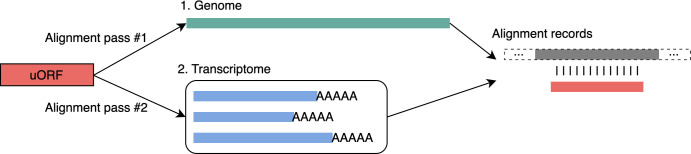
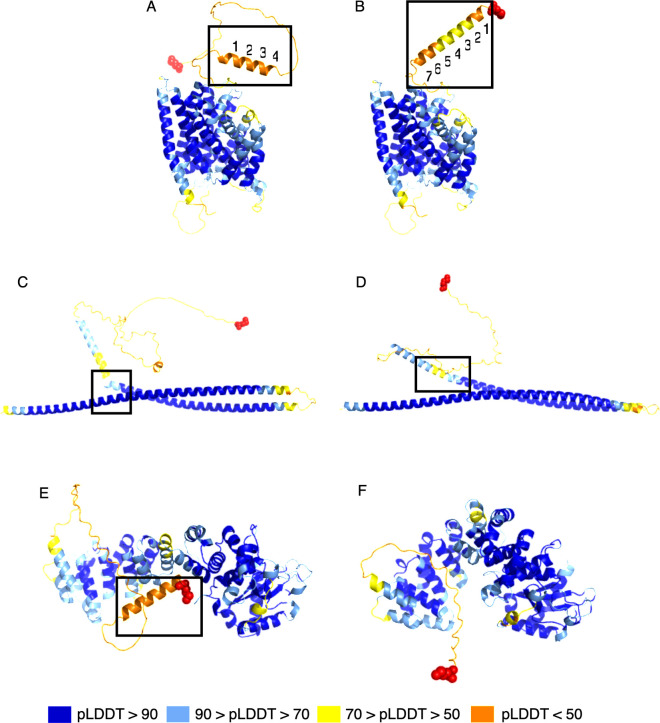
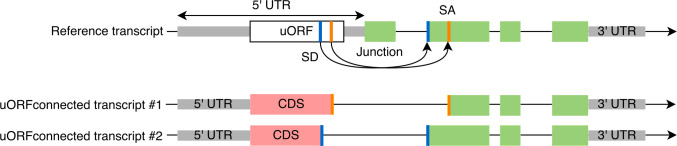
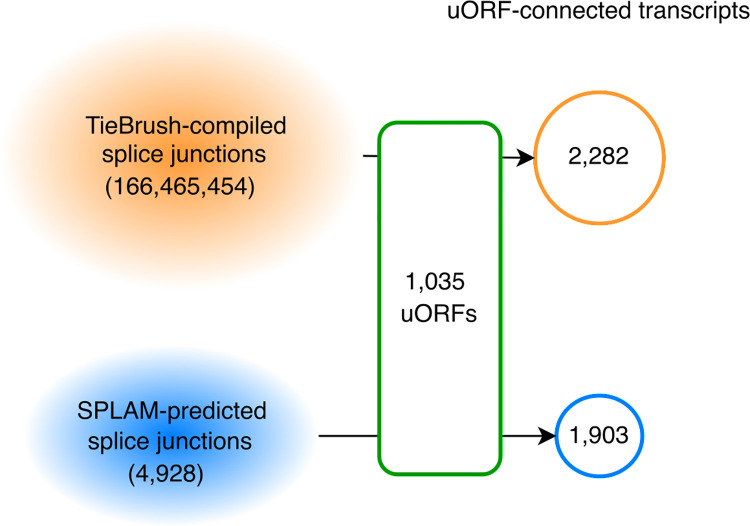
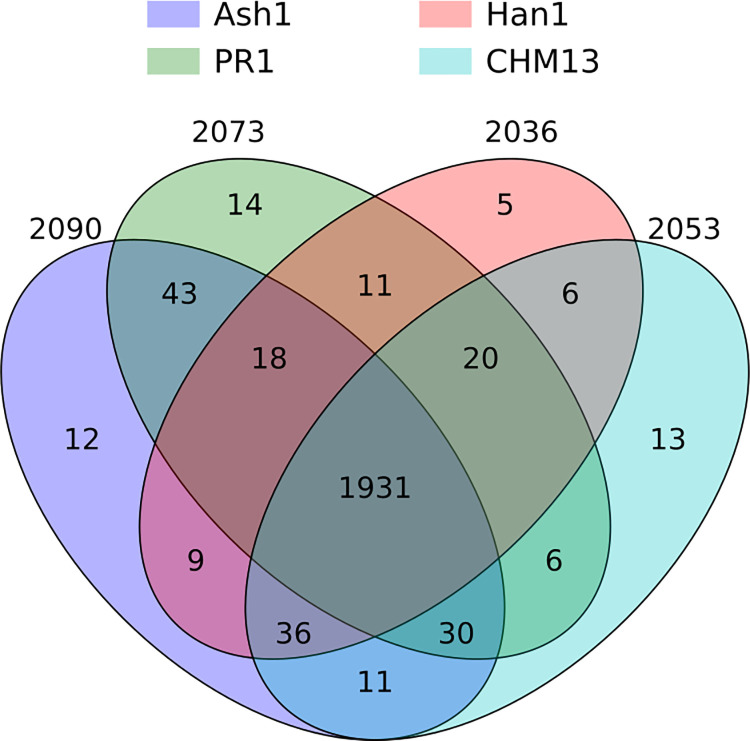
Several recent studies have presented evidence that the human gene catalogue should be expanded to include thousands of short open reading frames (ORFs) appearing upstream or downstream of existing protein-coding genes, each of which might create an additional bicistronic transcript in humans. Here we explore an alternative hypothesis that would explain the translational and evolutionary evidence for these upstream ORFs without the need to create novel genes or bicistronic transcripts. We examined 2,199 upstream ORFs that have been proposed as high-quality candidates for novel genes, to determine if they could instead represent protein-coding exons that can be added to existing genes. We checked for the conservation of these ORFs in four recently sequenced, high-quality human genomes, and found a large majority (87.8%) to be conserved in all four as expected. We then looked for splicing evidence that would connect each upstream ORF to the downstream protein-coding gene at the same locus, thus creating a novel splicing variant using the upstream ORF as its first exon. These protein coding exon candidates were further evaluated using protein structure predictions of the protein sequences that included the proposed new exons. We determined that 541 out of 2,199 upstream ORFs have strong evidence that they can form protein coding exons that are part of an existing gene, and that the resulting protein is predicted to have similar or better structural quality than the currently annotated isoform.
最近的几项研究表明,人类基因目录应该扩大,以包括数千个出现在现有蛋白编码基因上下游的短开放阅读框(ORF),每个 ORF 都可能在人类中产生额外的双顺反子转录本。在这里,我们探讨了另一种假设,即可以在不需要创建新基因或双顺反子转录本的情况下,解释这些上游 ORF 的翻译和进化证据。我们检查了 2199 个被提议为新基因的高质量候选上游 ORF,以确定它们是否可以代表可添加到现有基因中的编码蛋白外显子。我们检查了这些 ORF 在最近测序的四个高质量人类基因组中的保守性,发现绝大多数(87.8%)如预期的那样在所有四个基因组中都保守。然后,我们寻找拼接证据,将每个上游 ORF 与同一基因座的下游蛋白编码基因连接起来,从而使用上游 ORF 作为其第一个外显子来创建新的拼接变体。然后,使用包括提议的新外显子的蛋白质序列的蛋白质结构预测进一步评估这些蛋白质编码外显子候选物。我们确定,在 2199 个上游 ORF 中,有 541 个具有很强的证据表明它们可以形成蛋白编码外显子,这些外显子是现有基因的一部分,并且预测所得蛋白质具有与当前注释的同工型相似或更好的结构质量。