University Center of Orthopedic, Trauma and Plastic Surgery, Faculty of Medicine, University Hospital Carl Gustav Carus, Technische Universität Dresden, Dresden, Germany.
National Center for Tumor Diseases (NCT/UCC), Partner Site Dresden, Germany: German Cancer Research Center (DKFZ), Heidelberg, Germany.
BMC Cancer. 2024 Nov 21;24(1):1431. doi: 10.1186/s12885-024-13170-0.
Femoral bone metastases (FBM) or lesions (FBL) can lead to loss of mobility and independence due to skeletal-related events (SRE), e.g. pain, deformity and pathological fractures. Aim of this study was to analyze effects of radiotherapy and surgery, different surgical techniques and complications on disease-specific survival (DSS).
Patients who underwent palliative therapy for FBM or FBL between 2014 and 2020 were retrospectively analyzed. Chi-square test was used to detect intergroup differences. Survival was calculated using Kaplan-Meier method, Cox regression and compared using log-rank test. Complications were evaluated using Chi-Square test.
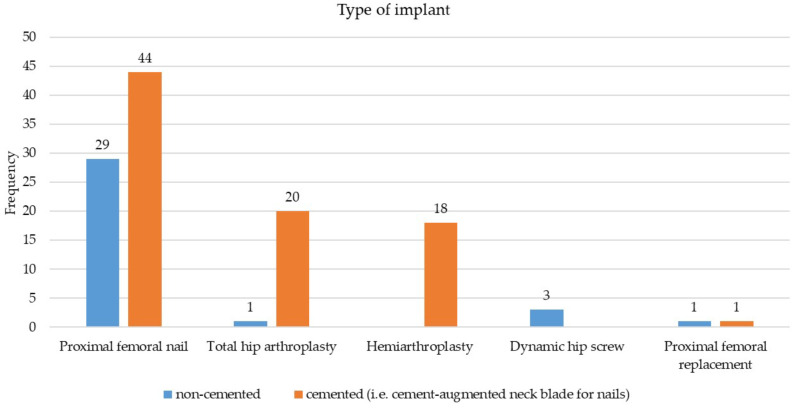
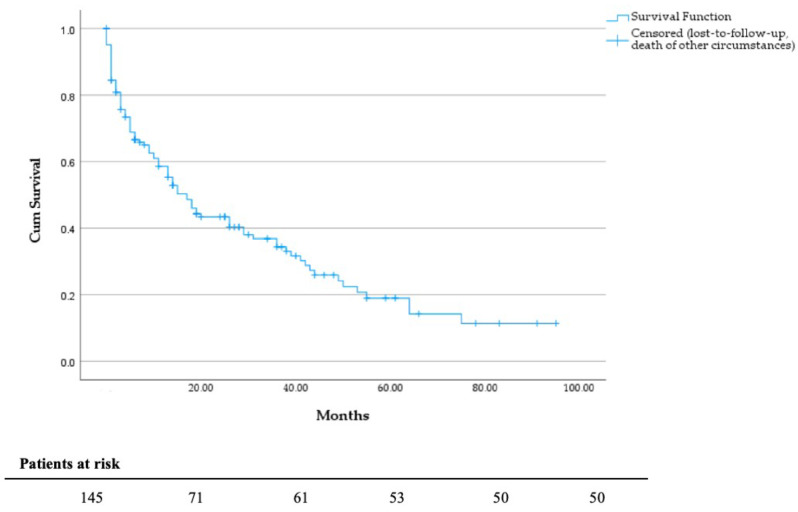
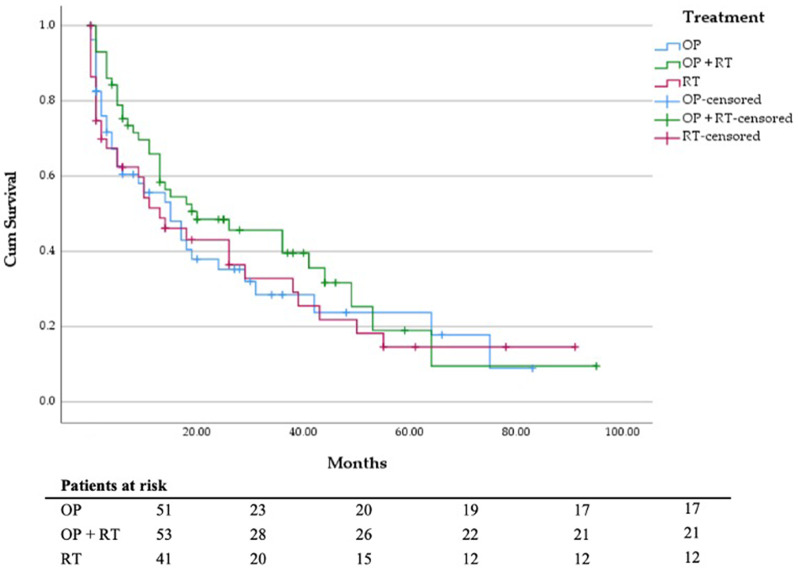
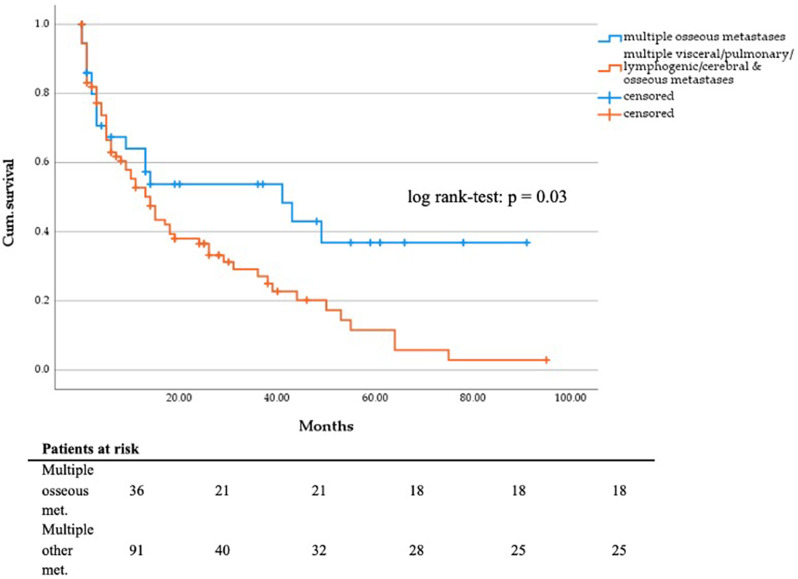
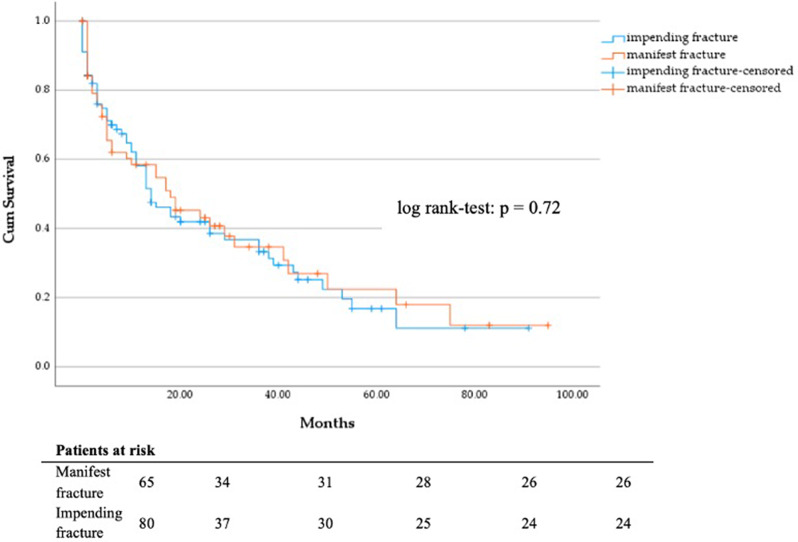
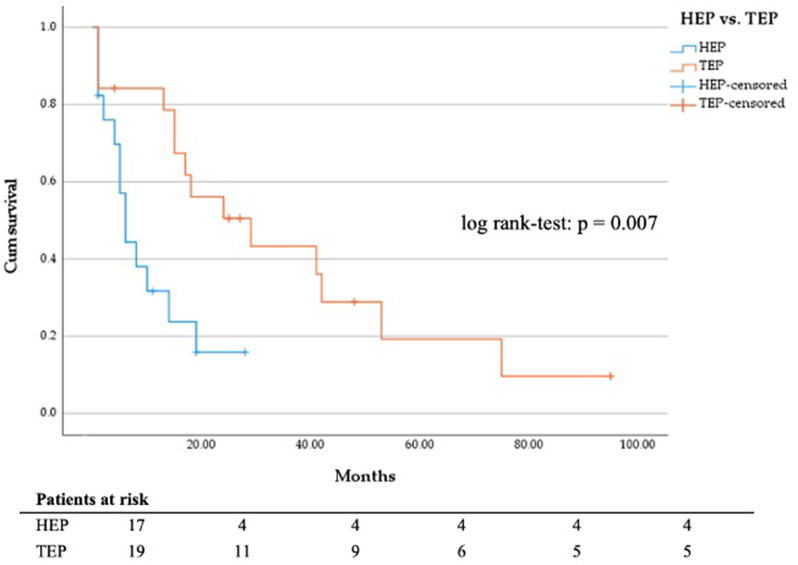
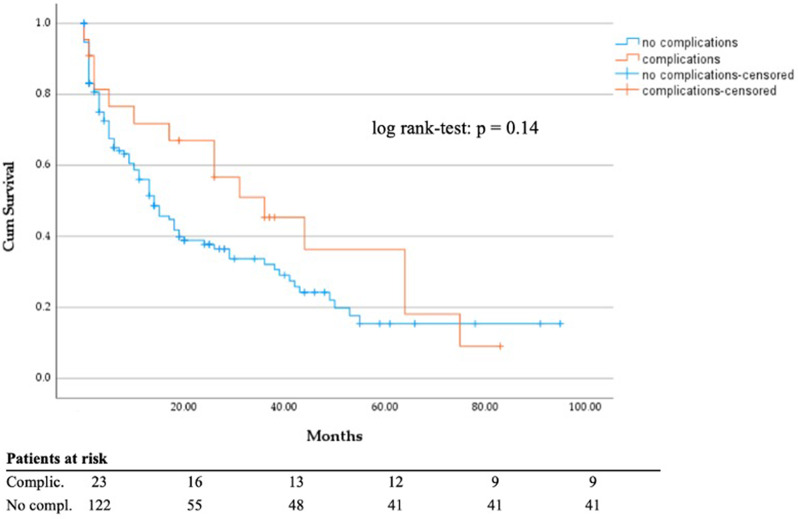
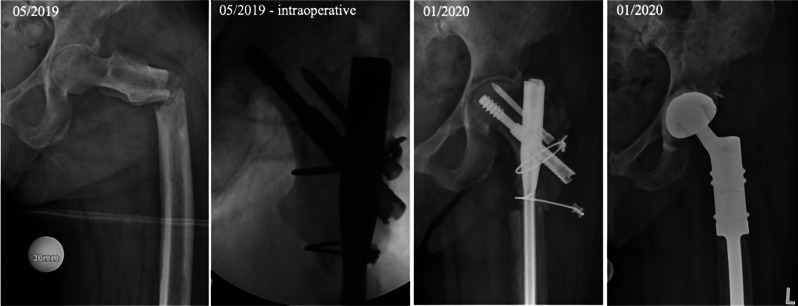
145 patients were treated for proximal femoral BM/BL or pathologic fractures (10 bilaterally). Three groups were classified: surgery only (S, n = 53), surgery with adjuvant radiation (S + RT, n = 58), and primary radiation only (RT, n = 44). Most common primary tumors were breast (n = 31), prostate (n = 27), and non-small cell lung cancer (n = 27). 47 patients underwent surgery for an impending, 61 for a manifest pathological fracture. There were no significant differences in DSS between the 3 groups (S = 29.8, S + RT = 32.2, RT = 27.1 months), with the S + RT group having the longest one-year survival. Local complications occurred in 25 of 145 patients after a mean interval of 9.9 months.
Due to the steadily increasing incidence and survival of patients with FBM/FBL, indication for prevention and treatment of painful and immobilizing SREs should be critically assessed. Surgical treatment should always be performed with maximum stability and, whenever possible, adjuvant RT.
股骨转移瘤(FBM)或病灶(FBL)可因骨骼相关事件(SRE)而导致活动能力和独立性丧失,例如疼痛、畸形和病理性骨折。本研究旨在分析放疗和手术、不同手术技术和并发症对疾病特异性生存(DSS)的影响。
回顾性分析 2014 年至 2020 年间接受姑息性治疗的 FBM 或 FBL 患者。采用卡方检验检测组间差异。采用 Kaplan-Meier 法、Cox 回归计算生存时间,并采用对数秩检验进行比较。采用卡方检验评估并发症。
共治疗 145 例股骨近端 BM/BL 或病理性骨折患者(10 例双侧)。将患者分为三组:单纯手术组(S 组,n=53)、手术联合辅助放疗组(S+RT 组,n=58)和单纯放疗组(RT 组,n=44)。最常见的原发肿瘤为乳腺癌(n=31)、前列腺癌(n=27)和非小细胞肺癌(n=27)。47 例患者因即将发生病理性骨折而行手术治疗,61 例患者因已发生病理性骨折而行手术治疗。三组间 DSS 无显著差异(S 组为 29.8 个月,S+RT 组为 32.2 个月,RT 组为 27.1 个月),S+RT 组的一年生存率最高。145 例患者中有 25 例在平均 9.9 个月后发生局部并发症。
由于股骨转移瘤/病灶患者的发病率和生存率不断上升,应慎重评估预防和治疗导致疼痛和活动受限的 SRE 的指征。手术治疗应始终采用最大稳定性,并尽可能采用辅助放疗。