van Boxel Stan C J, Vermorken Bernd L, Volpe Benjamin, Guinand Nils, Perez-Fornos Angélica, Devocht Elke M J, van de Berg Raymond
Division of Vestibular Disorders, Department of Otorhinolaryngology and Head and Neck Surgery, Maastricht University Medical Center, Maastricht, Netherlands.
Mental Health and Neuroscience Research Institute (MHeNs), Maastricht University, Maastricht, Netherlands.
Front Neurol. 2024 Nov 6;15:1483067. doi: 10.3389/fneur.2024.1483067. eCollection 2024.
The vestibular implant is a neuroprosthesis which offers a potential treatment approach for patients suffering from vestibulopathy. Investigating the influence of electrical stimulation parameters is essential to improve the vestibular implant response. Optimization of the response focuses on the electrically evoked vestibulo-ocular reflex. It aims to facilitate high peak eye velocities and adequate alignment of the eye movement responses. In this study, the basic stimulation parameters of the vestibular implant were tested for their effect on the electrically evoked vestibulo-ocular reflex.
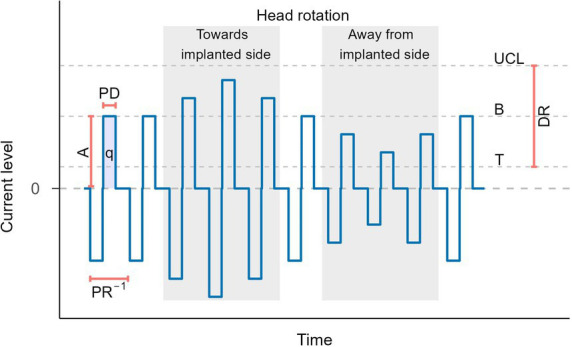
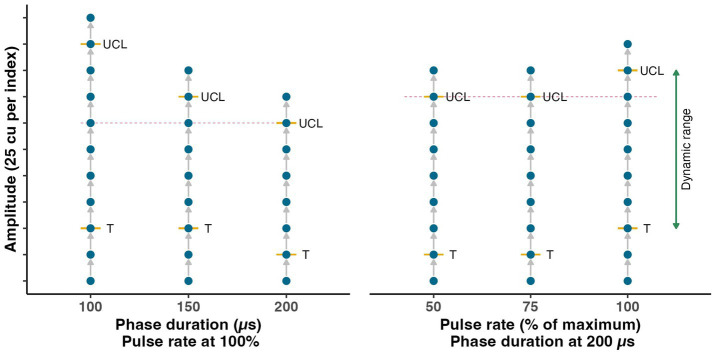
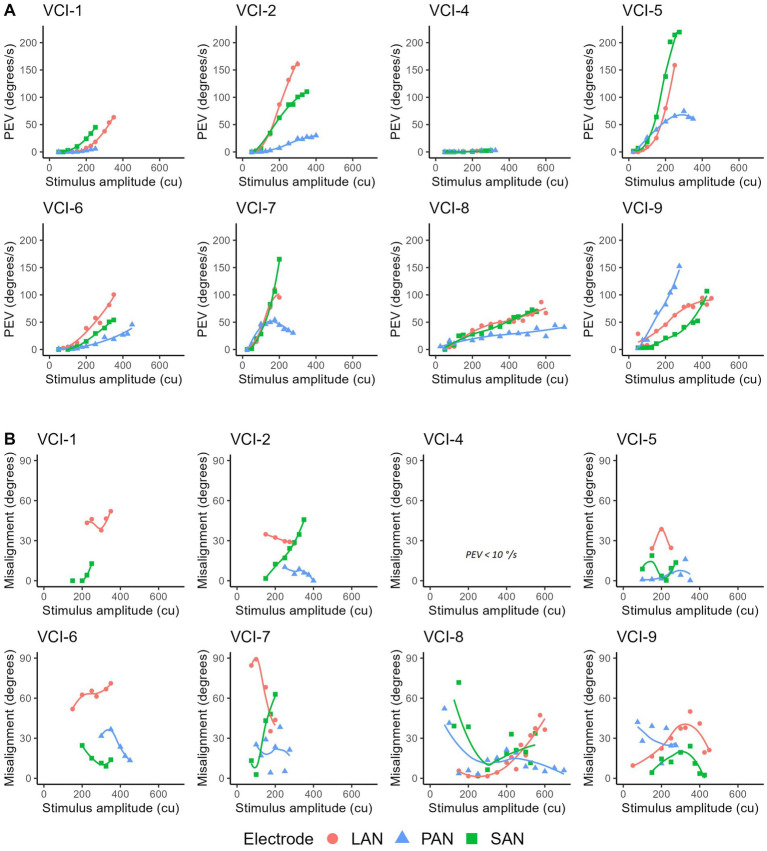
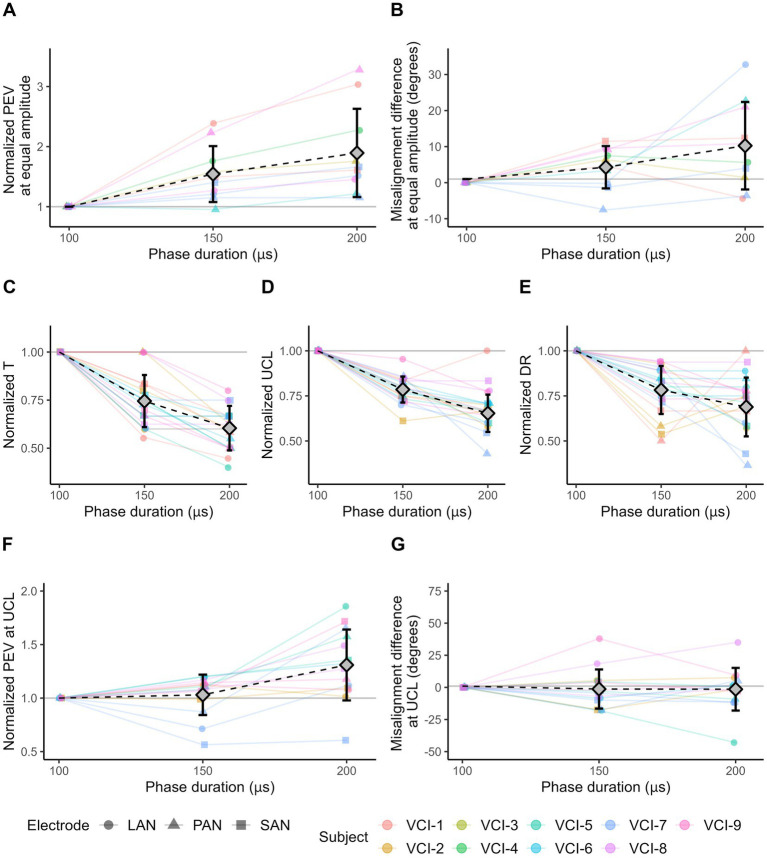
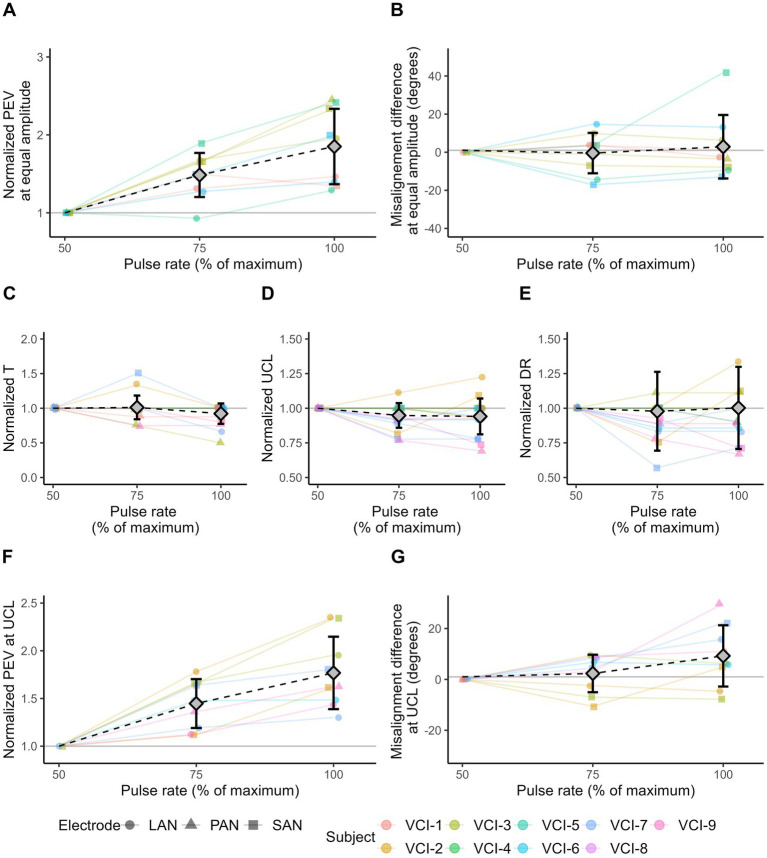
Four stimulation parameters, including the stimulation amplitude, phase duration, stimulus rate and speed of change of stimulation, were systematically tested in a cohort of nine subjects with a vestibulo-cochlear implant. These parameters were tested to evaluate their effect on fitting settings (i.e., threshold of activation, upper comfortable limit and dynamic range) as well as on the electrically evoked vestibulo-ocular reflex (peak eye velocity and alignment).
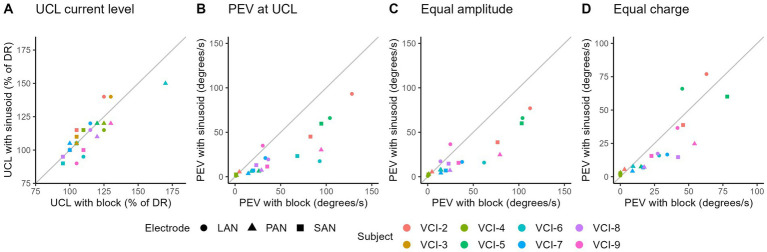
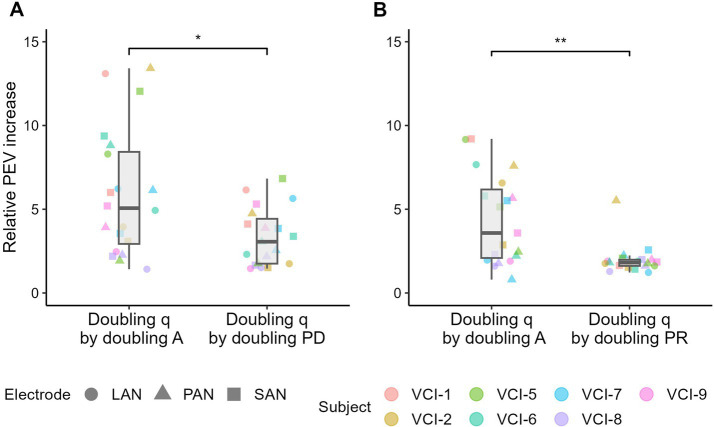
It was confirmed that, in addition to current amplitude, the peak eye velocity of the response can be increased by increasing the phase duration and pulse rate. Both parameters have little effect on the alignment of the eye response. However, a longer phase duration decreased the range between the threshold of activation and the upper comfortable limit of the electrical stimulation (i.e., dynamic range). Furthermore, these results show that next to the amplitude of the stimulation, the speed of change in stimulation has a determinative positive effect on the peak eye velocity.
The observations in this study imply that the vestibular implant response, in terms of peak eye velocity, can be optimized with a higher pulse rate and longer phase duration. However, this comes at a trade-off between the dynamic range and power consumption. This study provides essential insights for fitting strategies in future vestibular implant care.
前庭植入物是一种神经假体,为患有前庭病变的患者提供了一种潜在的治疗方法。研究电刺激参数的影响对于改善前庭植入物的反应至关重要。反应的优化集中在电诱发前庭眼反射上。其目的是促进高的峰值眼速度和眼动反应的适当对齐。在本研究中,测试了前庭植入物的基本刺激参数对电诱发前庭眼反射的影响。
在一组9名患有人工耳蜗的受试者中,系统地测试了四个刺激参数,包括刺激幅度、相位持续时间、刺激速率和刺激变化速度。测试这些参数以评估它们对拟合设置(即激活阈值、舒适上限和动态范围)以及电诱发前庭眼反射(峰值眼速度和对齐)的影响。
证实了,除了电流幅度外,通过增加相位持续时间和脉冲速率可以提高反应的峰值眼速度。这两个参数对眼反应的对齐影响很小。然而,较长的相位持续时间会减小电刺激的激活阈值和舒适上限之间的范围(即动态范围)。此外,这些结果表明,除了刺激幅度外,刺激变化速度对峰值眼速度有决定性的积极影响。
本研究中的观察结果表明,在前庭植入物反应方面,就峰值眼速度而言,可以通过更高的脉冲速率和更长的相位持续时间来优化。然而,这在动态范围和功耗之间存在权衡。本研究为未来前庭植入物护理中的拟合策略提供了重要见解。