Lee Michael H, Perez-Lopez Araceli, Knodler Leigh A, Nguyen Grace, Walker Gregory T, Behnsen Judith, Silva Steven, Celli Jean, Tamin Melissa A, Liang Michael H, Melchior Karine, Argueta Felix A, Nuccio Sean-Paul, Raffatellu Manuela
Division of Host-Microbe Systems and Therapeutics, Department of Pediatrics, University of California San Diego, La Jolla, CA 92093, USA.
Biomedicine Research Unit, Facultad de Estudios Superiores Iztacala, Universidad Nacional Autónoma de México. Tlalnepantla, State of México 54090, México.
bioRxiv. 2024 Nov 5:2024.11.05.622138. doi: 10.1101/2024.11.05.622138.
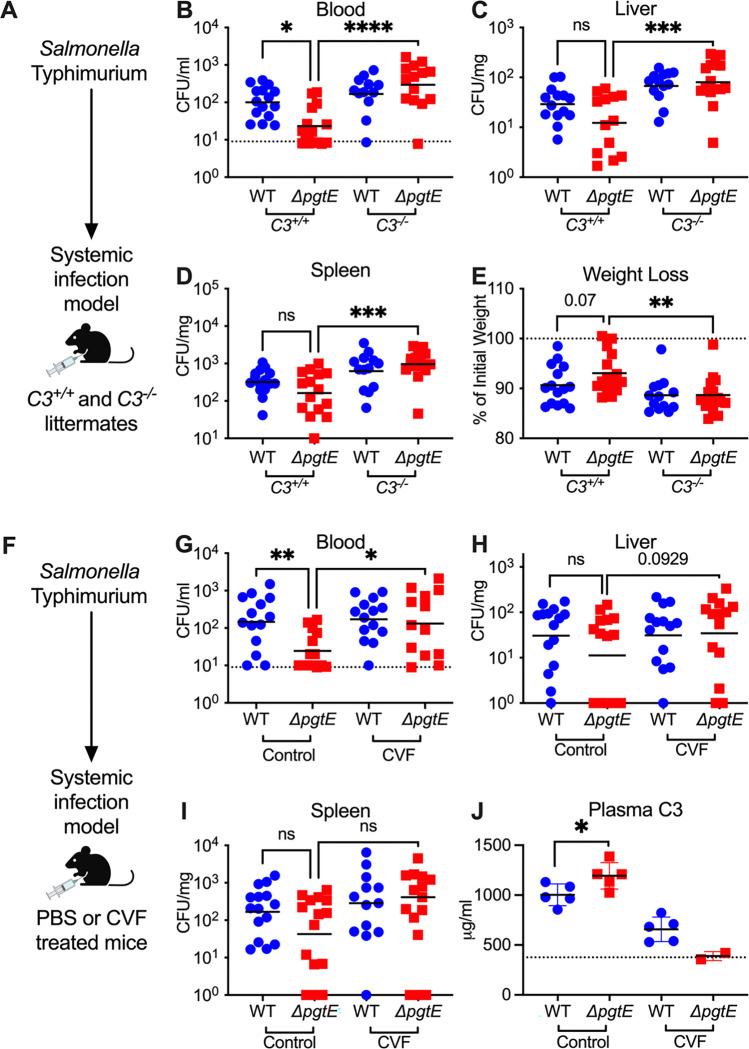
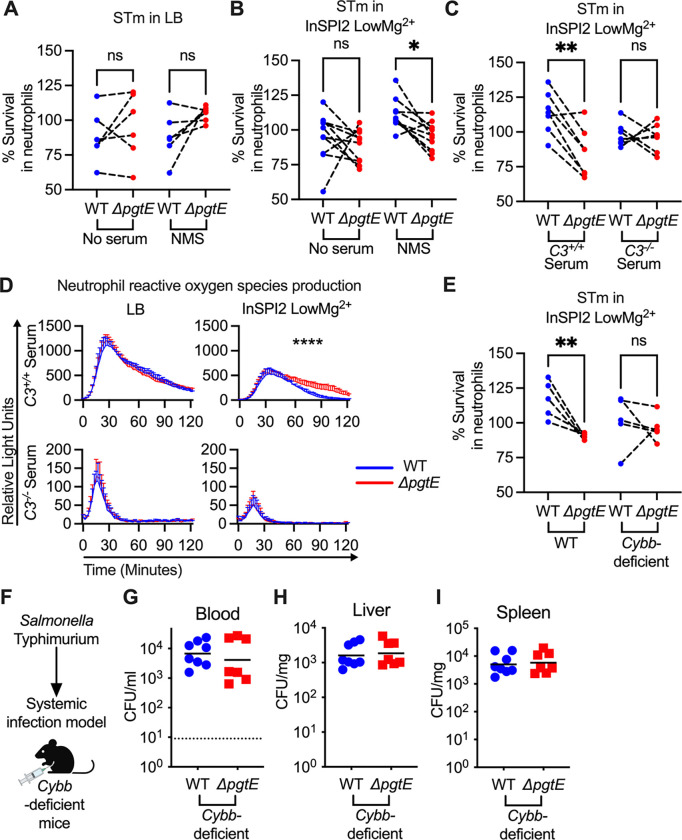
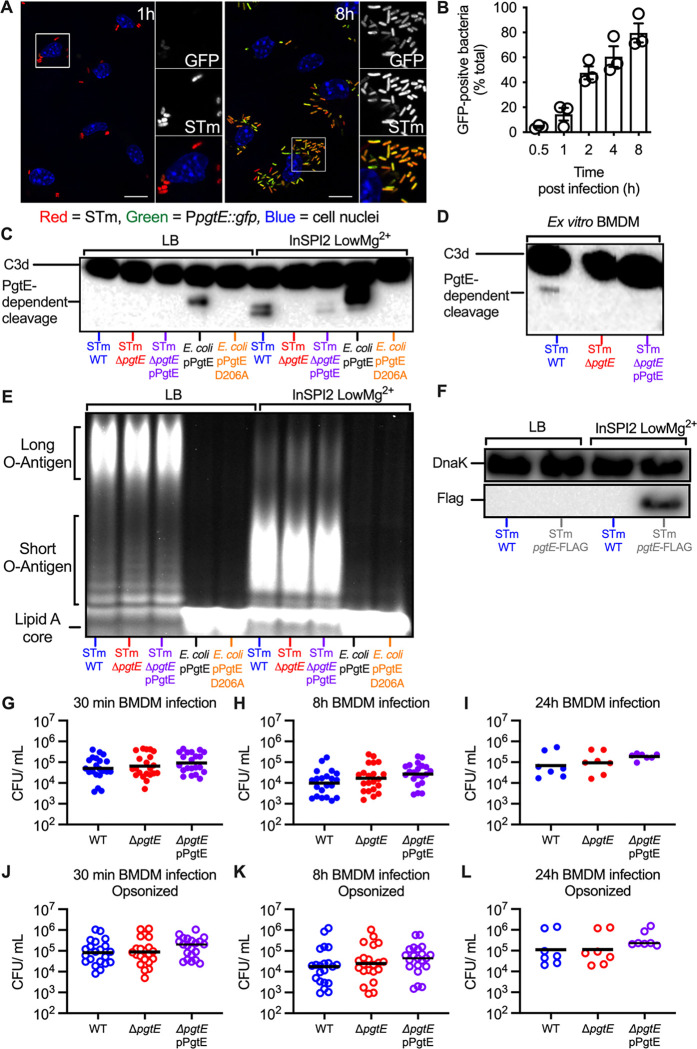
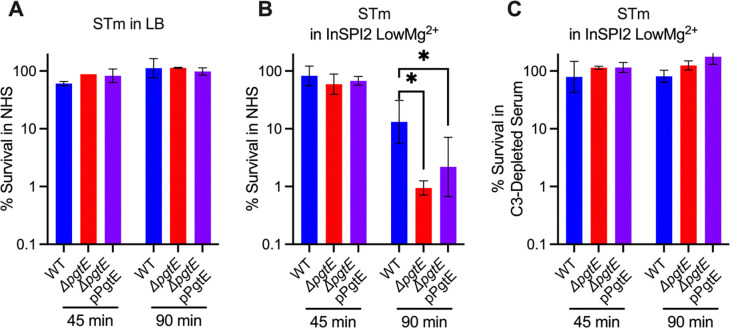
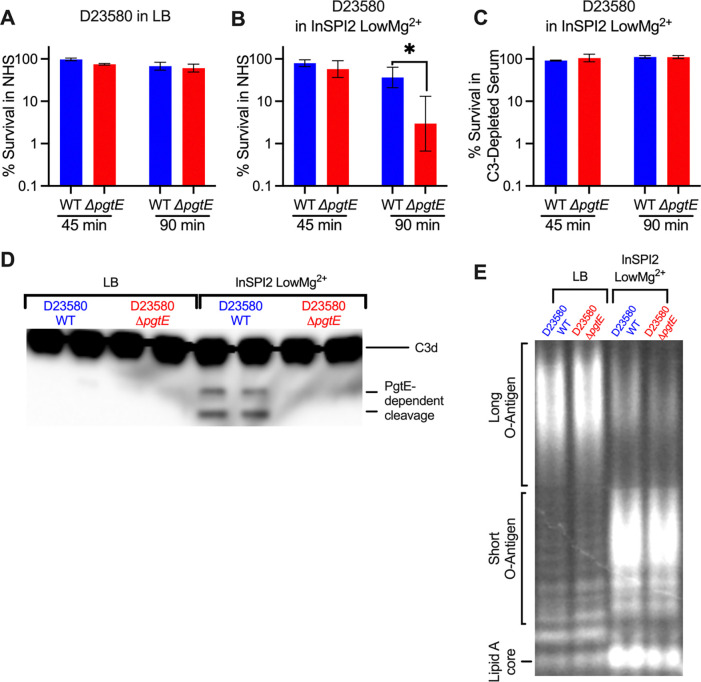
Non-typhoidal serovars, such as serovar Typhimurium (STm), are a leading cause of inflammatory diarrhea in otherwise healthy individuals. Among children, the elderly, and immunocompromised individuals, STm can spread to systemic sites and cause potentially lethal bacteremia. Phagocytic cells and the immune complement system are pivotal to preventing the dissemination of STm. PgtE, an STm outer membrane protease, has been previously described to cleave over a dozen mammalian protein substrates , including complement protein C3. However, these activities have mostly been observed with mutant, avirulent strains with a truncated O-antigen that renders bacteria sensitive to complement killing. Here, we report that virulent STm utilizes PgtE to evade complement-mediated killing . The wild-type pathogen increases expression and PgtE proteolytic function within macrophages and in macrophage-like growth conditions, concomitant with physiologic O-antigen shortening in these environments. Furthermore, we found that wild-type STm's resistance to complement-mediated serum and neutrophil killing is PgtE-dependent. We propose that PgtE promotes the systemic spread of STm by acting as a second line of defense against complement when STm escapes from a macrophage.
非伤寒血清型,如鼠伤寒血清型(STm),是健康个体炎症性腹泻的主要病因。在儿童、老年人和免疫功能低下的个体中,STm可扩散至全身部位并导致潜在致命的菌血症。吞噬细胞和免疫补体系统对于防止STm传播至关重要。PgtE是一种STm外膜蛋白酶,此前已被描述可切割十几种哺乳动物蛋白质底物,包括补体蛋白C3。然而,这些活性大多在具有截短O抗原的突变无毒菌株中观察到,这种截短的O抗原使细菌对补体杀伤敏感。在此,我们报告毒力强的STm利用PgtE逃避补体介导的杀伤。野生型病原体在巨噬细胞内以及类似巨噬细胞的生长条件下增加PgtE的表达和蛋白水解功能,同时在这些环境中伴随着生理性O抗原缩短。此外,我们发现野生型STm对补体介导的血清和中性粒细胞杀伤的抗性依赖于PgtE。我们提出,当STm从巨噬细胞中逸出时,PgtE作为对抗补体的第二道防线,促进STm的全身扩散。