Blair Alex B, Radomski Shannon N, Chou Joanne, Liu Mengyuan, Howell Thomas Clark, Park Wungki, O'Reilly Eileen M, Zheng Lei, Balachandran Vinod P, Wei Alice C, Kingham T Peter, D'Angelica Michael I, Drebin Jeffrey, Zani Sabino, Blazer Dan G, Burkhart Richard A, Burns William R, Lafaro Kelly J, Allen Peter J, Jarnagin William R, Lidsky Michael E, He Jin, Soares Kevin C
Department of Surgery, Memorial Sloan Kettering Cancer Center, New York, NY, USA.
Department of Surgery, The Ohio State University Wexner Medical Center, Columbus, OH, USA.
Ann Surg Oncol. 2025 Mar;32(3):1869-1878. doi: 10.1245/s10434-024-16331-4. Epub 2024 Nov 22.
Pancreatic acinar cell carcinoma (pACC) is a rare neoplasm of the exocrine pancreas. There is a dearth of information about tumor characteristics and patient outcomes. This study describes the clinical characteristics, genetic alterations, and survival outcomes of resected pACC.
Consecutive patients undergoing pancreatectomy for pathologically confirmed pACC from 1999 to 2022 across three high-volume pancreas surgery centers were analyzed. Patient demographics, tumor characteristics, treatment data, and genetic sequencing were obtained through retrospective abstraction.
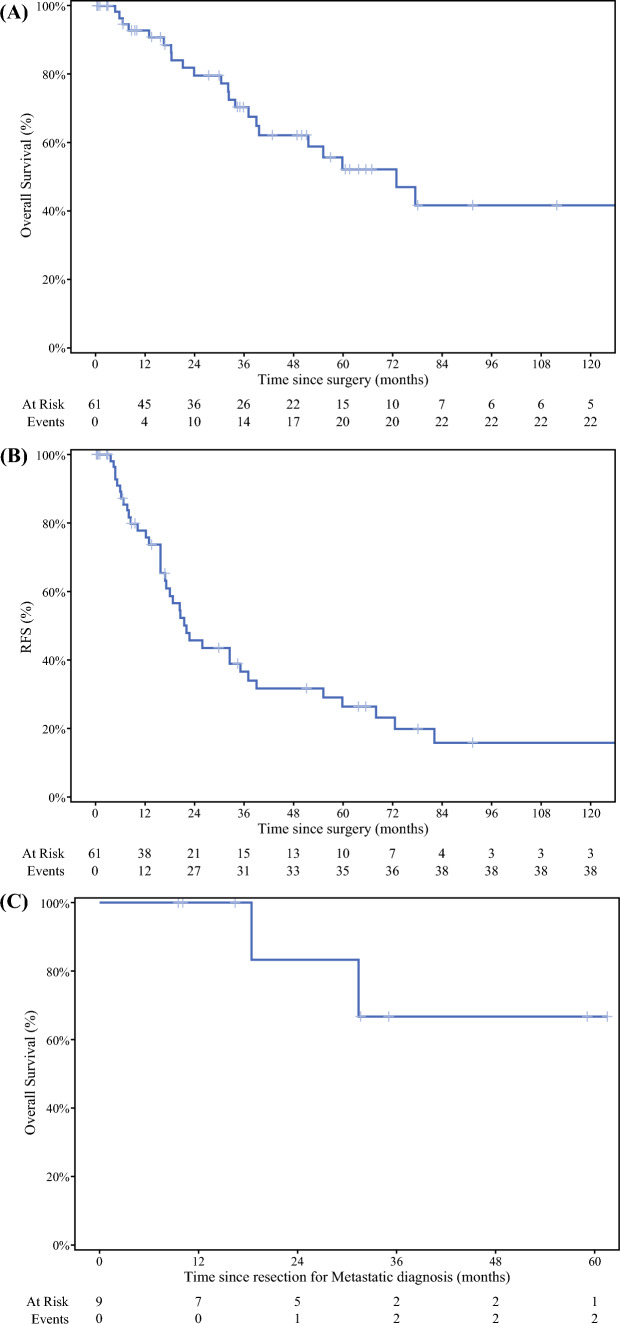
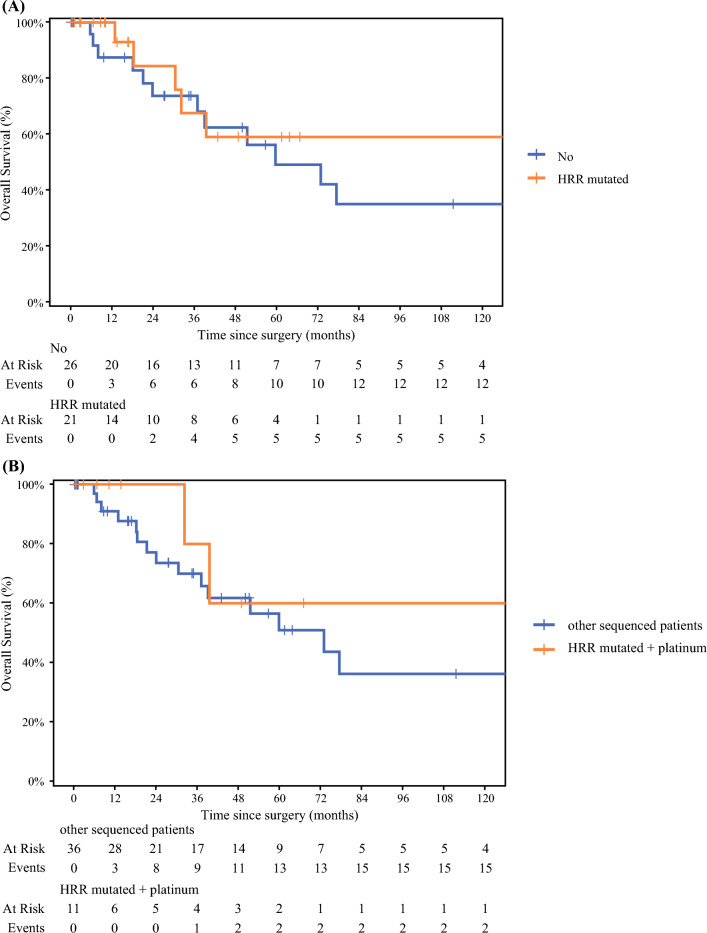
A total of 61 patients with resected pACC were identified. Median overall survival (OS) was 73 months and median recurrence free survival was 22 months. Nine patients underwent resection for oligometastatic disease; median OS was not reached after a median follow-up of 31 months from date of metastasectomy. Adjuvant chemotherapy was administered in 67% of patients with FOLFOX/FOLFIRINOX (5-fluorouracil, leucovorin, oxaliplatin, ± irinotecan) the most common regimen (58%). Sequencing data were obtained in 47 (77%) patients. A mutation in at least one of three core genes associated with the homologous recombination repair (HRR) pathway (BRCA1, BRCA2, or PALB2) occurred in 26% (n = 12) with BRCA2 the most frequently identified. A mutation in any other "non-core" gene associated with DNA damage repair or the HRR pathway was identified in 45% (n = 21) with a high tumor mutational burden of > 10 mutations per megabase in 13%.
Resection of pACC is associated with favorable survival outcomes, even in the setting of oligometastatic disease. Mutations in the HRR pathway are common, providing opportunities for potential targeted therapeutic options.
胰腺腺泡细胞癌(pACC)是一种罕见的外分泌胰腺肿瘤。关于肿瘤特征和患者预后的信息匮乏。本研究描述了切除的pACC的临床特征、基因改变和生存结果。
分析了1999年至2022年期间在三个高容量胰腺手术中心接受胰腺切除术且病理确诊为pACC的连续患者。通过回顾性提取获得患者人口统计学资料、肿瘤特征、治疗数据和基因测序结果。
共确定了61例接受pACC切除术的患者。中位总生存期(OS)为73个月,中位无复发生存期为22个月。9例患者因寡转移疾病接受了切除术;自转移灶切除日期起中位随访31个月后,中位OS未达到。67%的患者接受了辅助化疗,其中FOLFOX/FOLFIRINOX(5-氟尿嘧啶、亚叶酸钙、奥沙利铂、±伊立替康)是最常见的方案(58%)。47例(77%)患者获得了测序数据。与同源重组修复(HRR)途径相关的三个核心基因(BRCA1、BRCA2或PALB2)中至少有一个发生突变的比例为26%(n = 12),其中BRCA2是最常被鉴定出的。在45%(n = 21)的患者中鉴定出与DNA损伤修复或HRR途径相关的任何其他“非核心”基因发生突变,13%的患者肿瘤突变负荷高,每兆碱基>10个突变。
pACC切除术与良好的生存结果相关,即使在寡转移疾病情况下也是如此。HRR途径中的突变很常见,为潜在的靶向治疗选择提供了机会。