Yu Jinyan, Hong Shanchao, Yang Lingjia, Ye Shugao, Yu Zhen, Zhang Zheming, Wang Ziteng, Huang Shulun, Chen Yuan, Bian Tao, Wu Yan
Department of Respiratory Medicine The Affiliated Wuxi People's Hospital of Nanjing Medical University, Wuxi People's Hospital, Wuxi Medical Center, Nanjing Medical University Wuxi Jiangsu People's Republic of China.
Department of Clinical Laboratory Jiangnan University Medical Center Wuxi Jiangsu People's Republic of China.
J Am Heart Assoc. 2024 Dec 3;13(23):e036969. doi: 10.1161/JAHA.124.036969. Epub 2024 Nov 22.
Hypoxia-induced pulmonary hypertension (HPH) is a severe vascular disorder that is characterized by the involvement of endothelial-to-mesenchymal transition (EndMT) in its pathogenesis. Our previous research has suggested that the gene versican may have a crucial role in the development of HPH. However, the exact function of versican in HPH requires further investigation.
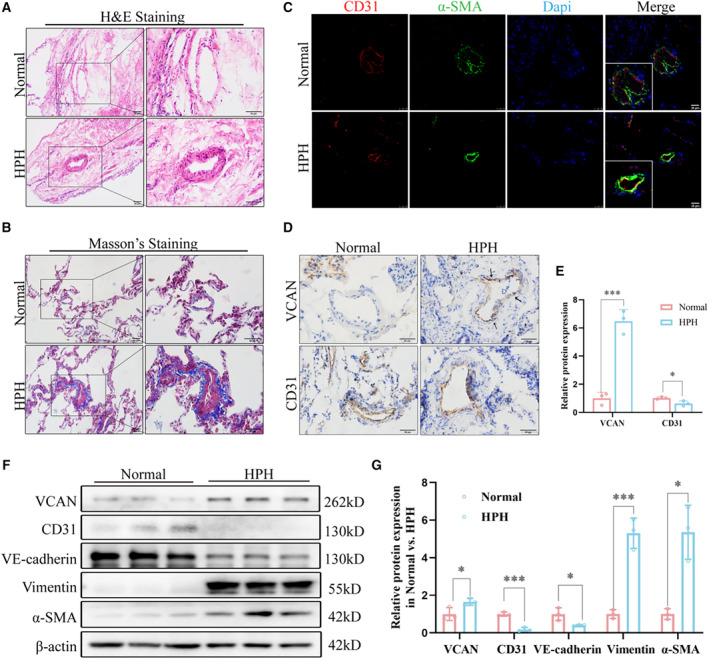
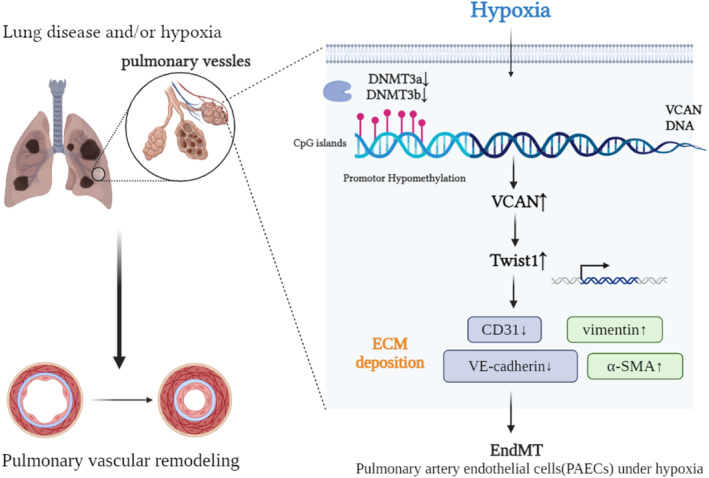
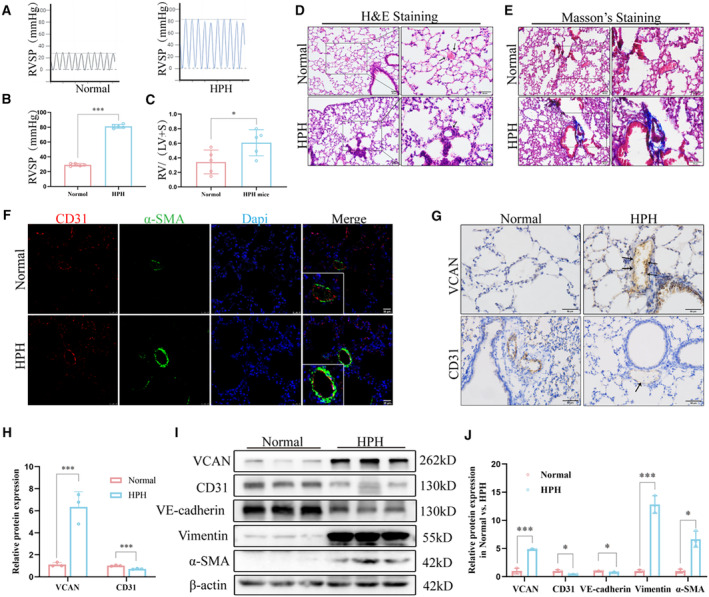
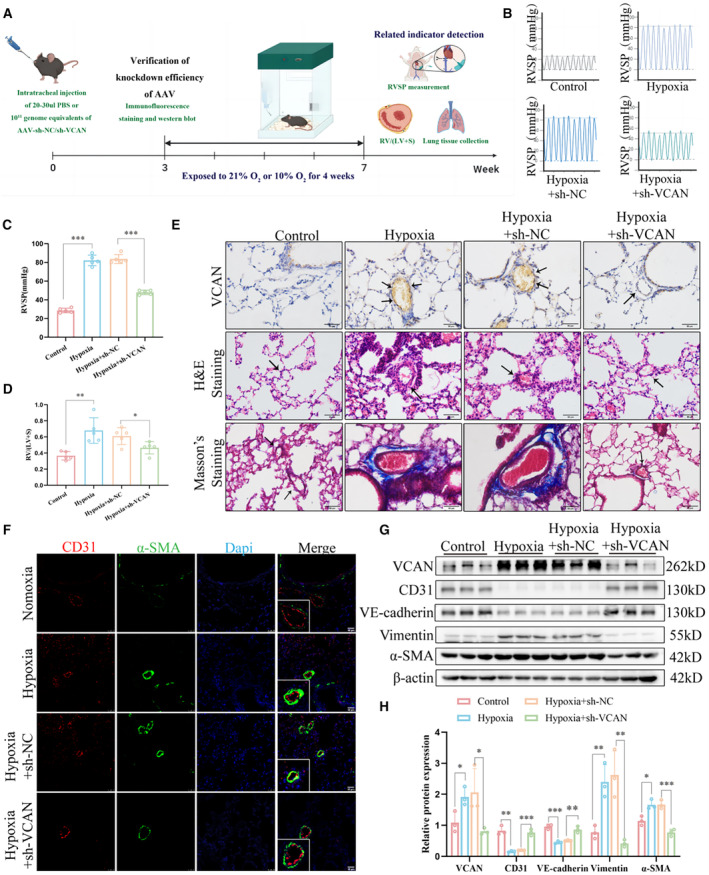
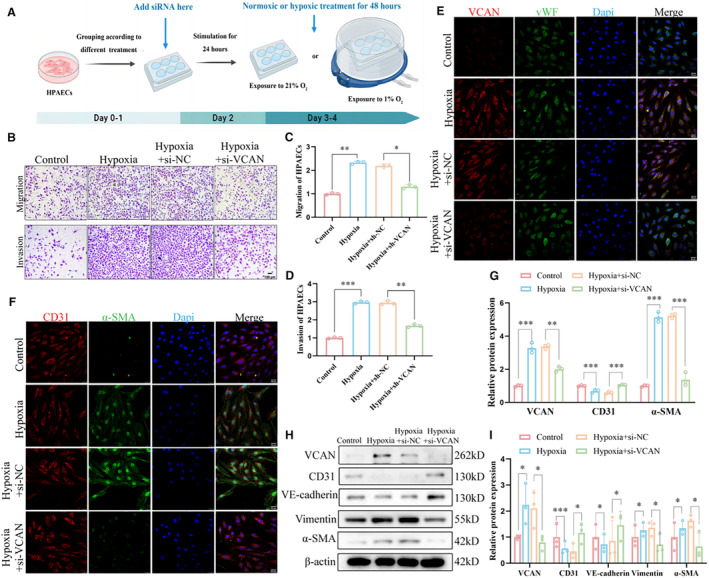
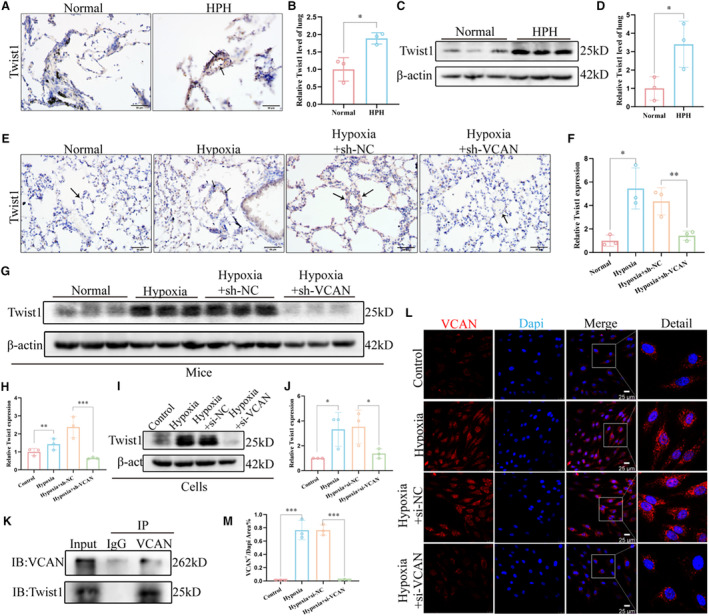
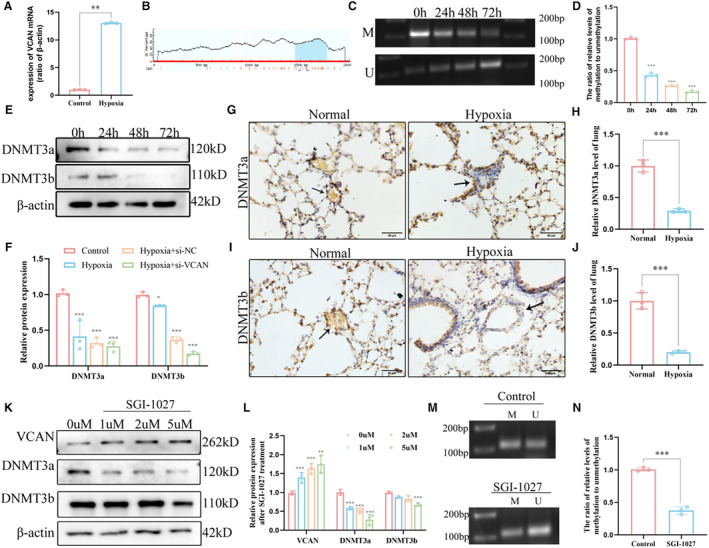
The expression of versican and markers of EndMT was assessed using Western blot, immunohistochemistry, and immunofluorescence. Vascular remodeling and right ventricular hypertrophy in patients with HPH and mice were evaluated through hematoxylin and eosin staining, Masson's staining, and hemodynamic measurements. Protein interactions were validated using co-immunoprecipitation, and the DNA methylation level of versican was examined using methylation-specific polymerase chain reaction. Compared with the control, EndMT was observed in patients with HPH, HPH mouse models, and hypoxia-treated human pulmonary artery endothelial cells, accompanied by a significant increase of versican. Endothelium-specific knockdown of versican reversed HPH progression and effectively prevented EndMT in mouse models and human pulmonary artery endothelial cells. We further confirmed that versican participated in EndMT by targeting the key transcription factor Twist1. Additionally, the upregulation of versican may be attributed to promoter hypomethylation, which was mediated by reduced DNA methyltransferases activity under hypoxic conditions.
This study provides the initial evidence showcasing the role of promoter hypomethylation-mediated versican upregulation in promoting EndMT by targeting Twist1, which facilitates vascular remodeling and the progression of HPH. These findings offer a promising new target for the treatment of HPH.
缺氧诱导的肺动脉高压(HPH)是一种严重的血管疾病,其发病机制涉及内皮-间充质转化(EndMT)。我们之前的研究表明,多功能蛋白聚糖基因可能在HPH的发展中起关键作用。然而,多功能蛋白聚糖在HPH中的确切功能需要进一步研究。
使用蛋白质免疫印迹法、免疫组织化学和免疫荧光法评估多功能蛋白聚糖和EndMT标志物的表达。通过苏木精-伊红染色、Masson染色和血流动力学测量评估HPH患者和小鼠的血管重塑及右心室肥厚。使用免疫共沉淀法验证蛋白质相互作用,并使用甲基化特异性聚合酶链反应检测多功能蛋白聚糖的DNA甲基化水平。与对照组相比,在HPH患者、HPH小鼠模型和缺氧处理的人肺动脉内皮细胞中观察到EndMT,同时多功能蛋白聚糖显著增加。在小鼠模型和人肺动脉内皮细胞中,内皮特异性敲低多功能蛋白聚糖可逆转HPH进展并有效预防EndMT。我们进一步证实,多功能蛋白聚糖通过靶向关键转录因子Twist1参与EndMT。此外,多功能蛋白聚糖的上调可能归因于启动子低甲基化,这是由缺氧条件下DNA甲基转移酶活性降低介导的。
本研究提供了初步证据,表明启动子低甲基化介导的多功能蛋白聚糖上调通过靶向Twist1促进EndMT,从而促进血管重塑和HPH进展。这些发现为HPH的治疗提供了一个有前景的新靶点。