Laboratory of Innovative Toxicological Research and Analyzes, Institute of Medical Studies, Medical College, Rzeszów University, Al. mjr. W. Kopisto 2a, Rzeszów, 35-959, Poland.
Department of Regulatory and Forensic Toxicology, Institute of Medical Expertises, ul. Aleksandrowska 67/93, Łódz´,Łódz´, 91-205, Poland.
Sci Rep. 2024 Nov 22;14(1):28977. doi: 10.1038/s41598-024-79453-5.
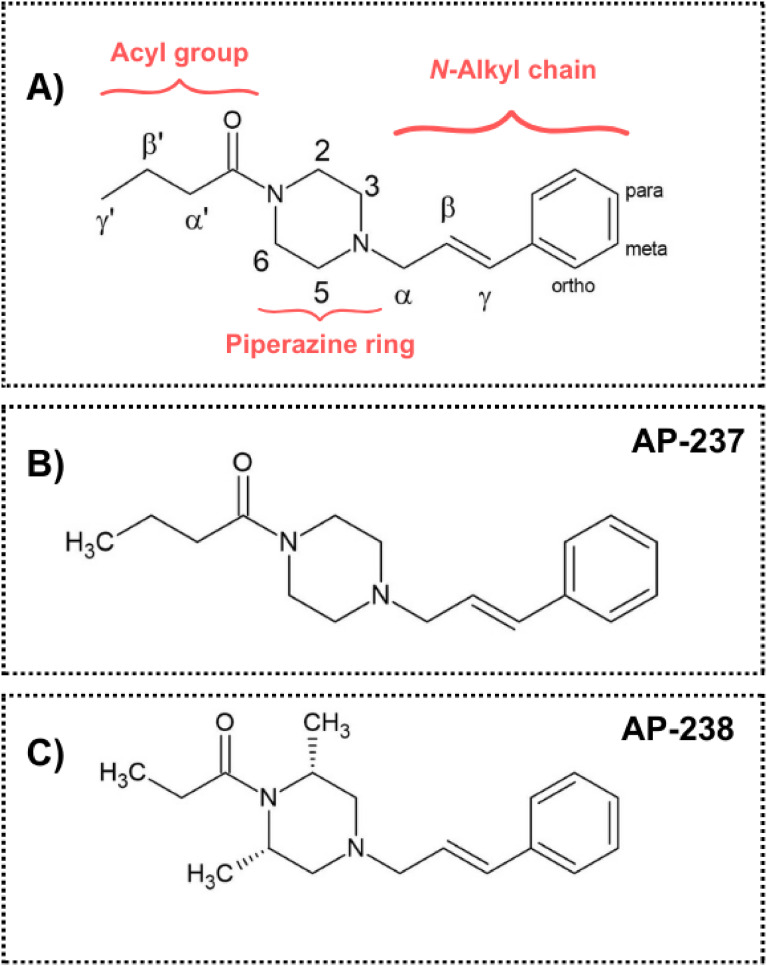
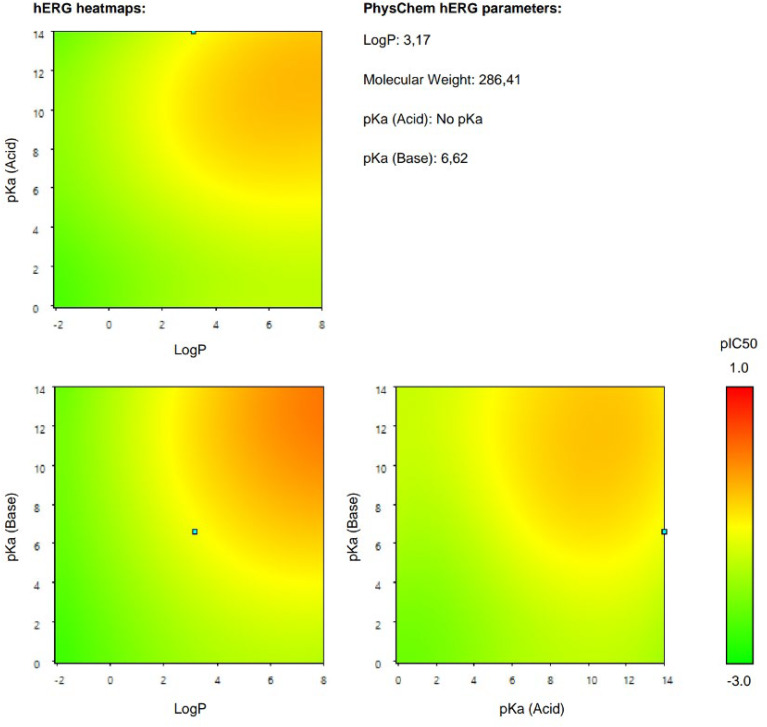
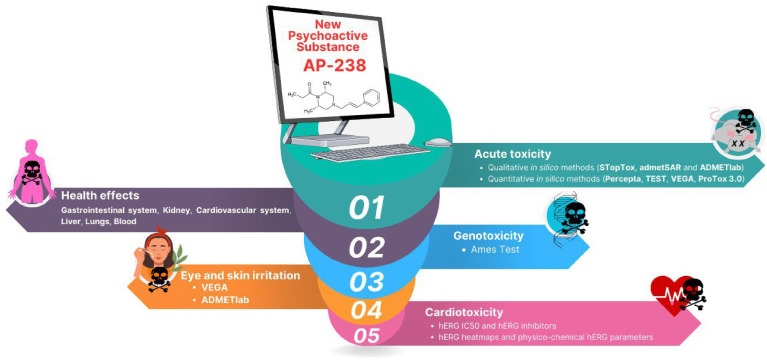
This study performed advanced toxicological assessments of the new substance AP-238 using nine 'green' in silico methods, focusing on acute toxicity, organ-specific effects, skin and eye irritation, genetic toxicity, and cardiotoxicity. A quantitative assessment of AP-238's acute toxicity (AT) was performed by predicting theoretical LD values for both rats and mice across different administration routes using various in silico methods. Results indicated the highest toxicity via intravenous administration in mice, with a t-LD of 53 mg/kg, while oral administration in rats exhibited a lower toxicity range, with t-LD values between 666.43 and 1838.77 mg/kg, depending on the predictive model used. The identification of toxicophores (the fragment connecting the benzene ring to the piperazine ring, including the α, β, and γ carbon atoms near the nitrogen atom) in AP-238 suggests a high likelihood of lung toxicity (61%), with additional risks to the cardiovascular (58%) and renal systems (56%), emphasizing specific molecular fragments associated with these adverse effects. Genotoxic evaluations presented a mixed view, with low to moderate probabilities of a positive Ames test, suggesting some uncertainty but generally indicating a reduced risk of genetic toxicity. Eye and skin irritation risks were deemed minimal, supported by several models with high confidence. Cardiotoxicity assessments revealed varied information on the potential effects of AP-238 on the hERG channel, with some studies suggesting a nonsignificant impact, while others indicated moderate risk, although with low reliability in the predictions. This highlights the nuanced challenges in assessing the safety of novel substances through 'green' in silico methods.
本研究使用九种“绿色”计算方法对新型物质 AP-238 进行了先进的毒理学评估,重点关注急性毒性、器官特异性效应、皮肤和眼睛刺激性、遗传毒性和心脏毒性。通过使用各种计算方法预测不同给药途径的大鼠和小鼠的理论 LD 值,对 AP-238 的急性毒性 (AT) 进行了定量评估。结果表明,在小鼠中,静脉内给药的毒性最高,t-LD 值为 53mg/kg,而在大鼠中,口服给药的毒性范围较低,t-LD 值在 666.43 至 1838.77mg/kg 之间,具体取决于预测模型。AP-238 中有毒原子团(将苯环连接到哌嗪环的片段,包括靠近氮原子的α、β和γ碳原子)的鉴定表明,AP-238 很可能具有肺毒性(61%),对心血管系统(58%)和肾脏系统(56%)的额外风险,强调了与这些不良反应相关的特定分子片段。遗传毒性评估结果喜忧参半,Ames 试验的阳性概率较低至中等,表明存在一定的不确定性,但总体上表明遗传毒性风险降低。眼和皮肤刺激性风险被认为是最小的,得到了几个高置信度模型的支持。心脏毒性评估揭示了 AP-238 对 hERG 通道潜在影响的不同信息,一些研究表明没有显著影响,而另一些研究则表明存在中度风险,尽管预测的可靠性较低。这凸显了通过“绿色”计算方法评估新型物质安全性的细微挑战。