Department of Biotechnology and Animal Science, National Ilan University, Ilan, Taiwan.
Division of Cardiology, Department of Internal Medicine, Tri-Service General Hospital, National Defense Medical Center, Taipei, Taiwan.
BMC Infect Dis. 2024 Nov 22;24(1):1338. doi: 10.1186/s12879-024-10208-3.
Gonorrhea, induced by Neisseria gonorrhoeae infection, stands as a prevalent sexually transmitted inflammatory disease globally. Our earlier research illuminated that N. gonorrhoeae-infected macrophages provoke inflammation by activating the intracellular sensor NACHT, LRR, and PYD domain-containing protein 3 (NLRP3) inflammasome, a pivotal regulator in inflammatory diseases governing the maturation and secretion of interleukin (IL)-1β and IL-18. Nevertheless, effective therapies addressing N. gonorrhoeae-mediated NLRP3 inflammasome activation and ensuing inflammation are currently lacking. This study delves into the impact of the angiotensin II receptor antagonist Candesartan (CS) on N. gonorrhoeae-infected macrophages.
The protein expression levels were examined through ELISA and Western blotting. Intracellular HO levels, mitochondrial reactive oxygen species, and mitochondrial membrane integrity were evaluated using targeted fluorescent probes and analyzed via flow cytometry. NF-κB transcriptional activity was assessed using NF-κB reporter cells. LC3-knockdown cells were created using CRISPR/Cas9 technology.
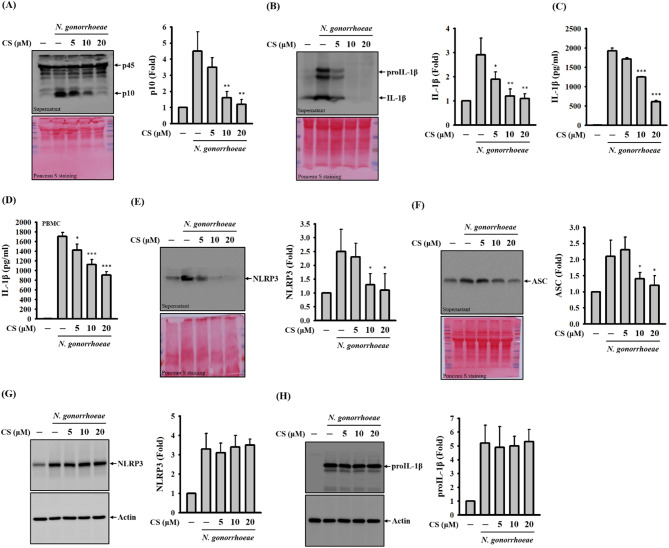
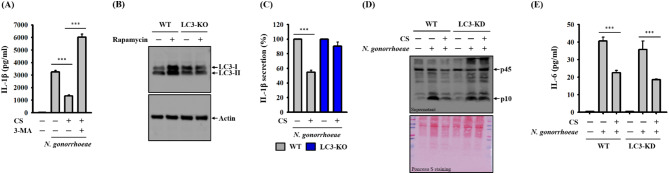
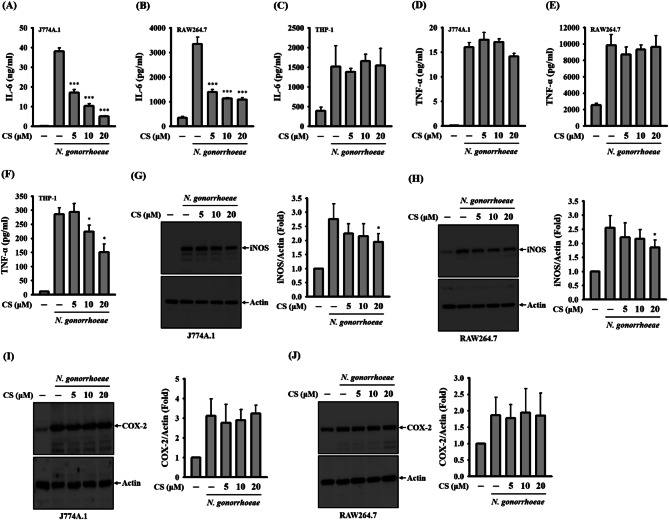
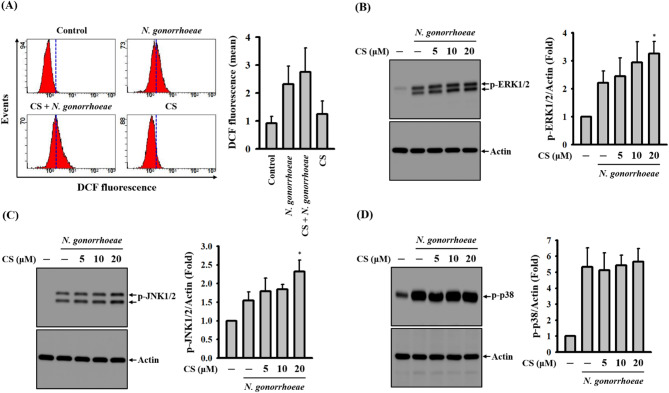
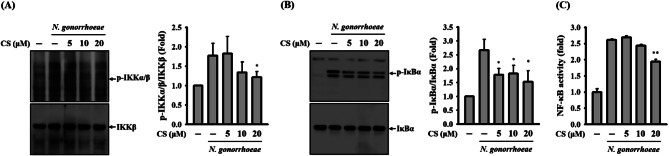
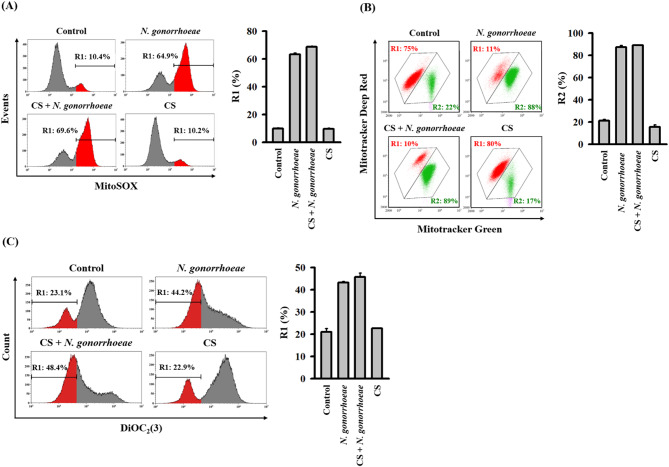
CS effectively inhibits the NLRP3 inflammasome, as indicated by the suppression of caspase-1 activation, IL-1β secretion, NLRP3 release, and the release of apoptosis-associated speck-like protein containing a CARD (ASC) in N. gonorrhoeae-infected J774A.1 macrophages. Additionally, CS selectively impedes IL-6 secretion and iNOS expression in both N. gonorrhoeae-infected J774A.1 and RAW264.7 macrophages. Mechanistic insights uncover the inhibition of NF-κB by CS in N. gonorrhoeae-infected J774A.1 macrophages, while intracellular HO generation, mitogen-activated protein kinases phosphorylation, and mitochondrial damage remain unaffected. Notably, our study highlights that CS-induced autophagy contributes partially to its inhibitory effect on the NLRP3 inflammasome.
These results underscore the potential of CS as an anti-inflammatory drug for the treatment of gonorrhea, addressing a critical unmet medical need in combating N. gonorrhoeae-induced inflammation.
淋病是由淋病奈瑟菌感染引起的一种常见的性传播炎症性疾病。我们之前的研究表明,淋病奈瑟菌感染的巨噬细胞通过激活细胞内传感器 NACHT、LRR 和含有 PYDD 域的蛋白 3(NLRP3)炎症小体来引发炎症,NLRP3 炎症小体是炎症性疾病中关键的调节因子,可调节白细胞介素(IL)-1β和 IL-18 的成熟和分泌。然而,目前缺乏有效的治疗方法来解决淋病奈瑟菌介导的 NLRP3 炎症小体激活和随之而来的炎症。本研究探讨了血管紧张素 II 受体拮抗剂坎地沙坦(CS)对淋病奈瑟菌感染的巨噬细胞的影响。
通过 ELISA 和 Western blot 检测蛋白表达水平。使用靶向荧光探针评估细胞内 HO 水平、线粒体活性氧和线粒体膜完整性,并通过流式细胞术进行分析。使用 NF-κB 报告细胞评估 NF-κB 转录活性。使用 CRISPR/Cas9 技术构建 LC3 敲低细胞。
CS 可有效抑制 NLRP3 炎症小体,表现为抑制淋病奈瑟菌感染的 J774A.1 巨噬细胞中 caspase-1 激活、IL-1β 分泌、NLRP3 释放和凋亡相关斑点样蛋白(ASC)的释放。此外,CS 选择性抑制淋病奈瑟菌感染的 J774A.1 和 RAW264.7 巨噬细胞中 IL-6 的分泌和 iNOS 的表达。机制研究揭示 CS 通过抑制 NF-κB 来抑制淋病奈瑟菌感染的 J774A.1 巨噬细胞,而细胞内 HO 生成、丝裂原激活蛋白激酶磷酸化和线粒体损伤不受影响。值得注意的是,我们的研究表明,CS 诱导的自噬部分有助于其对 NLRP3 炎症小体的抑制作用。
这些结果强调了 CS 作为一种治疗淋病的抗炎药物的潜力,满足了对抗淋病奈瑟菌诱导的炎症的重要未满足的医疗需求。