Department of Physiology and Cell Biology, School of Biomedical Research, Faculty of Health Sciences, Zelman Center for Neuroscience, Ben-Gurion University of the Negev, POB 653, Beer-Sheva, 84105, Israel.
The Gonda Multidisciplinary Brain Research Center, Bar-Ilan University, Ramat-Gan, Israel.
Behav Brain Funct. 2024 Nov 24;20(1):31. doi: 10.1186/s12993-024-00254-x.
Mood disorders, particularly depression and anxiety, are associated with zinc dyshomeostasis and aberrant GABAergic signaling. Activation of ZnR/GPR39 by synaptic zinc in the hippocampus triggers phosphorylation of extracellular regulated kinase (ERK1/2), which regulates the K/Cl cotransporter (KCC2) and thereby GABAergic inhibitory neurotransmission and seizure activity. Therefore, we studied whether impaired ZnR/GPR39 signaling is linked to anxiety-related behavior in male or female mice.
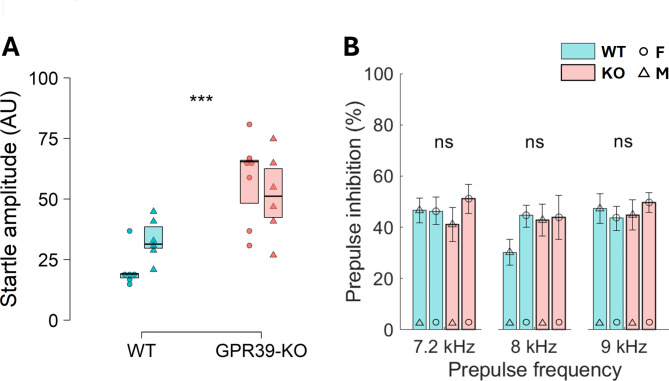
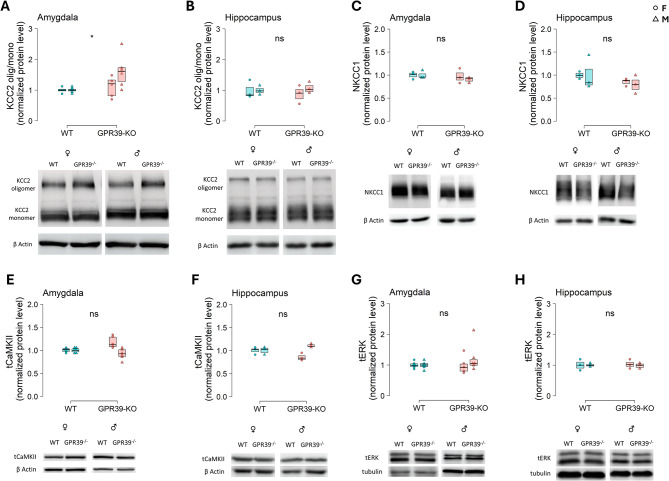
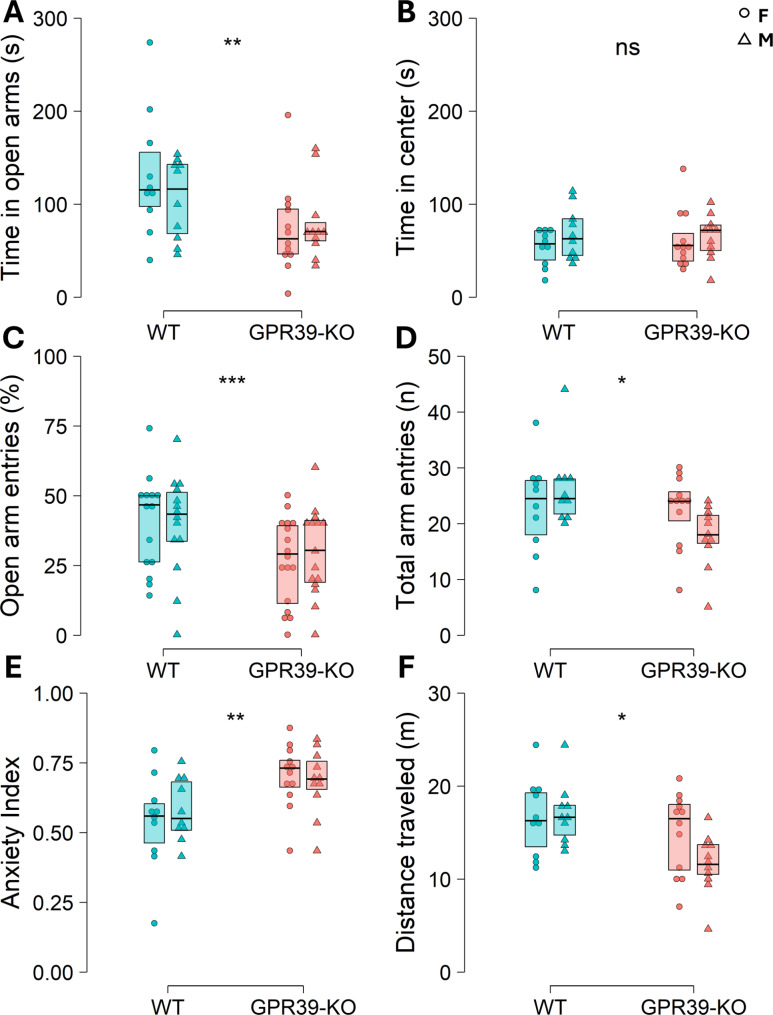
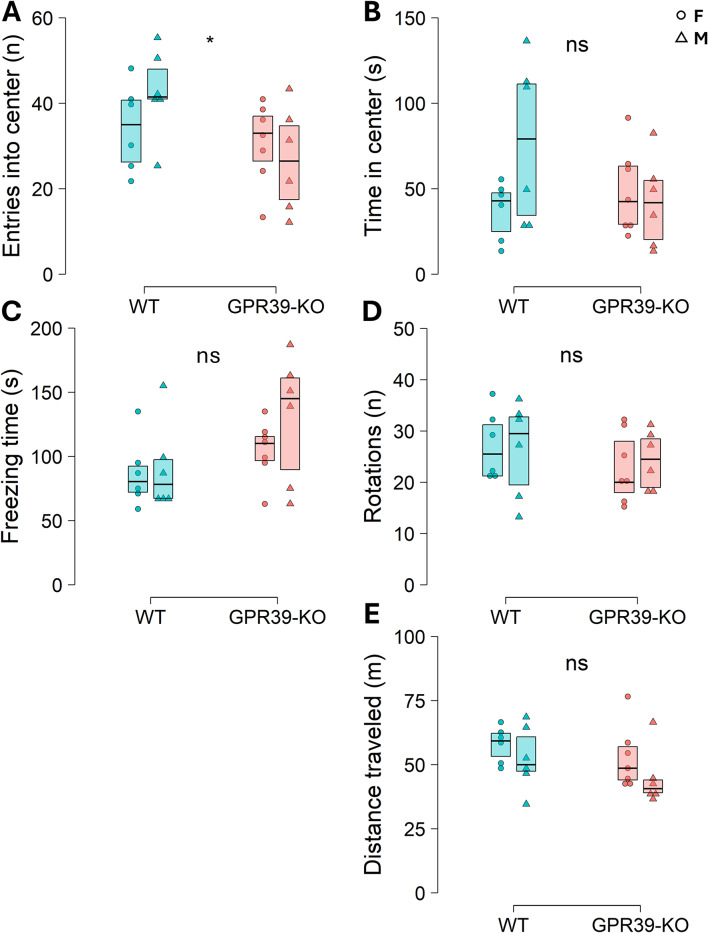
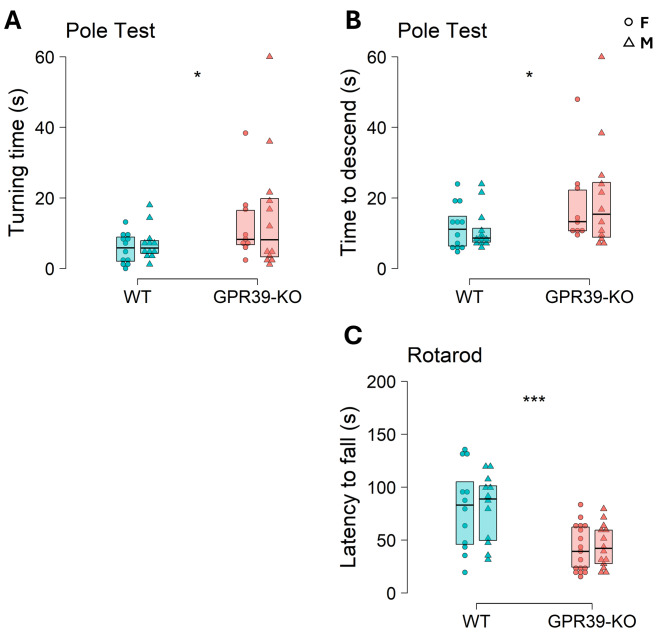
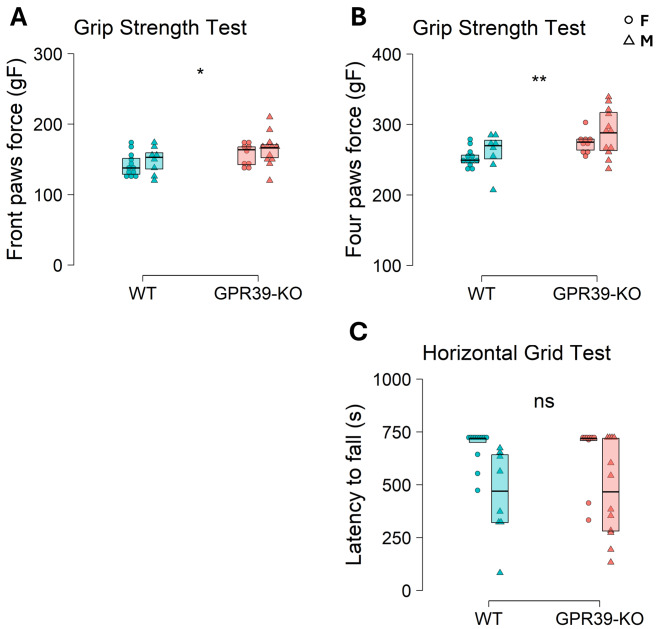
Using the acoustic startle response, elevated plus maze, and open field test, we found increased anxiety-related behavior in ZnR/GPR39 knockout (KO) mice. Despite a well-established sex difference, where females are typically more prone to anxiety, both male and female ZnR/GPR39 KO mice exhibited increased anxiety-related behavior compared to wildtype (WT) mice. Additionally, ZnR/GPR39 KO mice displayed impaired motor coordination in the pole and rotarod tests but did not show reduced muscle strength, as indicated by a grip test. Finally, we found intrinsic alterations in the expression level of KCC2, a major Cl transporter regulating GABAergic signaling, in the amygdala of naïve ZnR/GPR39 KO mice compared to controls.
Our findings indicate that loss of ZnR/GPR39 enhances anxiety-related behavior in both male and female mice. Moreover, ZnR/GPR39 KO mice exhibit impaired motor coordination, which may be associated with increased anxiety. Finally, we demonstrate that loss of ZnR/GPR39 modulates the expression of KCC2 in the amygdala. Thus, we propose that ZnR/GPR39 can serve as a target for regulating GABAergic signaling in anxiety treatment.
情绪障碍,尤其是抑郁和焦虑,与锌稳态失调和 GABA 能信号异常有关。海马突触锌激活 ZnR/GPR39 可触发细胞外调节激酶(ERK1/2)的磷酸化,调节 K/Cl 共转运体(KCC2),从而调节 GABA 能抑制性神经传递和癫痫活动。因此,我们研究了雄性或雌性小鼠中 ZnR/GPR39 信号转导受损是否与焦虑相关行为有关。
通过听觉惊跳反应、高架十字迷宫和旷场试验,我们发现 ZnR/GPR39 敲除(KO)小鼠表现出焦虑相关行为增加。尽管存在性别差异,女性通常更容易出现焦虑,但雄性和雌性 ZnR/GPR39 KO 小鼠的焦虑相关行为均比野生型(WT)小鼠增加。此外,ZnR/GPR39 KO 小鼠在棒状和转棒试验中表现出运动协调障碍,但握力试验表明肌肉力量并未减弱。最后,我们发现 ZnR/GPR39 KO 小鼠的杏仁核中 KCC2 的表达水平发生了内在改变,KCC2 是调节 GABA 能信号的主要 Cl 转运体。
我们的研究结果表明,ZnR/GPR39 的缺失增强了雄性和雌性小鼠的焦虑相关行为。此外,ZnR/GPR39 KO 小鼠表现出运动协调障碍,这可能与焦虑增加有关。最后,我们证明 ZnR/GPR39 调节杏仁核中 KCC2 的表达。因此,我们提出 ZnR/GPR39 可作为调节 GABA 能信号以治疗焦虑的靶点。