Microbiology, Infectious and Parasitic Diseases, The Research Institute of Virology of the National Specialized Scientific and Practical Medical Center for Epidemiology, 7A Yangi Shahar Street, 100194, Tashkent, Uzbekistan.
J Med Case Rep. 2024 Nov 25;18(1):561. doi: 10.1186/s13256-024-04909-1.
Multiple sclerosis is a chronic disease of the central nervous system characterized by inflammation, neurodegeneration, and failure of the central nervous system's repair mechanisms. The role of infectious agents against the background of genetic predisposition is currently considered a possible pathogenesis factor of this disease.
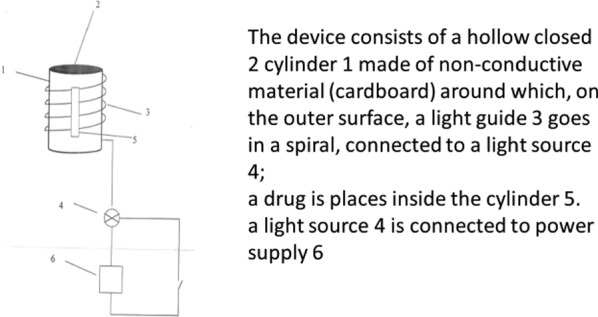
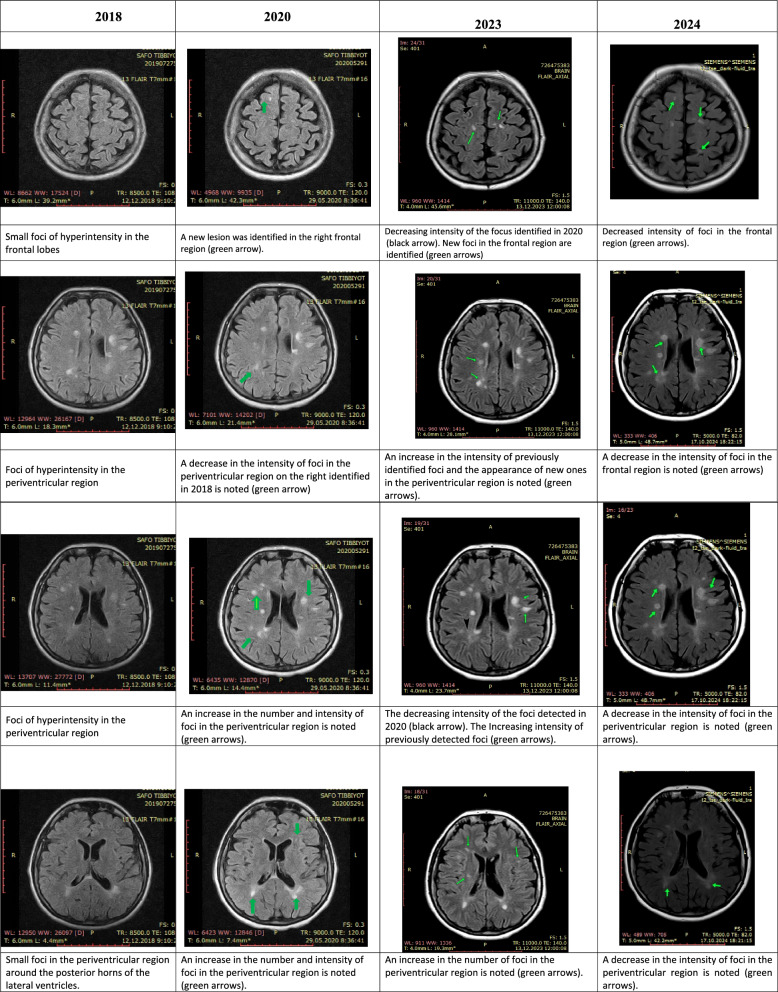
We report the case of a 52-year-old white (Russian) female musician with 15-year history of relapsing-remitting multiple sclerosis who had repeatedly received conventional therapy without much benefit. In 2017, she was admitted to the outpatient department of the Institute of Virology, where she was treated with erythromycin and acyclovir (tablet forms), which were not applied in the traditional way but through the "device for transfer of information from the drug to the human body." The received effect led to suppression of the disease activity, a significant reduction in the symptoms of the disease, prevention of further increase in neurological manifestations of the disease, and improvement in the dynamics of the manifestation of the disease according to brain magnetic resonance imaging.
The described case report is innovative and presents for the first time the results of a noninvasive approach to the treatment of a patient with multiple sclerosis in whom information about various medications was introduced into different parts of the body, including the brain. The results obtained may indicate a possible role of infectious agents in the genesis of multiple sclerosis. It indicates a potential impact on them by using a "device for transfer of information from the drug to the human body." The study was conducted in accordance with the principles of the Declaration of Helsinki. It was approved by the Institutional Review Board of the Research Institute of Virology of Uzbekistan (no. 12/8-1500, 1/3/2017).
多发性硬化症是一种中枢神经系统的慢性疾病,其特征为炎症、神经退行性变和中枢神经系统修复机制的失败。目前,在遗传易感性的背景下,感染因子的作用被认为是这种疾病的一个可能发病因素。
我们报告了一例 52 岁的白人(俄罗斯)女性音乐家,患有复发性缓解型多发性硬化症 15 年,曾多次接受常规治疗,但效果不佳。2017 年,她到病毒学研究所的门诊部就诊,在那里她接受了红霉素和阿昔洛韦(片剂形式)的治疗,但不是以传统的方式应用,而是通过“将药物信息传递到人体的设备”。所获得的效果导致疾病活动的抑制,疾病症状的显著减轻,防止疾病的神经表现进一步增加,以及根据脑磁共振成像显示疾病表现的动态改善。
所描述的病例报告具有创新性,首次报告了一种非侵入性方法治疗多发性硬化症患者的结果,其中将关于各种药物的信息引入到身体的不同部位,包括大脑。所获得的结果可能表明感染因子在多发性硬化症的发病机制中起作用。它表明通过使用“将药物信息传递到人体的设备”对它们可能有潜在的影响。该研究是按照《赫尔辛基宣言》的原则进行的。它得到了乌兹别克斯坦病毒学研究所机构审查委员会的批准(编号 12/8-1500,2017 年 1 月 3 日)。