Wang Zeyu, Zhang Daiyan, Shui Mingju, Ho Ian Wa, Kou Weng Si, Wei Jianwen, Wan Jian-Bo, Wang Ruibing, Zhang Qing-Wen
State Key Laboratory of Quality Research in Chinese Medicine, Institute of Chinese Medical Sciences, University of Macau, Macao SAR, China.
Pui Chng Middle School (Macau), Macao SAR, China.
J Ginseng Res. 2024 Nov;48(6):543-551. doi: 10.1016/j.jgr.2023.12.005. Epub 2024 Jan 7.
Ginsenoside, as an active ingredient in traditional Chinese medicine, has been widely used for skin whitening for several years. Recent research has found that Panax notoginseng has a higher content of ginsenosides compared with the Panax ginseng. Those ginsenosides have promising potential to be developed as skin whitening agents.
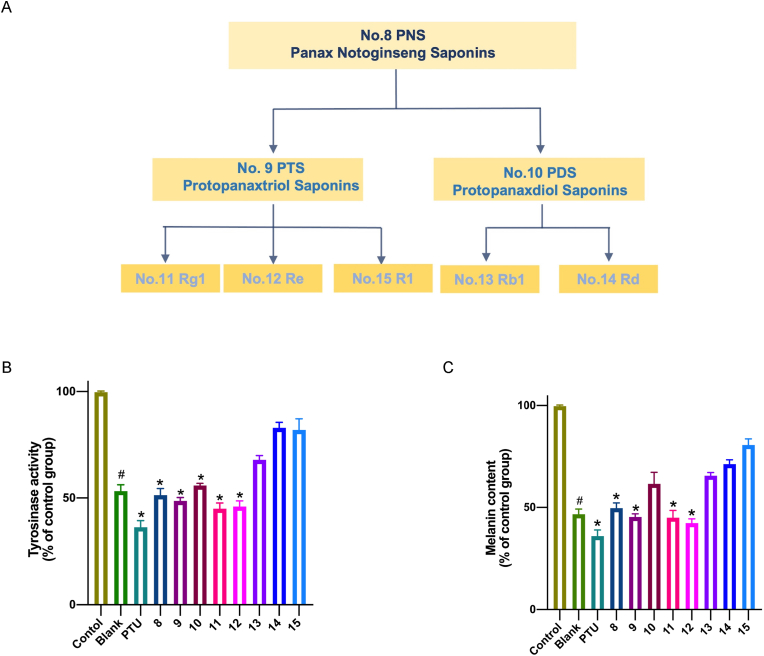
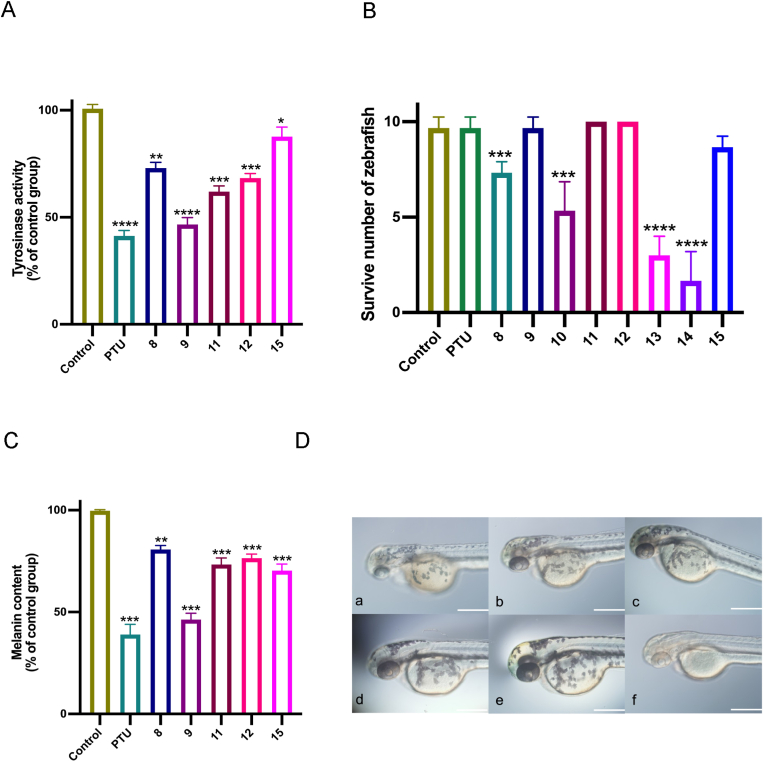
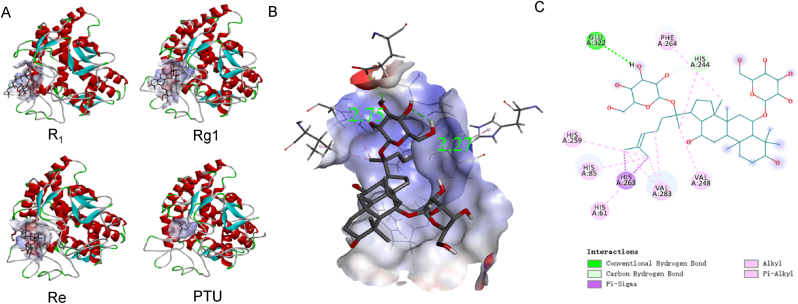
We selected five dammarane ginsenosides isolated from P. notoginseng and their mixtures to investigate the skin lightning activity. Zebrafish embryo model was used for initial screening of the whitening activity. Subsequently, the whitening effect of components was examined and compared via testing the inhibition of melanin and activity of tyrosinase in B16 cells treated with these components. Molecular docking was also applied to investigate the interactions between ginsenosides and tyrosinase. Finally, the most effective saponins were selected for dosage form optimization and the whitening effect of saponin-loaded ethosomes was further demonstrated on the C57BL/6 mouse model.
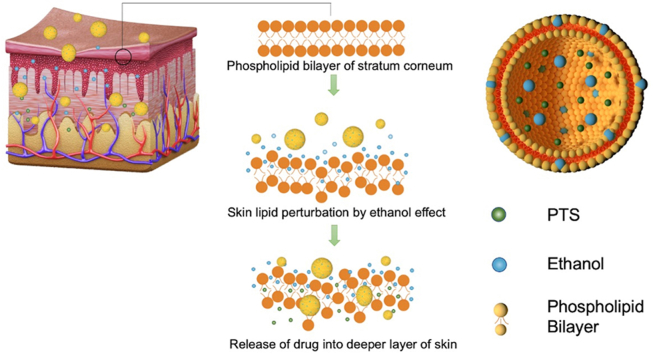
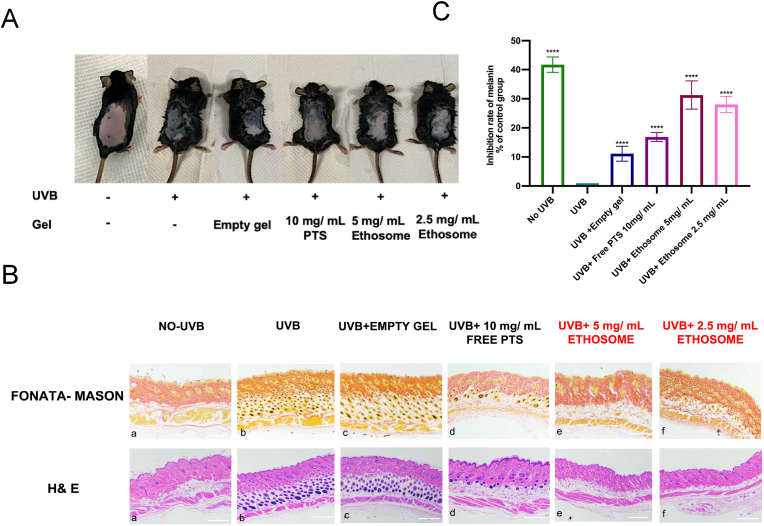
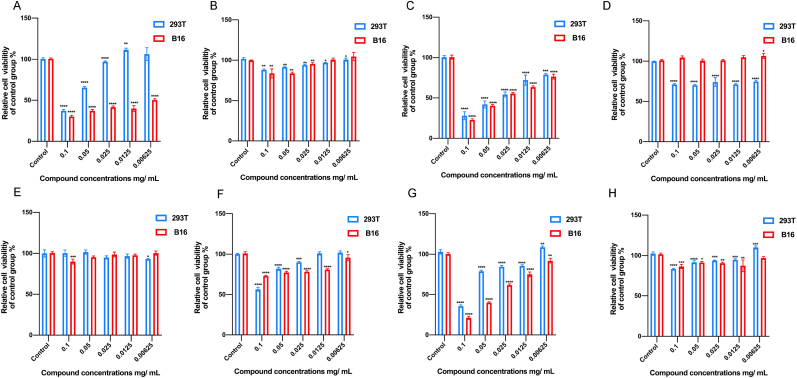
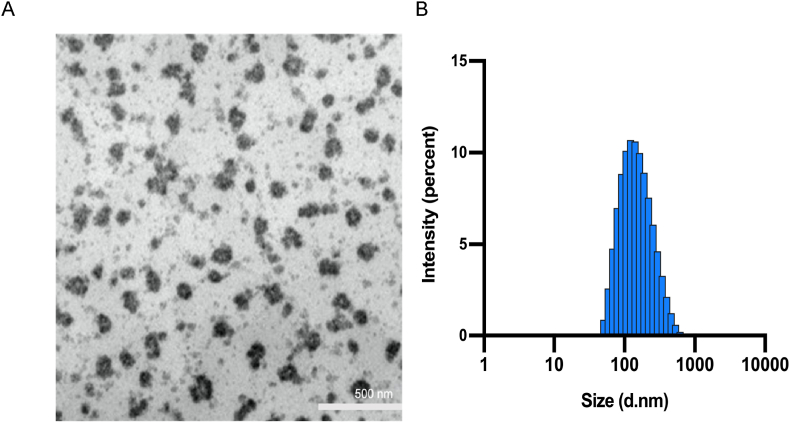
Experimental results showed that the protopanaxtriol saponins (PTS) were the most potent saponins with a decent safety profile, and the molecule docking results demonstrated that PTS had strong inhibitory ability to tyrosinase. PTS was successfully encapsulated into ethosomes with an encapsulation efficiency of 93%. The PTS ethosome gel could effectively inhibit the melanin production caused by UVB tanning on the back skin of mice.
The PTS ethosome gel provides an effective and safe formulation of PTS to whiten the UVB-tanned skin in vivo and could be used as a potential skin whitening agent in the future.
人参皂苷作为中药中的一种活性成分,多年来一直被广泛用于皮肤美白。最近的研究发现,与西洋参相比,三七中的人参皂苷含量更高。这些人参皂苷具有开发成皮肤美白剂的潜在前景。
我们选择了从三七中分离出的五种达玛烷型人参皂苷及其混合物来研究其皮肤美白活性。使用斑马鱼胚胎模型对美白活性进行初步筛选。随后,通过检测这些成分处理的B16细胞中黑色素的抑制情况和酪氨酸酶的活性,来检测和比较各成分的美白效果。还应用分子对接技术研究人参皂苷与酪氨酸酶之间的相互作用。最后,选择最有效的皂苷进行剂型优化,并在C57BL/6小鼠模型上进一步证明载皂苷脂质体的美白效果。
实验结果表明,原人参三醇型皂苷(PTS)是最有效的皂苷,具有良好的安全性,分子对接结果表明PTS对酪氨酸酶具有较强的抑制能力。PTS成功包封于脂质体中,包封率为93%。PTS脂质体凝胶能有效抑制小鼠背部皮肤因紫外线照射引起的黑色素生成。
PTS脂质体凝胶为PTS提供了一种有效且安全的制剂,可在体内美白紫外线照射后的皮肤,未来有望作为一种潜在的皮肤美白剂。