Guangzhou Key Laboratory of Forensic Multi-Omics for Precision Identification, School of Forensic Medicine, Southern Medical University, Guangzhou, China.
Guangzhou Forensic Science Institute, Guangzhou, China.
BMC Genomics. 2024 Nov 25;25(1):1137. doi: 10.1186/s12864-024-10894-y.
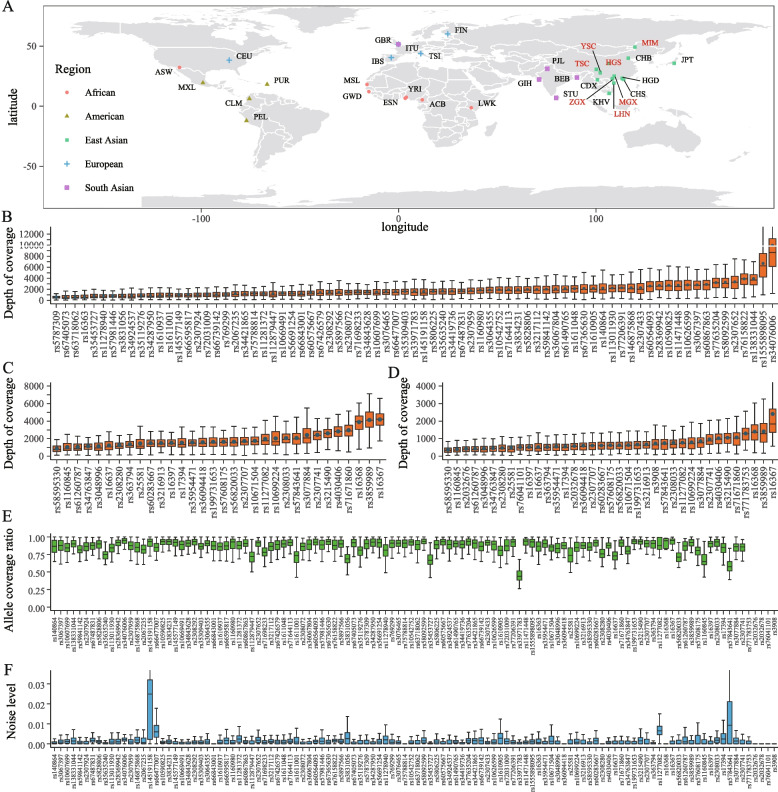
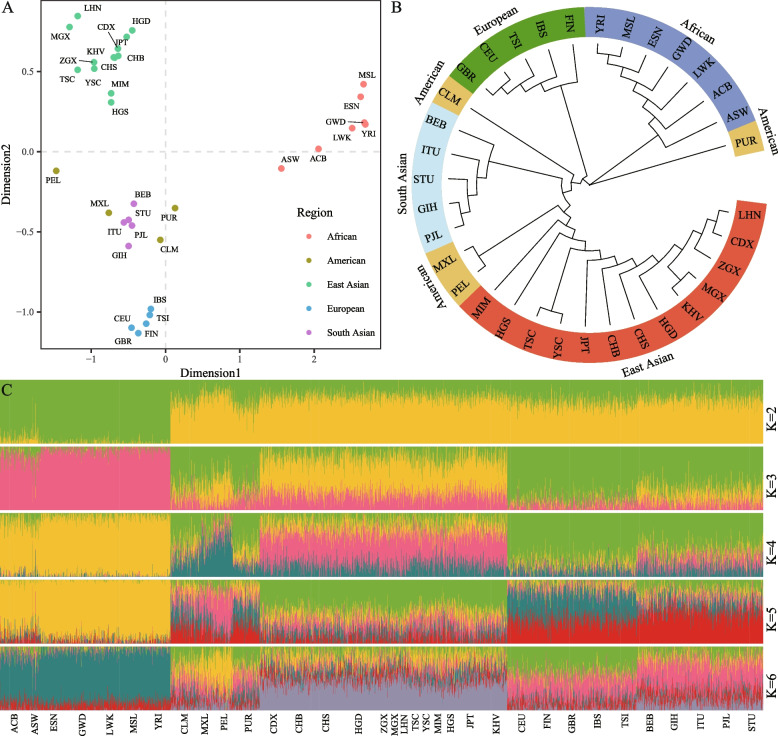
Comprehensive characterizations of genetic diversity and demographic models of ethnolinguistically diverse Chinese populations are essential for elucidating their forensic characteristics and evolutionary past. We developed a 114-plex NGS InDel panel to genotype 114 genome-wide markers and investigated the genetic structures of Zhuang, Hui, Miao, Li, Tibetan, Yi, and Mongolian populations, encompassing five language families. This panel demonstrated robust performance, with exceptional potential for forensic individual identification and paternity testing, evidenced by the combined power of discrimination for 77 autosomal InDels (ranged from 1-3.6400 × 10 to 1-3.5713 × 10) and the combined power of exclusion (ranged from 1-2.1863 × 10 to 1-2.1261 × 10). The cumulative mean exclusion chance for 32 X-chromosomal InDels varied between 0.99996 and 0.99999 for trios and 0.99760 to 0.99898 for duos. We also analyzed genetic similarities and differences between these populations and 27 global populations, revealing distinct clusters among African, South Asian, East Asian, and European groups, with a close genetic affinity to East Asians. Notably, we identified geography-related genetic substructures: Inner Mongolia Mongolians and Gansu Huis formed a northern branch, Tibetans and Yis from Sichuan constituted a highland branch, and Guangxi Zhuangs exhibited close ties with Hainan Lis and Guangxi Miaos in the southern branch. Additionally, many InDels proved to be ancestry-informative markers for biogeographic ancestry inference. Collectively, these findings underscore the utility of the 114-plex NGS InDel panel as a complementary tool for forensic investigations and as a source of insights into the genetic architecture of ethnolinguistically distinct Chinese populations.
全面描述遗传多样性和具有不同语言的中国人群的人口模型,对于阐明他们的法医学特征和进化历史至关重要。我们开发了一个包含 114 个基因组标记的 114 plex NGS InDel 面板,用于对壮族、回族、苗族、黎族、藏族、彝族和蒙古族进行基因结构研究,涵盖了五个语系。该面板表现出出色的性能,具有出色的个体识别和亲子鉴定潜力,这一点通过 77 个常染色体 InDel 的组合判别力(范围从 1-3.6400×10 到 1-3.5713×10)和排除力(范围从 1-2.1863×10 到 1-2.1261×10)得到了证明。32 个 X 染色体 InDel 的累积平均排除概率在三人间从 0.99996 到 0.99999,在二人间从 0.99760 到 0.99898。我们还分析了这些人群与 27 个全球人群之间的遗传相似性和差异,结果表明非洲、南亚、东亚和欧洲群体之间存在明显的聚类,与东亚人群具有密切的遗传亲缘关系。值得注意的是,我们发现了与地理相关的遗传亚结构:内蒙古蒙古族和甘肃回族形成了北方分支,四川的藏族和彝族构成了高原分支,广西壮族与海南黎族和广西苗族在南方分支密切相关。此外,许多 InDel 被证明是生物地理起源推断的遗传信息标记。总之,这些发现突显了 114 plex NGS InDel 面板作为法医调查补充工具的实用性,以及作为了解具有不同语言的中国人群遗传结构的信息来源的价值。