Faculty of Law, Hokkai-Gakuen University, 4-1-40 Asahi-machi Toyohira-Ku, Sapporo-City, Hokkaido, 062-8605, Japan.
Faculty of Medicine, Tottori University, 4-101 Koyama-cho minami, Tottori-City, Tottori, 683-8550, Japan.
J Physiol Anthropol. 2024 Nov 25;43(1):30. doi: 10.1186/s40101-024-00377-0.
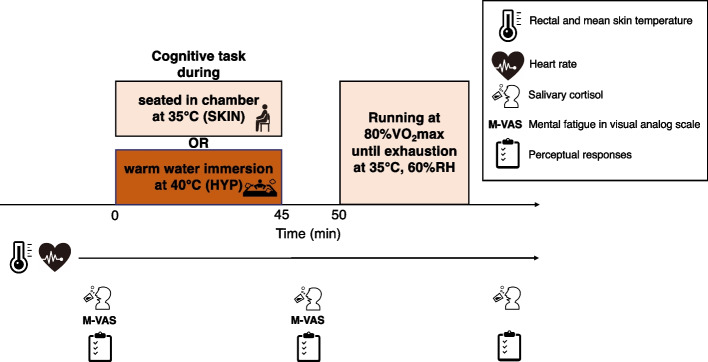
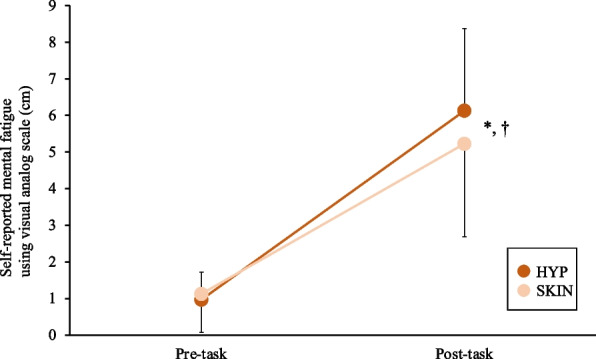
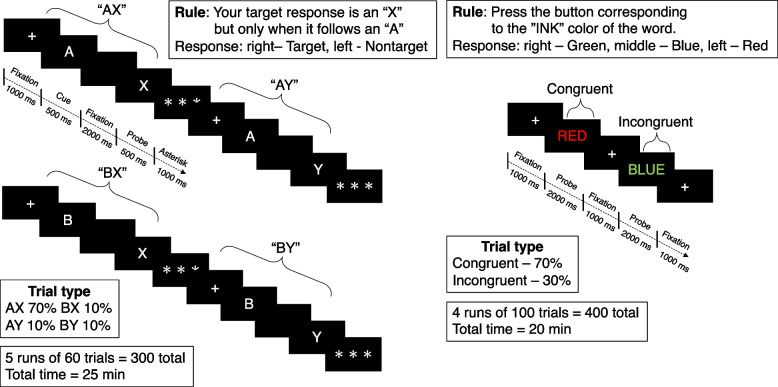
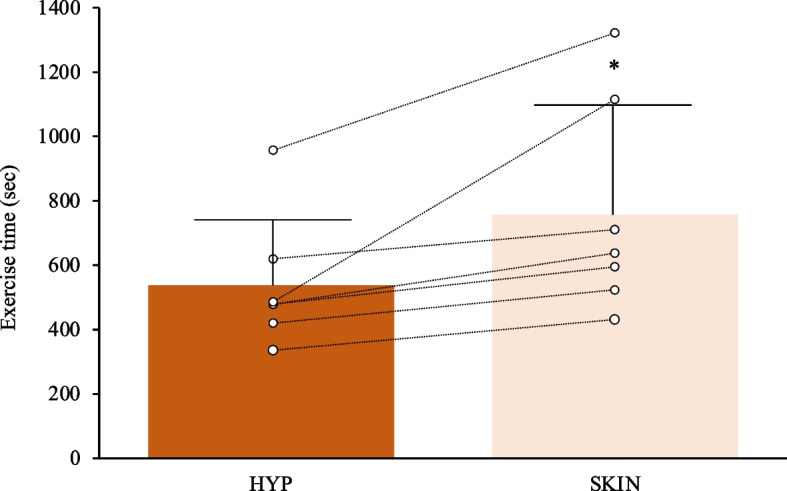
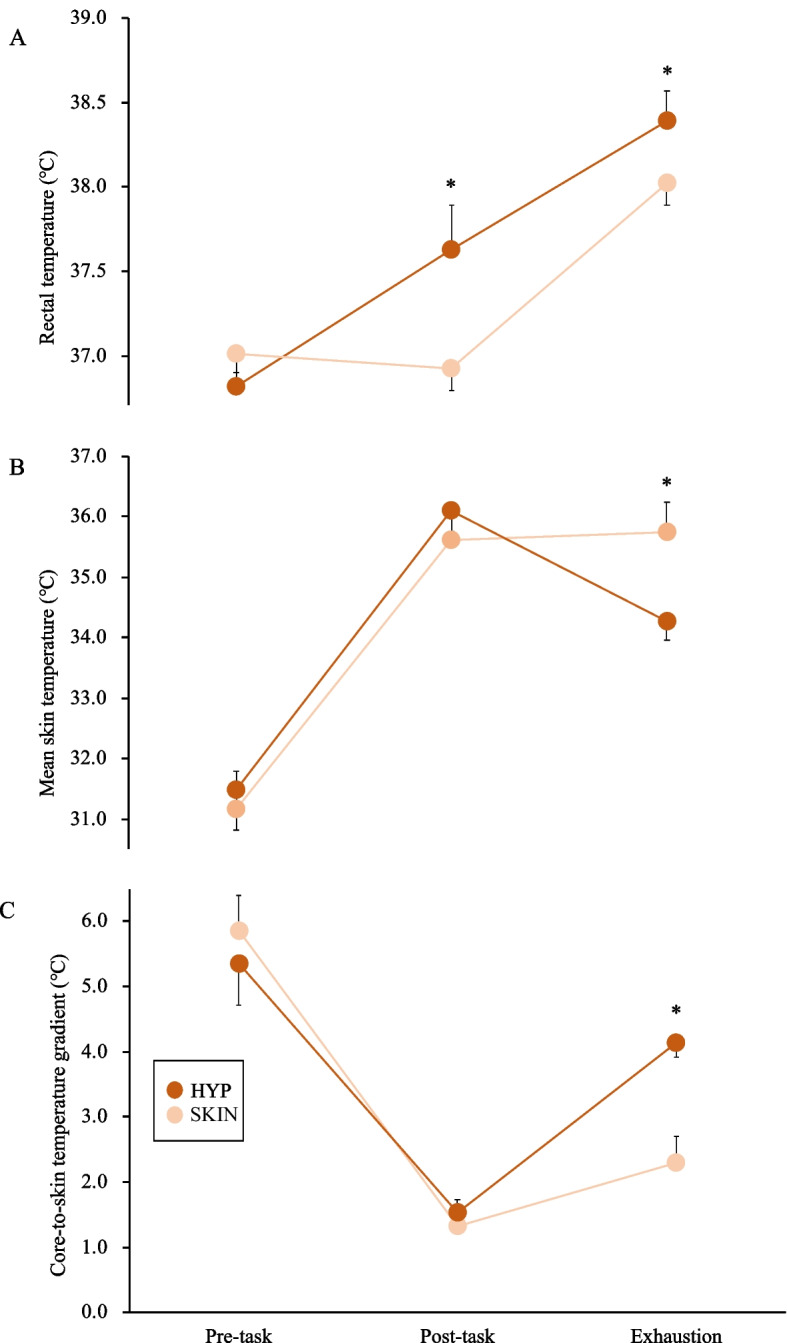
The purpose of this study was to investigate the effects of elevated core temperature by exposure to heat stress vs. heat exposure without elevated core temperature (mean skin temperature only) in addition to mental fatigue on aerobic exercise capacity in the heat. Seven highly trained athletes completed two experimental conditions: elevation in core and skin temperatures (hyperthermia: HYP), and skin temperatures (SKIN). Participants performed the AX-Continuous Performance Task and Stroop Task to induce mental fatigue during a warm water immersion at 40 °C (HYP) and a passive seated heat exposure in a climatic chamber at 35 °C and 60% relative humidity (SKIN) for 45 min before exercise. Thereafter, participants performed running trial at 80% maximal oxygen uptake until voluntary exhaustion in the same chamber as the SKIN. Exercise time to exhaustion was significantly shorter in the HYP trial (538 ± 200 s) than in the SKIN trial (757 ± 324 s). Rectal temperature at the end of tasks in the HYP trial increased by 0.86 ± 0.26℃ and was significantly higher (37.69 ± 0.18℃) than that of the SKIN trial (36.96 ± 0.13℃), albeit no significant differences in mean skin temperature. Self-reported mental fatigue using visual analog scale was significantly higher after tasks in both trials, but no significant difference between trials was found. Throughout the trial, salivary cortisol concentration and perceptual responses were not affected by hyperthermia. This study demonstrated that a combination of high core temperature and mean skin temperature, and mental fatigue limit aerobic exercise capacity in highly trained athletes in hot environments compared with heat exposure without an elevation of core temperature.
本研究旨在探讨在热环境中,与仅升高皮肤温度(平均皮肤温度)而不升高核心温度(核心温度升高)相比,热应激引起的核心温度升高以及精神疲劳对有氧运动能力的影响。7 名高训练水平的运动员完成了两种实验条件:核心和皮肤温度升高(高温:HYP),以及皮肤温度升高(SKIN)。参与者在 40°C 的温水浸泡(HYP)和 35°C 和 60%相对湿度的气候室中被动坐姿热暴露(SKIN)下进行 AX-连续性能任务和 Stroop 任务,以诱导精神疲劳,持续 45 分钟,然后在相同的气候室中进行 80%最大摄氧量的跑步试验,直到自愿力竭。在 HYP 试验中,运动至力竭的时间明显短于 SKIN 试验(538±200 s)(757±324 s)。HYP 试验结束时直肠温度升高 0.86±0.26°C,明显高于 SKIN 试验(37.69±0.18°C)(36.96±0.13°C),尽管平均皮肤温度无显著差异。在两项试验中,任务结束后使用视觉模拟量表报告的精神疲劳明显更高,但试验之间无显著差异。整个试验过程中,唾液皮质醇浓度和感知反应不受高温影响。本研究表明,与不升高核心温度的热暴露相比,高温和平均皮肤温度以及精神疲劳的综合作用限制了高温环境中高训练水平运动员的有氧运动能力。