School of Stomatology, Dalian Medical University, Dalian, 116044, China.
The Affiliated Stomatological Hospital of Dalian Medical University School of Stomatology, Dalian, 116044, China.
Stem Cell Res Ther. 2024 Nov 25;15(1):451. doi: 10.1186/s13287-024-04054-y.
Improving the microenvironment to augment endogenous regenerative potential has emerged as a fundamental concept for stimulating and expediting periodontal tissue repair and regeneration. Previous studies have demonstrated that TPPU, a soluble epoxide hydrolase inhibitor (sEHi), mediates the suppression of inflammatory bone loss in periodontitis models. However, the underlying mechanisms remain largely elusive.
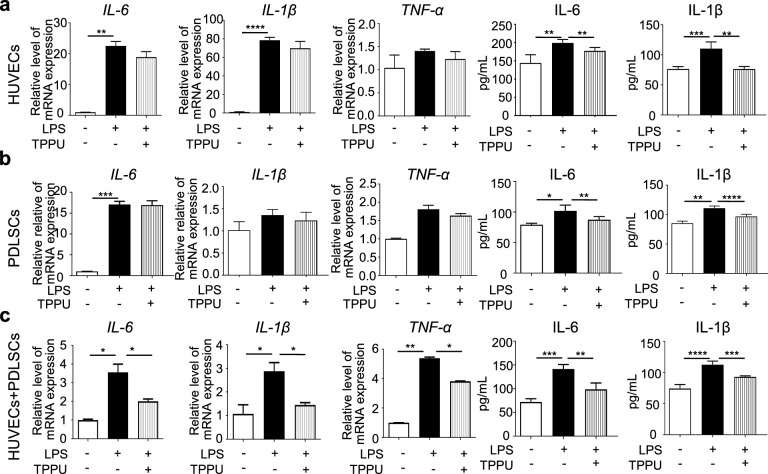
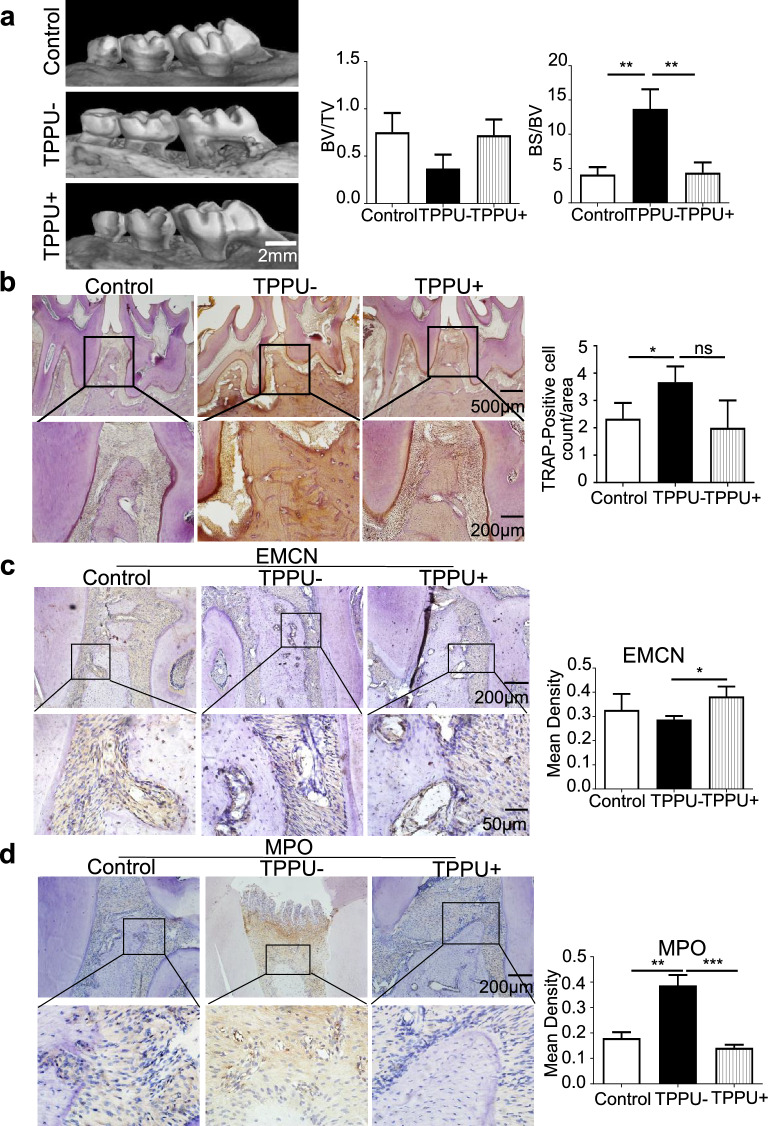
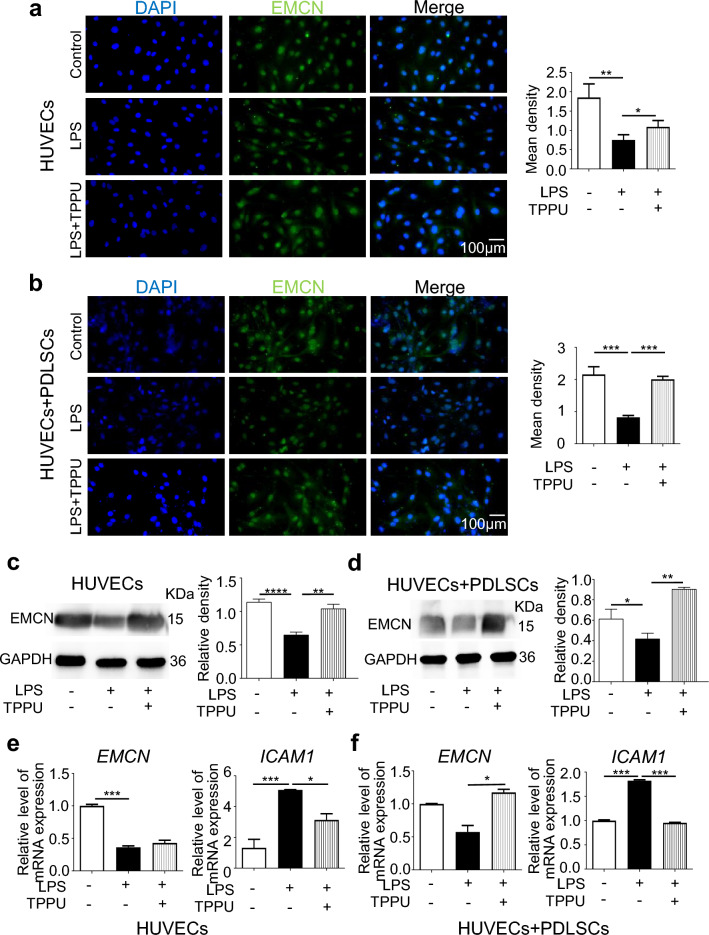
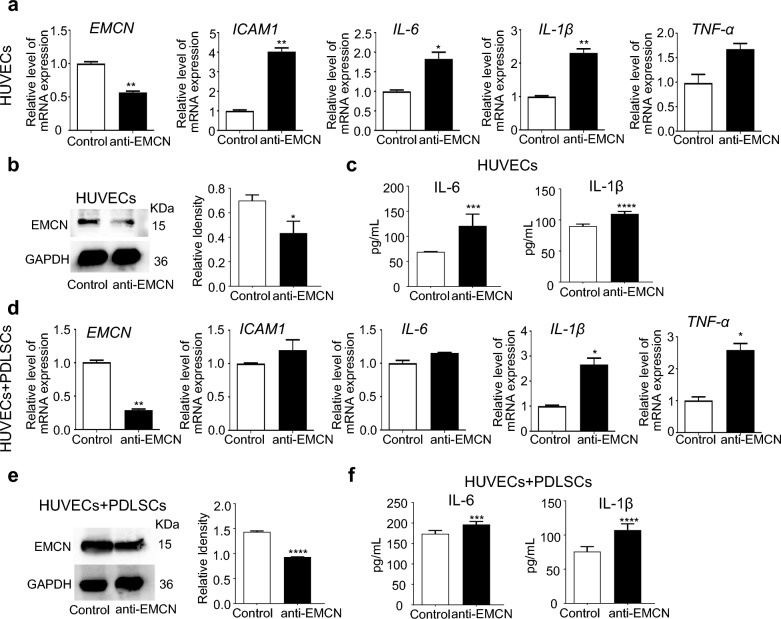
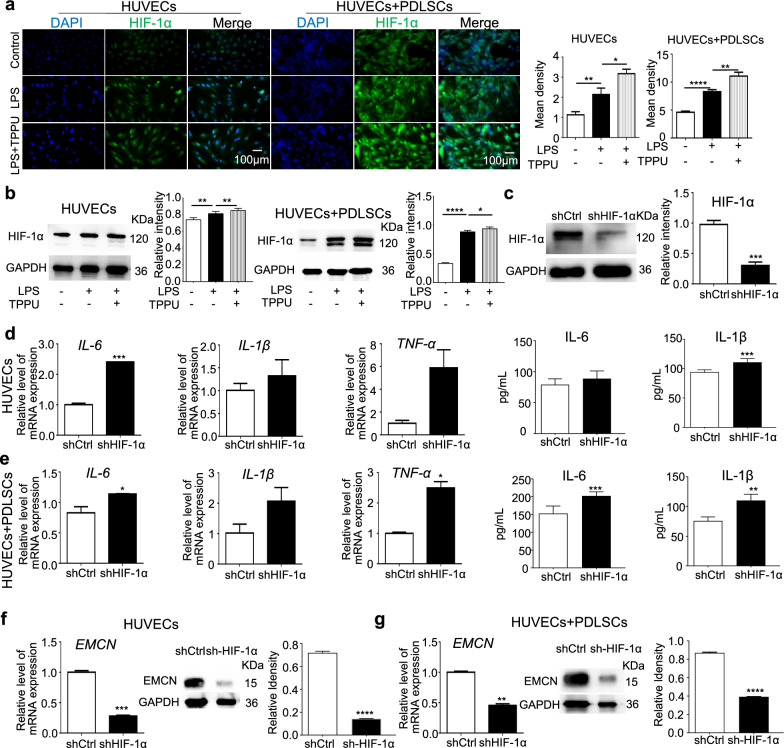
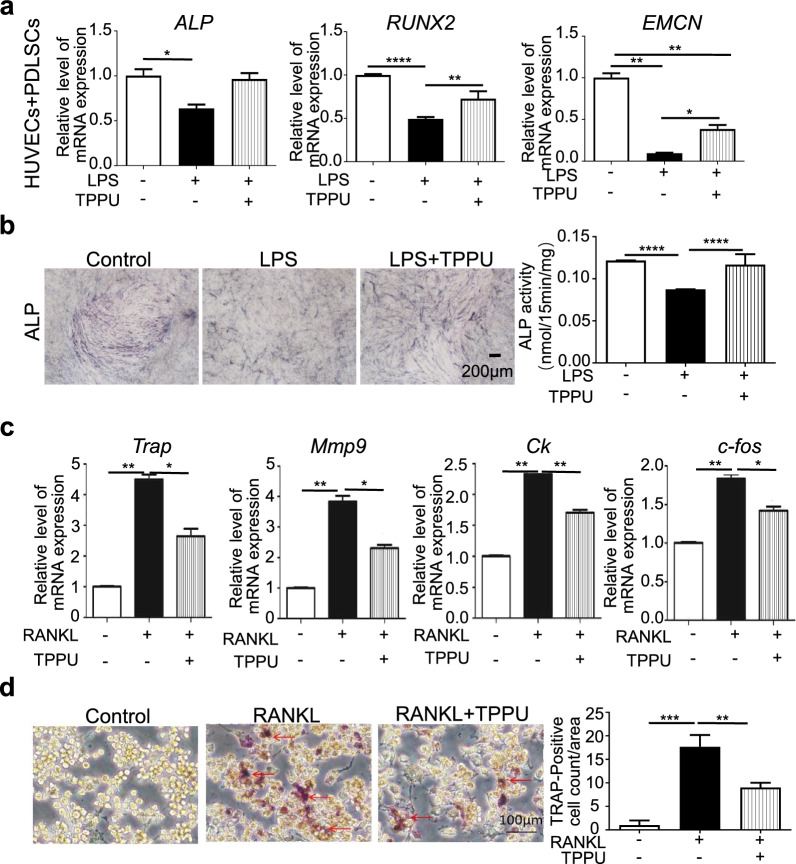
In this study, we constructed a human umbilical vein endothelial cell (HUVEC) and periodontal ligament stem cell (PDLSC) coculture system in vitro and tested the anti-inflammatory effect of TPPU under inflammatory conditions. The roles of HIF-1α and Endomucin (EMCN) in the anti-inflammatory effects of TPPU were analyzed. The effects of TPPU on osteogenesis and osteoclastogenesis in cocultured cells were examined. The in vivo periodontitis model further verified the effects of TPPU on inhibiting neutrophil adhesion and inflammation and inhibiting osteoclasts.
Our in vitro experiments demonstrated that TPPU enhances the interaction between mesenchymal stem cells and vascular endothelial cells to enhance anti-inflammatory and osteogenic differentiation effects and revealed a new anti-inflammatory mechanism of TPPU involving the upregulation of EMCN in endothelial cells to prevent lymphocyte recruitment. We also confirmed that TPPU inhibits osteoclast activity. Our in vivo findings showed that TPPU inhibits osteoclast activity and neutrophil adhesion and enhances periodontal tissue repair and regeneration.
TPPU promotes local regeneration in periodontitis by inhibiting inflammation and bone resorption. Thus, targeting soluble epoxide hydrolase represents an endogenous regenerative strategy for periodontitis treatment.
改善微环境以增强内源性再生潜能已成为刺激和加速牙周组织修复和再生的基本概念。先前的研究表明,TPPU(可溶性环氧化物水解酶抑制剂(sEHi))介导了牙周炎模型中炎症性骨丢失的抑制。然而,其潜在机制在很大程度上仍不清楚。
在这项研究中,我们构建了人脐静脉内皮细胞(HUVEC)和牙周膜干细胞(PDLSC)共培养体系,并在炎症条件下测试了 TPPU 的抗炎作用。分析了 TPPU 对 HIF-1α 和内粘蛋白(EMCN)的抗炎作用的影响。研究了 TPPU 对共培养细胞成骨和成骨细胞分化的影响。体内牙周炎模型进一步验证了 TPPU 抑制中性粒细胞黏附和炎症以及抑制破骨细胞的作用。
我们的体外实验表明,TPPU 增强了间充质干细胞和血管内皮细胞之间的相互作用,增强了抗炎和成骨分化作用,并揭示了 TPPU 的一种新的抗炎机制,涉及内皮细胞中 EMCN 的上调以防止淋巴细胞募集。我们还证实 TPPU 抑制破骨细胞活性。我们的体内研究结果表明,TPPU 抑制破骨细胞活性和中性粒细胞黏附,并增强牙周组织修复和再生。
TPPU 通过抑制炎症和骨吸收促进牙周炎的局部再生。因此,靶向可溶性环氧化物水解酶代表了一种治疗牙周炎的内源性再生策略。