Department of Obstetrics and Gynecology, Nagoya University Graduate School of Medicine, Nagoya, Japan.
Institute for Advanced Research, Nagoya University, Nagoya, Japan.
Cancer Med. 2024 Nov;13(22):e70251. doi: 10.1002/cam4.70251.
Platinum chemotherapy is the cornerstone of treatment for high-grade serous ovarian cancer (HGSOC); however, validated biomarkers that can accurately predict platinum response are lacking. Based on their roles in the underlying pathophysiology, circulating microRNAs are potential, noninvasive biomarkers in cancer. In the present study, we aimed to evaluate the circulating miRNA profiles of patients with HGSOC and to assess their potential utility as biomarkers to predict platinum response.
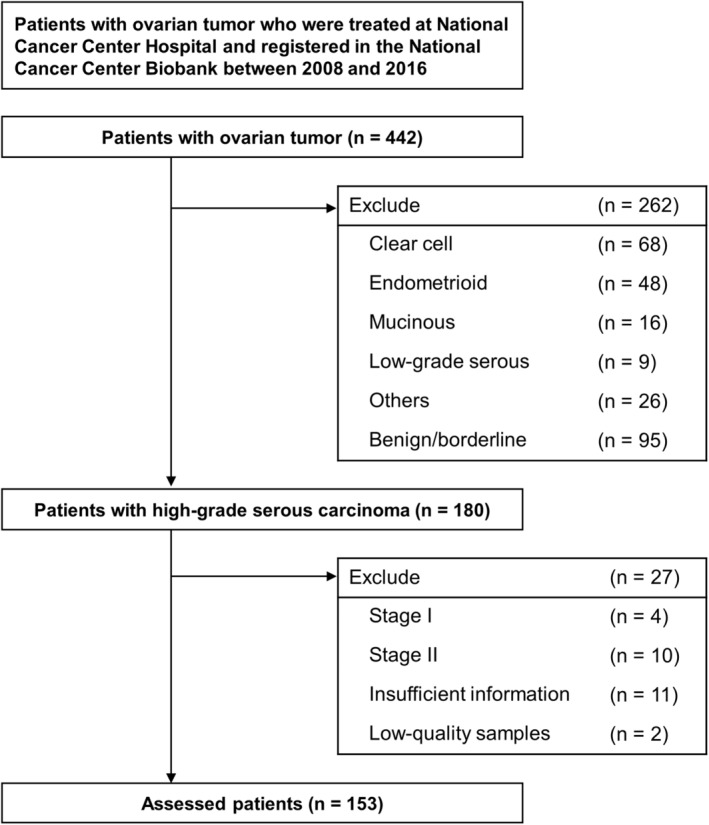
Pretreatment serum samples collected from patients who received platinum chemotherapy for Stage III-IV HGSOC between 2008 and 2016 were analyzed using miRNA microarray. LASSO logistic regression analysis was used to construct predictive models for treatment-free interval of platinum (TFIp).
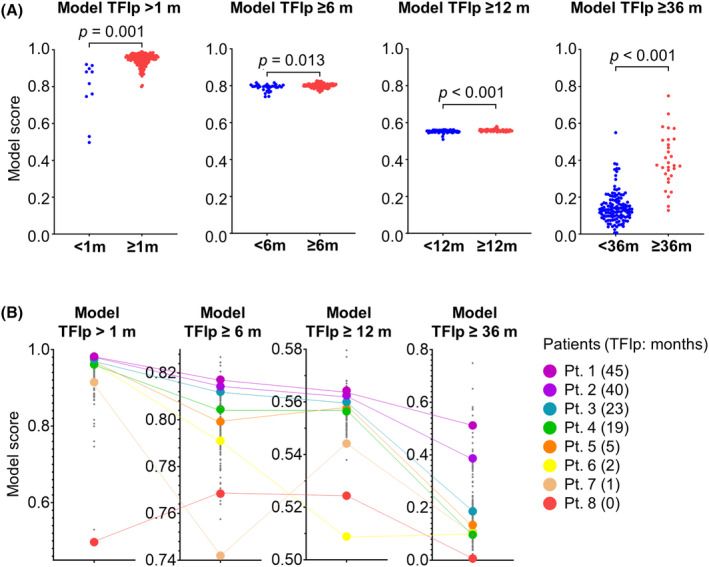
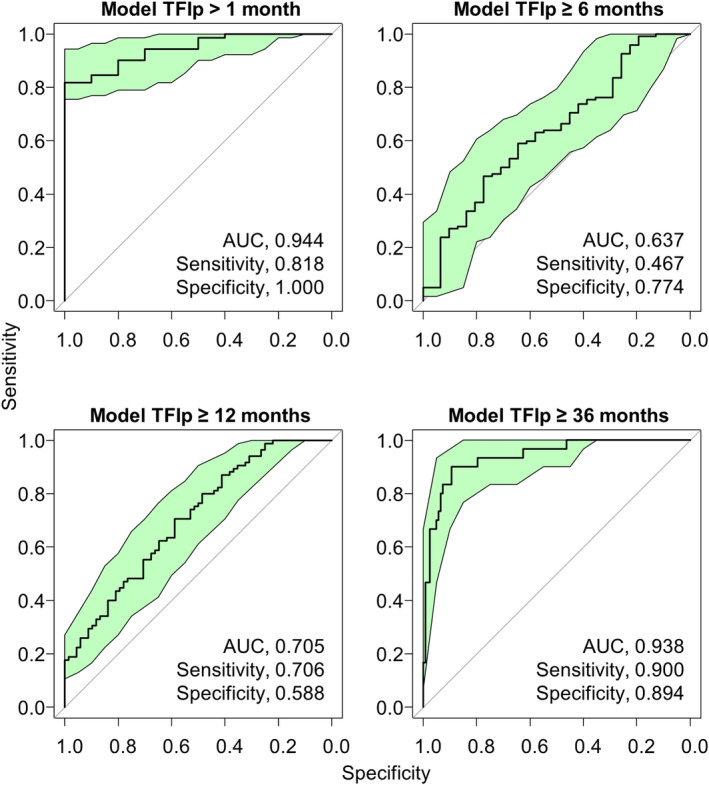
The median follow-up was 54.6 (range, 3.5-144.1) months. The comprehensive analysis of 2588 miRNAs was performed in serum samples of 153 eligible patients, and predictive models were constructed using a combination of circulating miRNAs with an area under the receiver operating characteristic curve of 0.944 for TFIp >1 month, 0.637 for TFIp ≥6 months, 0.705 for TFIp ≥12 months, and 0.938 for TFIp ≥36 months. Each predictive model provided a significant TFIp classification (p = 0.001 in TFIp >1 month, p = 0.013 in TFIp ≥6 months, p < 0.001 in TFIp ≥12 months, and p < 0.001 in TFIp ≥36 months).
Circulating miRNA profiles has potential utility in predicting platinum response in patients with HGSOC and can aid clinicians in choosing appropriate treatment strategies.
铂类化疗是高级别浆液性卵巢癌(HGSOC)治疗的基石;然而,缺乏能够准确预测铂类反应的验证生物标志物。基于它们在潜在病理生理学中的作用,循环 microRNA 是癌症中潜在的非侵入性生物标志物。在本研究中,我们旨在评估 HGSOC 患者的循环 microRNA 谱,并评估其作为预测铂类反应的生物标志物的潜在用途。
使用 microRNA 微阵列分析了 2008 年至 2016 年间接受铂类化疗的 III 期-IV 期 HGSOC 患者的预处理血清样本。使用 LASSO 逻辑回归分析构建了无铂化疗间期(TFIp)的预测模型。
中位随访时间为 54.6 个月(范围为 3.5-144.1)。对 153 名合格患者的血清样本进行了 2588 个 miRNA 的综合分析,并使用循环 miRNA 的组合构建了预测模型,用于 TFIp >1 个月的曲线下面积为 0.944、TFIp ≥6 个月为 0.637、TFIp ≥12 个月为 0.705、TFIp ≥36 个月为 0.938。每个预测模型均提供了显著的 TFIp 分类(TFIp >1 个月时 p=0.001,TFIp ≥6 个月时 p=0.013,TFIp ≥12 个月时 p<0.001,TFIp ≥36 个月时 p<0.001)。
循环 microRNA 谱在预测 HGSOC 患者的铂类反应方面具有潜在的应用价值,并可以帮助临床医生选择合适的治疗策略。