School of Chemistry and Chemical Engineering, State Key Laboratory of Digital Medical Engineering, Southeast University, Nanjing 211189, China.
College of Chemistry, Chemical Engineering and Materials Science, Shandong Normal University, Jinan 250014, China.
Biosensors (Basel). 2024 Nov 7;14(11):540. doi: 10.3390/bios14110540.
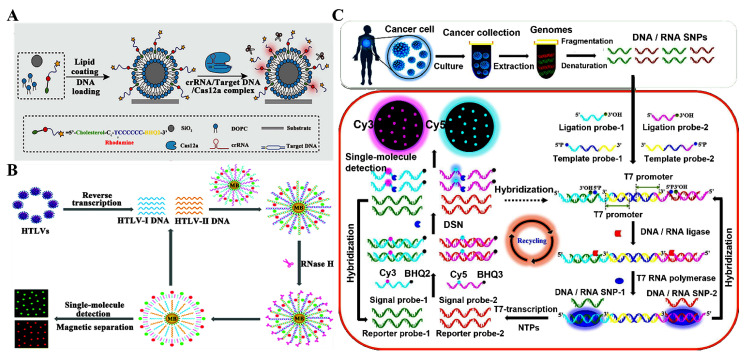
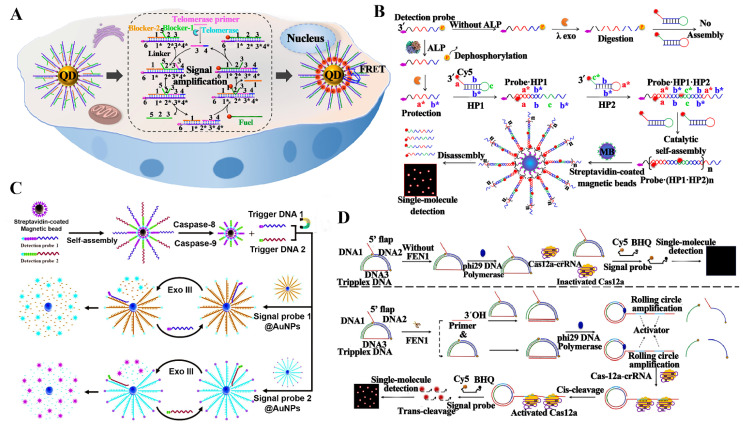
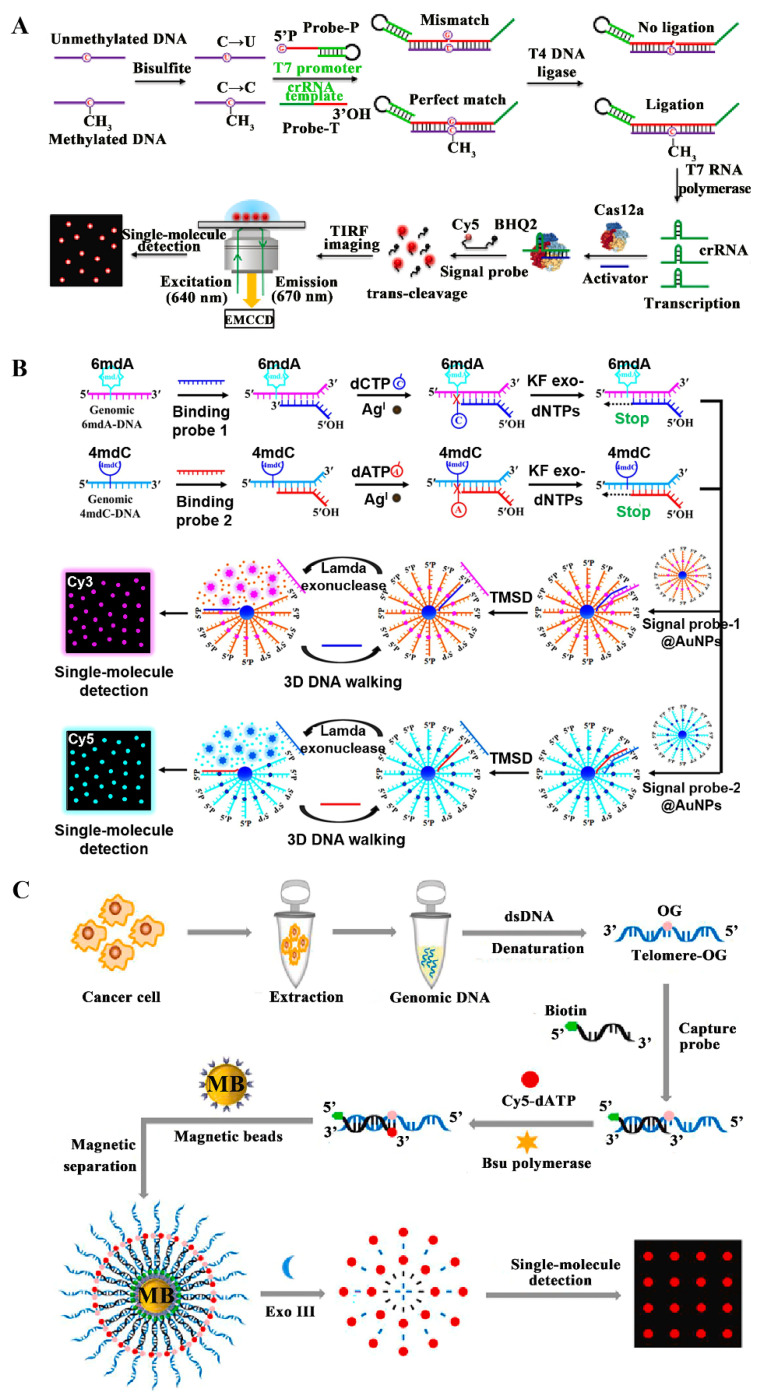
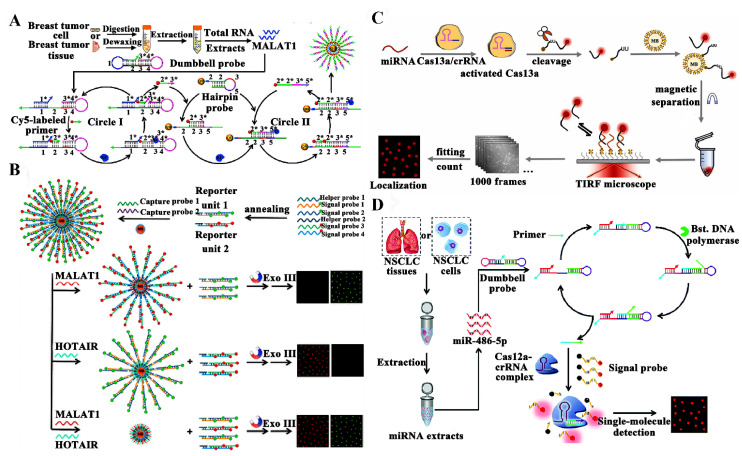
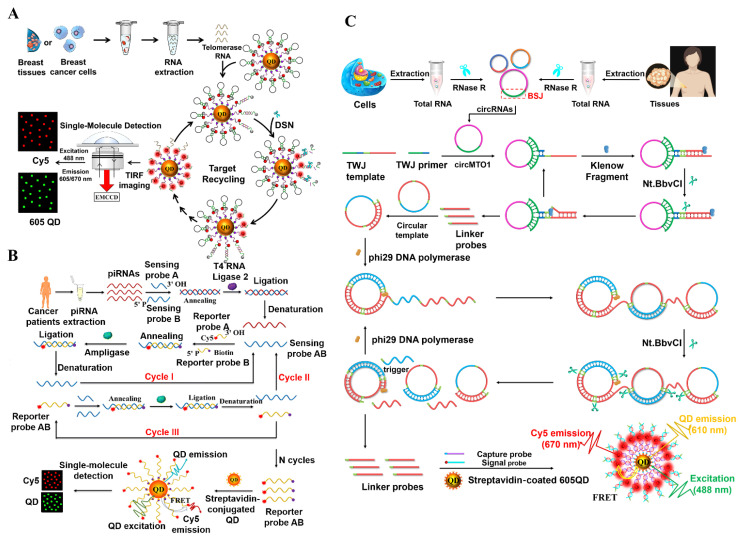
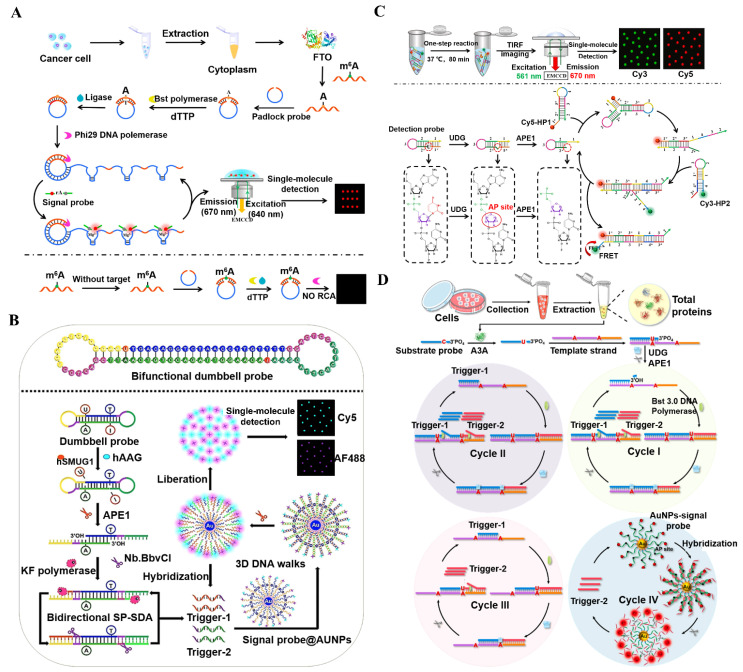
The construction of biosensors for specific, sensitive, and rapid detection of tumor biomarkers significantly contributes to biomedical research and early cancer diagnosis. However, conventional assays often involve large sample consumption and poor sensitivity, limiting their further application in real samples. In recent years, single-molecule biosensing has emerged as a robust tool for detecting and characterizing biomarkers due to its unique advantages including simplicity, low sample consumption, ultra-high sensitivity, and rapid assay time. This review summarizes the recent advances in the construction of single-molecule biosensors for the measurement of various tumor biomarkers, including DNAs, DNA modifications, RNAs, and enzymes. We give a comprehensive review about the working principles and practical applications of these single-molecule biosensors. Additionally, we discuss the challenges and limitations of current single-molecule biosensors, and highlight the future directions.
用于特异性、敏感性和快速检测肿瘤生物标志物的生物传感器的构建,对生物医学研究和早期癌症诊断有重要贡献。然而,传统的检测方法通常需要大量的样本消耗和较差的灵敏度,限制了它们在实际样本中的进一步应用。近年来,由于其独特的优势,包括简单、低样本消耗、超高灵敏度和快速分析时间,单分子生物传感已成为检测和表征生物标志物的有力工具。本综述总结了用于测量各种肿瘤生物标志物(包括 DNA、DNA 修饰物、RNA 和酶)的单分子生物传感器的最新进展。我们全面回顾了这些单分子生物传感器的工作原理和实际应用。此外,我们还讨论了当前单分子生物传感器的挑战和局限性,并强调了未来的发展方向。