Folkhälsan Institute of Genetics, Folkhälsan Research Center, 00290, Helsinki, Finland.
Department of Nephrology, University of Helsinki and Helsinki University Hospital, 00290, Helsinki, Finland.
Cardiovasc Diabetol. 2024 Nov 26;23(1):425. doi: 10.1186/s12933-024-02512-8.
Type 1 diabetes increases the risk of coronary artery disease (CAD). High-throughput metabolomics may be utilized to identify metabolites associated with disease, thus, providing insight into disease pathophysiology, and serving as predictive markers in clinical practice. Urine is less tightly regulated than blood, and therefore, may enable earlier discovery of disease-associated markers. We studied urine metabolomics in relation to incident CAD in individuals with type 1 diabetes.
We prospectively studied CAD in 2501 adults with type 1 diabetes from the Finnish Diabetic Nephropathy Study. 209 participants experienced incident CAD within the 10-year follow-up. We analyzed the baseline urine samples with a high-throughput targeted urine metabolomics platform, which yielded 54 metabolites. With the data, we performed metabolome-wide survival analyses, correlation network analyses, and metabolomic state profiling for prediction of incident CAD.
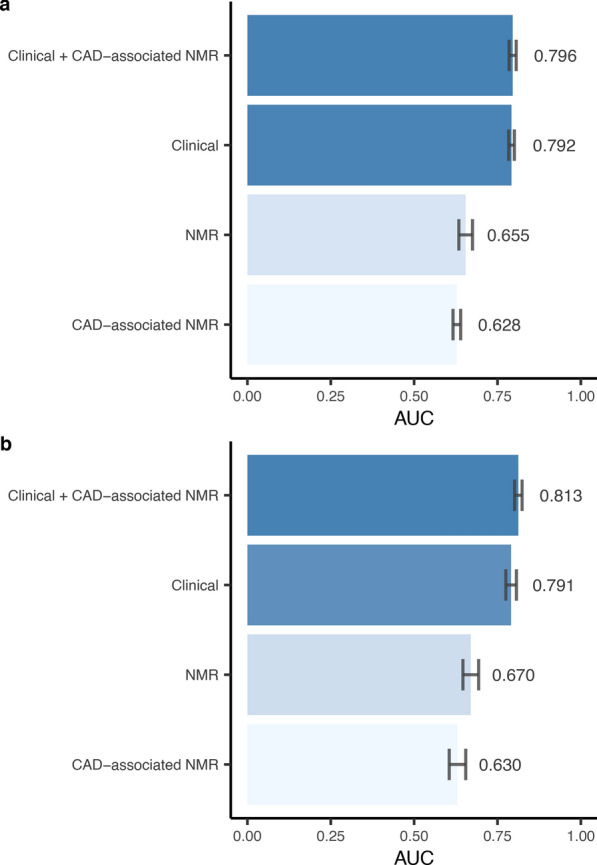
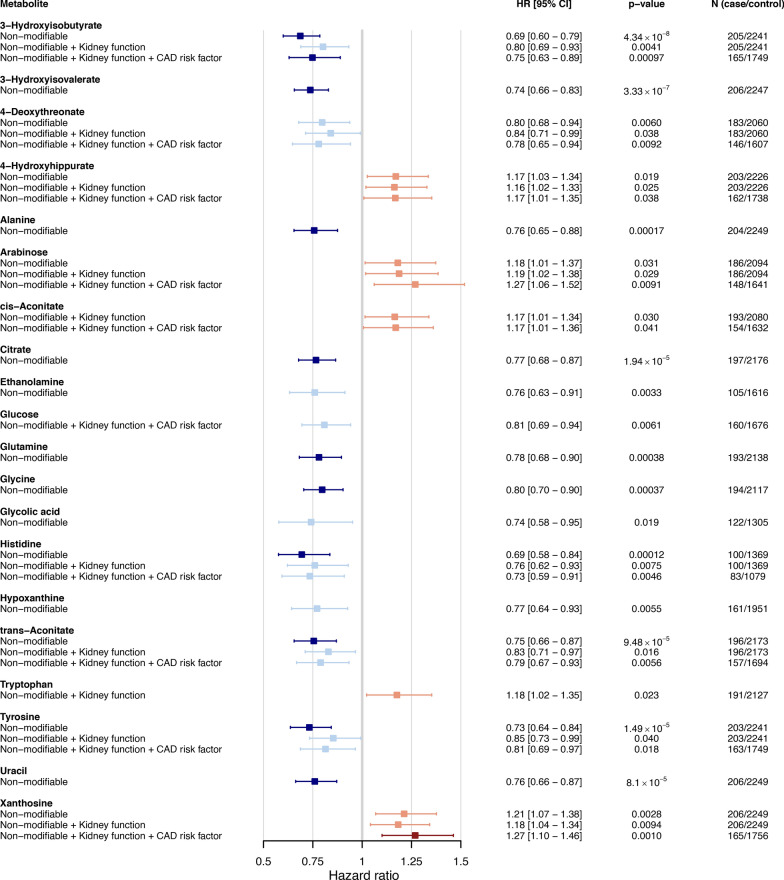
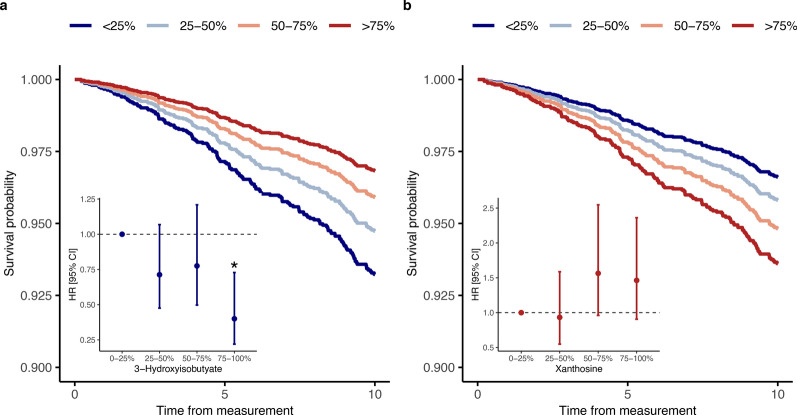
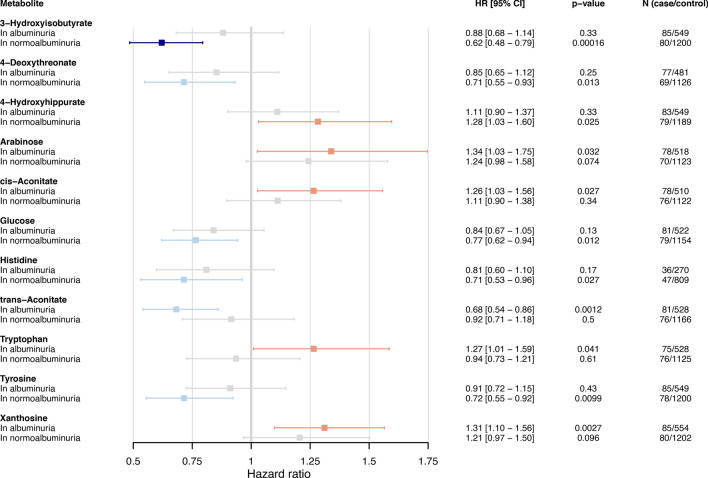
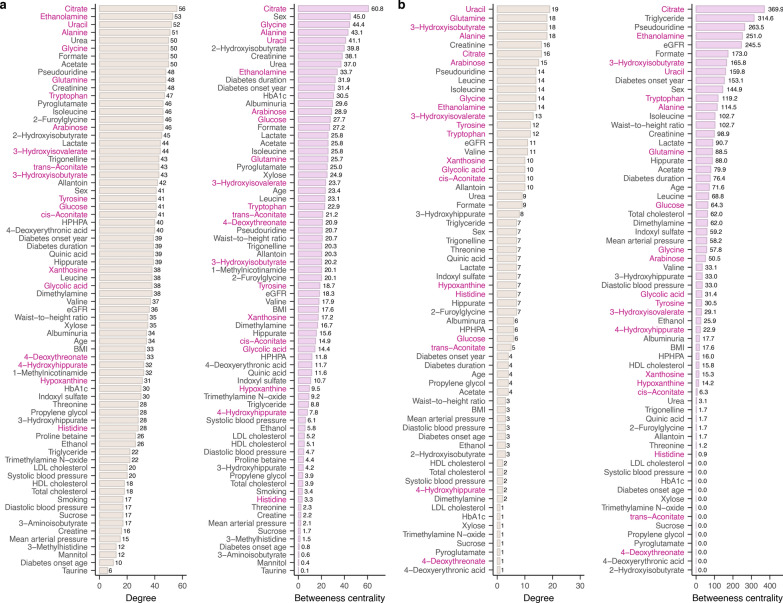
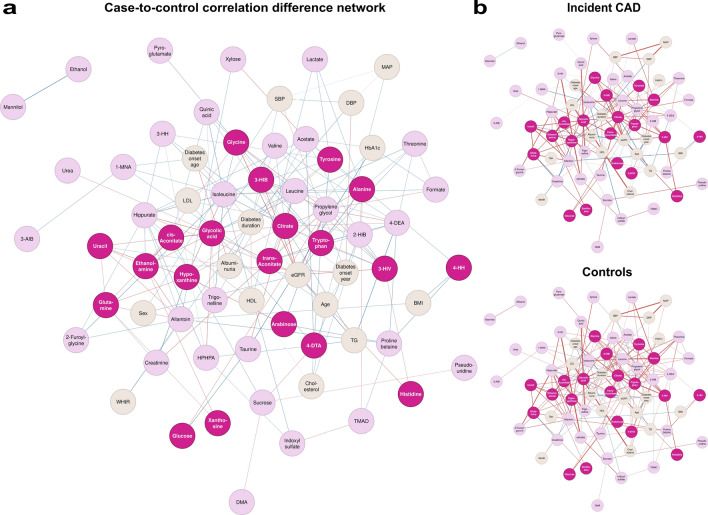
Urinary 3-hydroxyisobutyrate was associated with decreased 10-year incident CAD, which according to the network analysis, likely reflects younger age and improved kidney function. Urinary xanthosine was associated with 10-year incident CAD. In the network analysis, xanthosine correlated with baseline urinary allantoin, which is a marker of oxidative stress. In addition, urinary trans-aconitate and 4-deoxythreonate were associated with decreased 5-year incident CAD. Metabolomic state profiling supported the usage of CAD-associated urinary metabolites to improve prediction accuracy, especially during shorter follow-up. Furthermore, urinary trans-aconitate and 4-deoxythreonate were associated with decreased 5-year incident CAD. The network analysis further suggested glomerular filtration rate to influence the urinary metabolome differently between individuals with and without future CAD.
We have performed the first high-throughput urinary metabolomics analysis on CAD in individuals with type 1 diabetes and found xanthosine, 3-hydroxyisobutyrate, trans-aconitate, and 4-deoxythreonate to be associated with incident CAD. In addition, metabolomic state profiling improved prediction of incident CAD.
1 型糖尿病会增加冠状动脉疾病(CAD)的风险。高通量代谢组学可用于识别与疾病相关的代谢物,从而深入了解疾病的病理生理学,并作为临床实践中的预测标志物。尿液比血液的调控程度低,因此可能更早发现与疾病相关的标志物。我们研究了与 1 型糖尿病个体发生 CAD 相关的尿液代谢组学。
我们前瞻性地研究了来自芬兰糖尿病肾病研究的 2501 名 1 型糖尿病成人的 CAD。在 10 年的随访中,有 209 名参与者发生了 CAD。我们使用高通量靶向尿液代谢组学平台分析了基线尿液样本,该平台产生了 54 种代谢物。我们利用这些数据进行了代谢组学生存分析、相关网络分析和代谢组学状态分析,以预测 CAD 的发生。
尿 3-羟基异丁酸与 10 年 CAD 发生率降低有关,根据网络分析,这可能反映了年龄较小和肾功能改善。尿黄嘌呤核苷与 10 年 CAD 发生率有关。在网络分析中,黄嘌呤核苷与基线尿液中尿嘧啶核苷相关,后者是氧化应激的标志物。此外,尿反丁烯二酸和 4-脱氧苏糖醇与 5 年 CAD 发生率降低有关。代谢组学状态分析支持使用与 CAD 相关的尿液代谢物来提高预测准确性,特别是在较短的随访期间。此外,尿反丁烯二酸和 4-脱氧苏糖醇与 5 年 CAD 发生率降低有关。网络分析进一步表明,肾小球滤过率会影响 CAD 患者和非 CAD 患者的尿液代谢组。
我们对 1 型糖尿病个体的 CAD 进行了首次高通量尿液代谢组学分析,发现黄嘌呤核苷、3-羟基异丁酸、反丁烯二酸和 4-脱氧苏糖醇与 CAD 发生有关。此外,代谢组学状态分析提高了 CAD 发生的预测。