Ozbay Mehmet Fatih, Harputluoglu Hakan, Karaca Mustafa, Tekin Omer, Şendur Mehmet Ali Nahit, Kaplan Muhammed Ali, Sahin Berksoy, Geredeli Caglayan, Teker Fatih, Tural Deniz, Saglam Sezer, Çil Timuçin, Bilici Ahmet, Erol Cihan, Kalkan Ziya, Bayram Ertugrul, Selvi Oguzhan, Gültürk İlkay, Göksu Sema Sezgin, Tatlı Ali Murat
Department of Medical Oncology, Kırsehir Training and Research Hospital, Kirsehir 40200, Turkey.
Department of Medical Oncology, Faculty of Medicine, Inonu University, Malatya 44000, Turkey.
Cancers (Basel). 2024 Nov 20;16(22):3880. doi: 10.3390/cancers16223880.
During liver transplantation, hepatocellular carcinoma (HCC) recurrence remains a critical challenge for patient survival. Targeted therapies, such as sorafenib and regorafenib, have been utilized to manage relapsed HCC in this unique setting. This study aimed to assess the efficacy of Sorafenib and Regorafenib in patients with HCC who experienced recurrence after liver transplantation. We focused on survival outcomes, treatment responses, and the management of side effects in this patient group.
We conducted a retrospective analysis of 73 patients who experienced HCC recurrence post-liver transplantation between 2012 and 2022 across 11 oncology centers in Turkey. Patients were categorized according to Child-Pugh classification and treated with sorafenib as first-line therapy and Regorafenib in case of progression. Survival rates were analyzed using the Kaplan-Meier method, and risk factors were evaluated using Cox regression analysis.
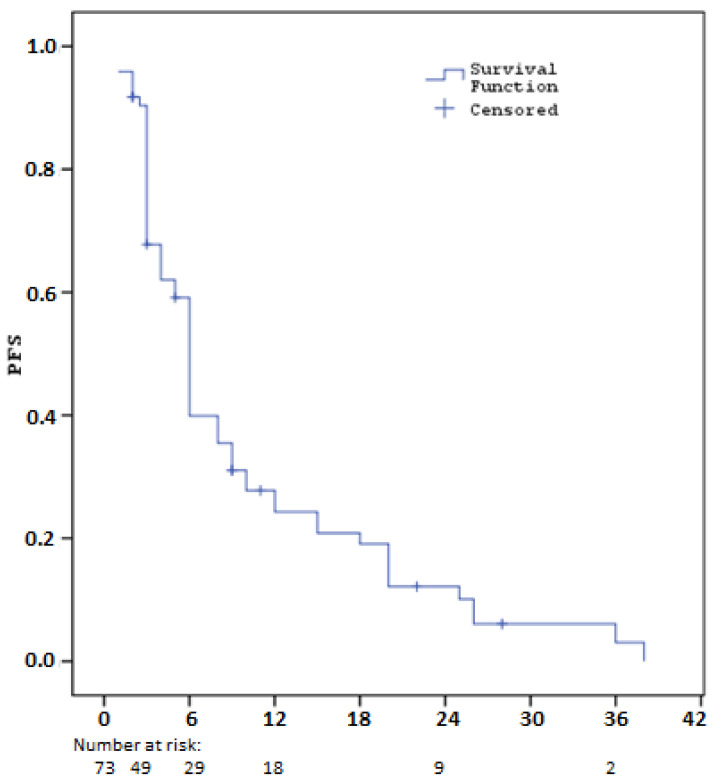
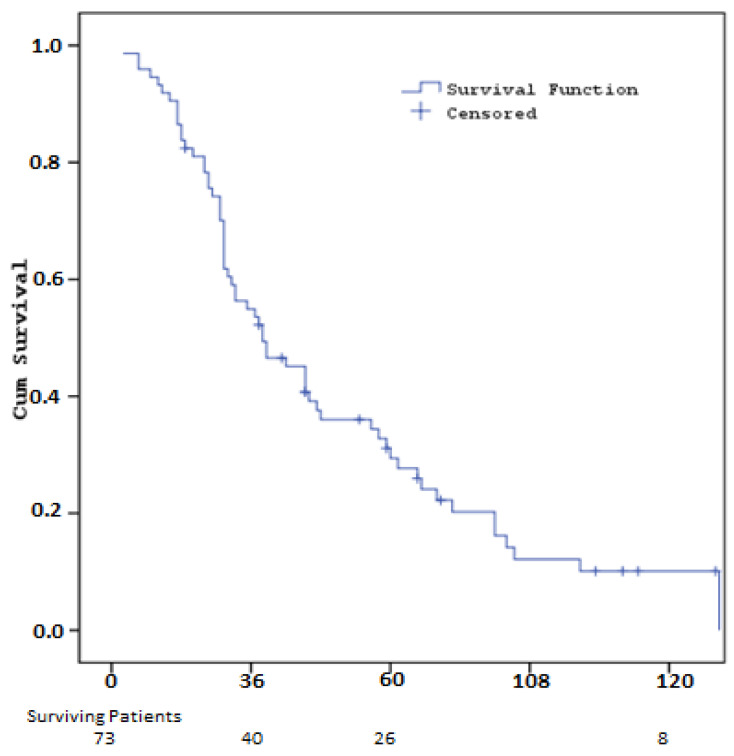
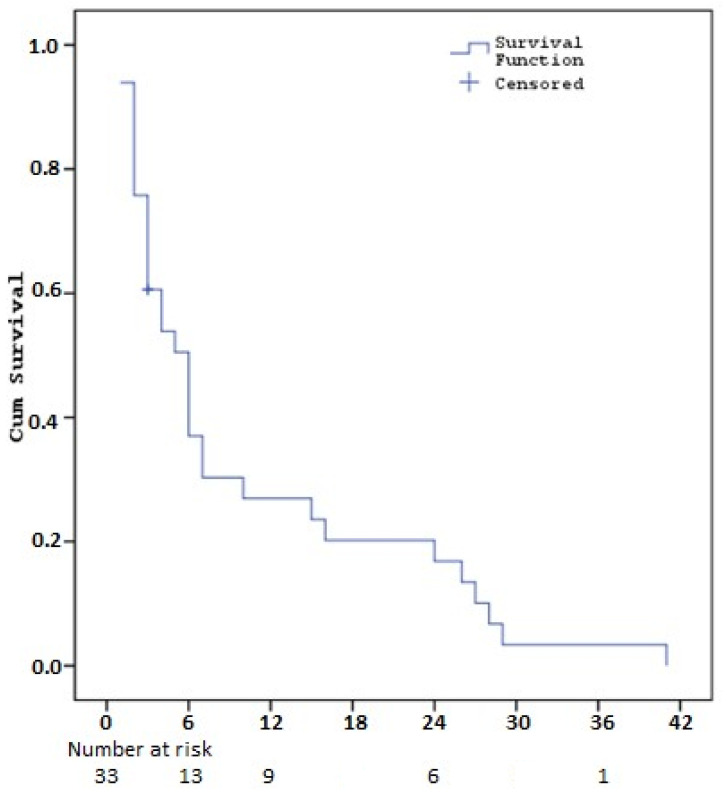
Of the 73 patients included in the study, 62 were male (84.9%), and 11 were female (15.1%), with a mean age of 61.5 ± 10.9 years. All patients received sorafenib as first-line treatment. Among patients who experienced progression with sorafenib or discontinued treatment due to toxicity, 45.2% ( = 33) continued treatment with regorafenib. The median progression-free survival (PFS1) time with sorafenib was 5.6 months, and the one-year survival rate was 24.3%. The median progression-free survival (PFS2) time with regorafenib, which was administered as second-line treatment, was also calculated as 5.9 months. Overall survival (OS) duration was determined as 35.9 months. The most common side effects associated with both drugs included fatigue, hand and foot syndrome, and hypertension. Significantly better survival outcomes were shown in the Child-Pugh A group compared to other patients.
These results suggest that Sorafenib and Regorafenib treatments offer a survival advantage in patients with relapsed HCC post-transplantation. However, individualized treatment strategies and close follow-up are crucial for optimizing outcomes. Further studies are needed to refine therapeutic protocols and enhance the care of this specific patient group.
在肝移植过程中,肝细胞癌(HCC)复发仍然是影响患者生存的关键挑战。索拉非尼和瑞戈非尼等靶向治疗药物已被用于治疗这种特殊情况下复发的HCC。本研究旨在评估索拉非尼和瑞戈非尼对肝移植后复发的HCC患者的疗效。我们重点关注了该患者群体的生存结局、治疗反应以及副作用的管理。
我们对2012年至2022年间土耳其11个肿瘤中心的73例肝移植后出现HCC复发的患者进行了回顾性分析。根据Child-Pugh分类对患者进行分组,一线治疗采用索拉非尼,病情进展时采用瑞戈非尼治疗。采用Kaplan-Meier方法分析生存率,使用Cox回归分析评估危险因素。
纳入研究的73例患者中,男性62例(84.9%),女性11例(15.1%),平均年龄61.5±10.9岁。所有患者均接受索拉非尼作为一线治疗。在因索拉非尼治疗进展或因毒性而停药的患者中,45.2%(n = 33)继续接受瑞戈非尼治疗。索拉非尼的中位无进展生存期(PFS1)为5.6个月,一年生存率为24.3%。作为二线治疗的瑞戈非尼的中位无进展生存期(PFS2)也计算为5.9个月。总生存期(OS)为35.9个月。两种药物最常见的副作用包括疲劳、手足综合征和高血压。与其他患者相比,Child-Pugh A组的生存结局明显更好。
这些结果表明,索拉非尼和瑞戈非尼治疗为移植后复发的HCC患者提供了生存优势。然而,个体化治疗策略和密切随访对于优化治疗效果至关重要。需要进一步研究以完善治疗方案并加强对这一特定患者群体的护理。