Lobato-Fernandez Cesar, Gimeno Marian, San Martín Ane, Anorbe Ana, Rubio Angel, Ferrer-Bonsoms Juan A
Departamento de Ingeniería Biomédica y Ciencias, TECNUN, Universidad de Navarra, 20009 San Sebastián, Spain.
Biomedicines. 2024 Nov 13;12(11):2592. doi: 10.3390/biomedicines12112592.
Alternative Splicing (AS) is a post-transcriptional process that allows a single RNA to produce different mRNA variants and, in some cases, multiple proteins. Various processes, many yet to be discovered, regulate AS. This study focuses on regulation by RNA-binding proteins (RBPs), which are not only crucial for splicing regulation but also linked to cancer prognosis and are emerging as therapeutic targets for cancer treatment. CLIP-seq experiments help identify where RBPs bind on nascent transcripts, potentially revealing changes in splicing status that suggest causal relationships. Selecting specific RBPs for CLIP-seq experiments is often driven by a priori hypotheses.
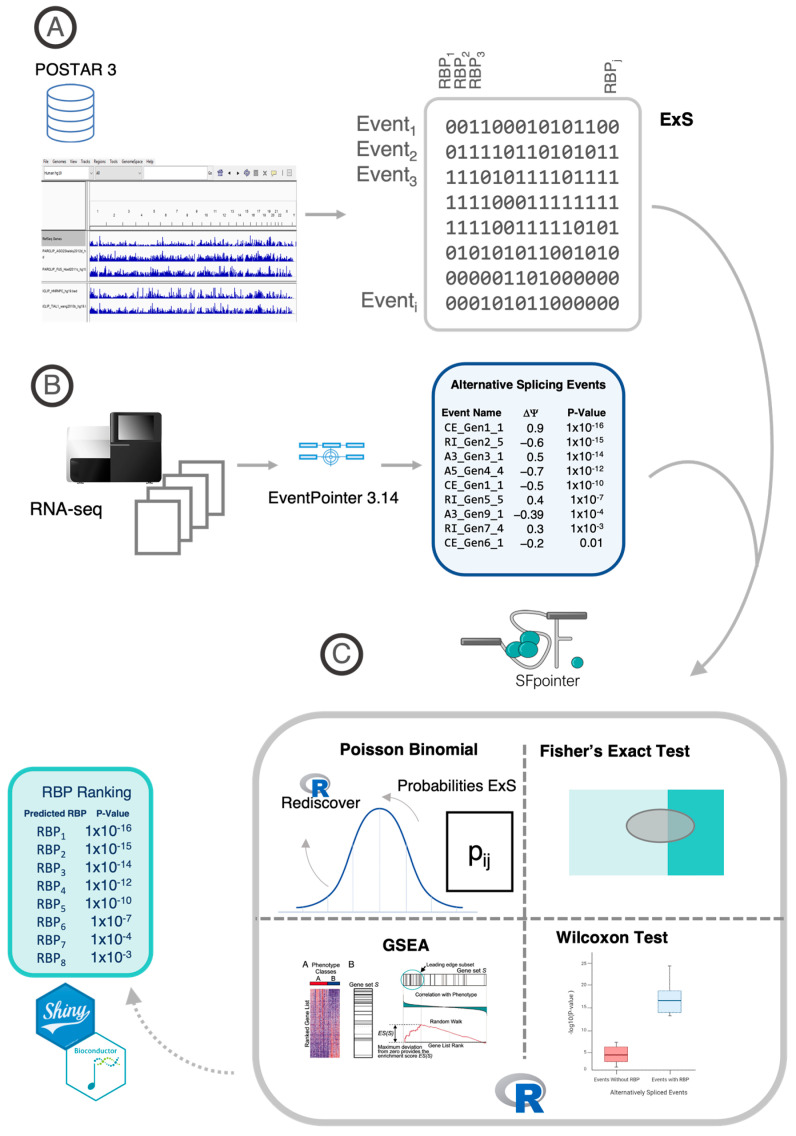
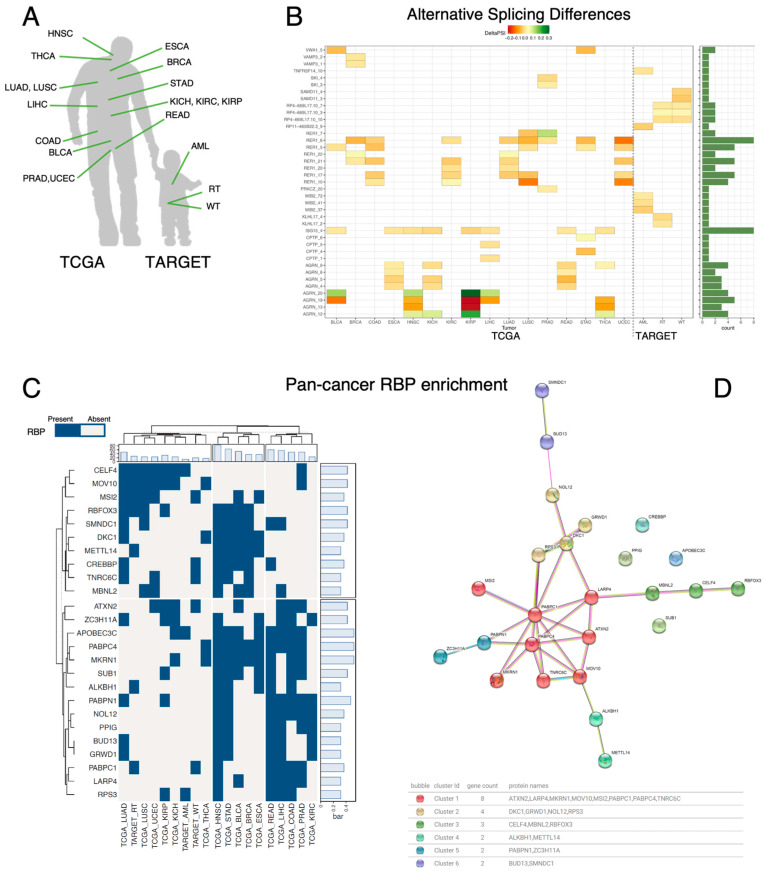
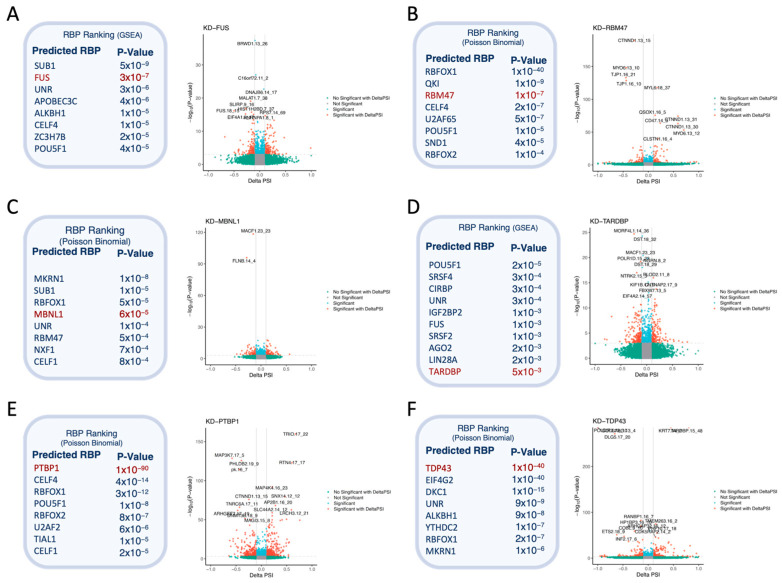
We developed an algorithm to detect RBPs likely related to splicing changes between conditions by integrating several CLIP-seq databases and a differential splicing detection algorithm. This work refines a previous study by improving splicing event prediction, testing different enrichment statistics, and performing additional validation experiments. The new method provides more accurate predictions and is included in the Bioconductor package EventPointer 3.14. We tested the algorithm in four experiments involving knockdowns of seven different RBPs. The algorithm accurately assessed the statistical significance of these RBPs using only splicing alterations. Additionally, we applied the algorithm to study sixteen cancer types from The Cancer Genome Atlas (TCGA) and three from TARGET. We identified relationships between RBPs and various cancer types, including alterations in CREBBP and MBNL2 in adenocarcinomas of the lung, liver, prostate, rectum, stomach, and colon. Some of these findings are validated in the literature, while others are novel.
The developed algorithm enhances the ability to predict and understand RBP-related splicing changes, offering more accurate predictions and novel insights into cancer-related splicing alterations. This work highlights the potential of RBPs as therapeutic targets and contributes to the broader understanding of their roles in cancer biology.
可变剪接(Alternative Splicing,AS)是一种转录后过程,它使单个RNA产生不同的mRNA变体,在某些情况下还能产生多种蛋白质。多种过程(其中许多尚未被发现)调节着可变剪接。本研究聚焦于RNA结合蛋白(RBP)的调节作用,RBP不仅对剪接调节至关重要,还与癌症预后相关,并且正逐渐成为癌症治疗的靶点。CLIP-seq实验有助于确定RBP在新生转录本上的结合位置,可能揭示剪接状态的变化,从而暗示因果关系。为CLIP-seq实验选择特定的RBP通常由先验假设驱动。
我们开发了一种算法,通过整合多个CLIP-seq数据库和一种差异剪接检测算法,来检测可能与不同条件下剪接变化相关的RBP。这项工作通过改进剪接事件预测、测试不同的富集统计方法以及进行额外的验证实验,对之前的研究进行了优化。新方法提供了更准确的预测,并被纳入Bioconductor软件包EventPointer 3.14中。我们在涉及七种不同RBP敲低的四个实验中测试了该算法。该算法仅使用剪接改变就能准确评估这些RBP的统计学意义。此外,我们将该算法应用于研究来自癌症基因组图谱(TCGA)的16种癌症类型和来自TARGET的3种癌症类型。我们确定了RBP与各种癌症类型之间的关系,包括肺、肝、前列腺、直肠、胃和结肠腺癌中CREBBP和MBNL2的改变。其中一些发现已在文献中得到验证,但其他一些则是新的发现。
所开发的算法增强了预测和理解与RBP相关的剪接变化的能力,提供了更准确的预测以及对癌症相关剪接改变的新见解。这项工作突出了RBP作为治疗靶点的潜力,并有助于更广泛地理解它们在癌症生物学中的作用。